
 English
 Español
 中文简体
中文简体
Content
- 1 The Great Debate: Why Choosing the Right Mop Determines Your Cleaning Efficiency
- 2 Mechanical Design Comparison: Flat Mop vs. Spin Mop
- 3 Data-Driven Performance: Cleaning Time and Water Usage
- 4 Why Flat Mops are Safer for Modern Flooring
- 5 The Hygiene Factor: Preventing Cross-Contamination
- 6 Frequently Asked Questions About Mop Selection
The Great Debate: Why Choosing the Right Mop Determines Your Cleaning Efficiency
Choosing between a flat mop and a spin mop is more than just a preference; it is a decision that affects the structural integrity of your flooring and the actual hygiene of your living space. For years, the spin mop was popularized by late-night infomercials, but professional cleaning services and savvy homeowners are increasingly pivoting toward the flat mop system. The reason lies in the mechanics of how dirt is actually removed from a surface rather than just moved around.
When we analyze the physics of floor cleaning, the goal is to achieve maximum surface contact and consistent pressure. A flat mop offers a uniform cleaning base that ensures every square inch of the microfiber pad is working for you. In contrast, spin mops often rely on circular, loosely-packed fibers that can leave streaks and struggle to reach the very areas where dust accumulates most: the corners and edges of your rooms.
Mechanical Design Comparison: Flat Mop vs. Spin Mop
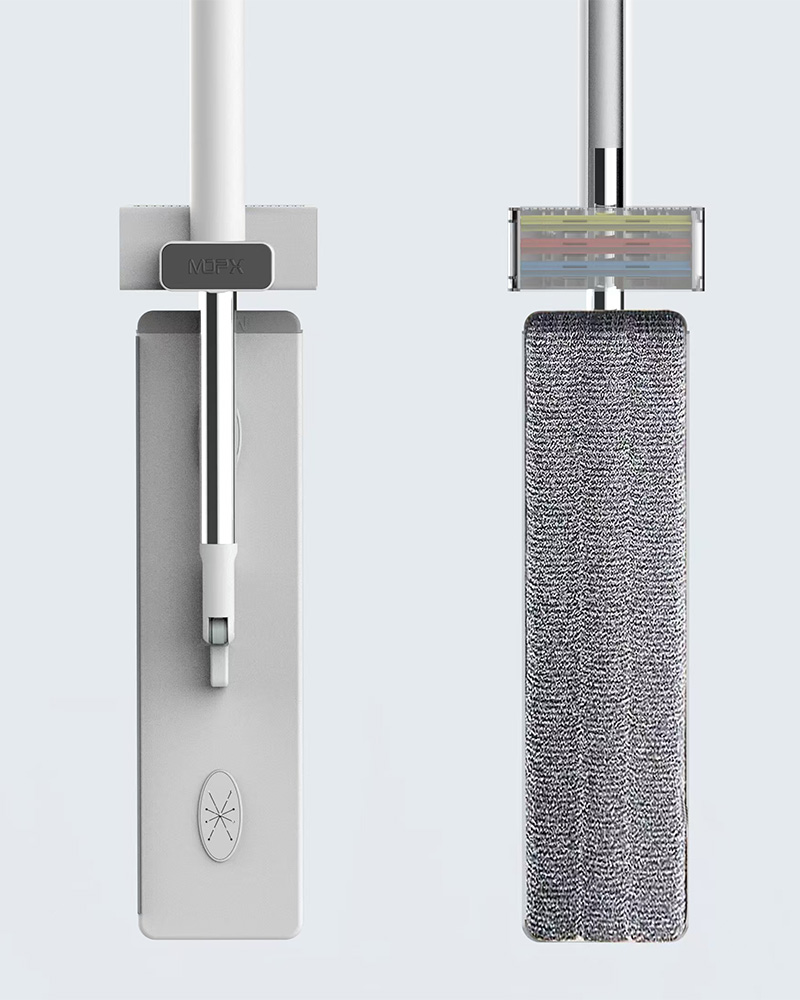
To understand why the flat mop consistently outperforms its rivals, we must look at the design specifications. A standard professional-grade flat mop features a 360-degree swivel head and a low-profile frame. This allows the user to slide the mop under furniture with as little as 2 inches of clearance. Spin mops, with their bulky plastic buckets and circular mop heads, frequently fail to clean under couches, cabinets, and appliances without moving the furniture entirely.
The Microfiber Advantage in Flat Mops
Flat mops utilize advanced microfiber technology. These pads are composed of millions of tiny synthetic fibers that carry a slight positive charge, which literally attracts negatively charged dust and allergens. Research shows that high-quality microfiber flat mops can remove up to 99% of surface bacteria using only water, whereas traditional string-based spin mops often require heavy chemicals to achieve similar results.
- Greater surface area coverage per stroke.
- Superior edge-to-edge cleaning capabilities.
- Lightweight ergonomics reducing user fatigue by 30%.
Data-Driven Performance: Cleaning Time and Water Usage
Efficiency in a commercial or busy residential setting is measured by time and resource consumption. In a controlled test comparing a flat mop to a standard spin mop over a 500-square-foot area, the flat mop completed the task 15% faster. This is primarily due to the "S-motion" cleaning technique that is only possible with a flat, rectangular head.
| Feature | Flat Mop System | Spin Mop System |
|---|---|---|
| Drying Time | 1-2 Minutes | 5-8 Minutes |
| Water Consumption | Minimal (Spray or Damp) | High (Full Bucket) |
| Storage Space | Ultra-Compact | Bulky Bucket Required |
Why Flat Mops are Safer for Modern Flooring
Modern homes often feature sensitive materials such as engineered hardwood, LVP (Luxury Vinyl Plank), and laminate. These floors are highly susceptible to water damage. The core weakness of a spin mop is the potential for "over-wetting." Even after spinning, the mop head often retains enough moisture to seep into the seams of laminate flooring, causing warping and swelling over time.
The flat mop provides precise moisture control. Whether you use a spray-integrated handle or a pre-dampened pad system, the amount of liquid introduced to the floor is controlled and minimal. This ensures that your floors are clean and dry almost instantly, preserving the lifespan of expensive flooring materials. For high-gloss tiles, the flat mop is the only tool that prevents the unsightly circular streaks often left behind by the centrifugal motion of a spin mop.
The Hygiene Factor: Preventing Cross-Contamination
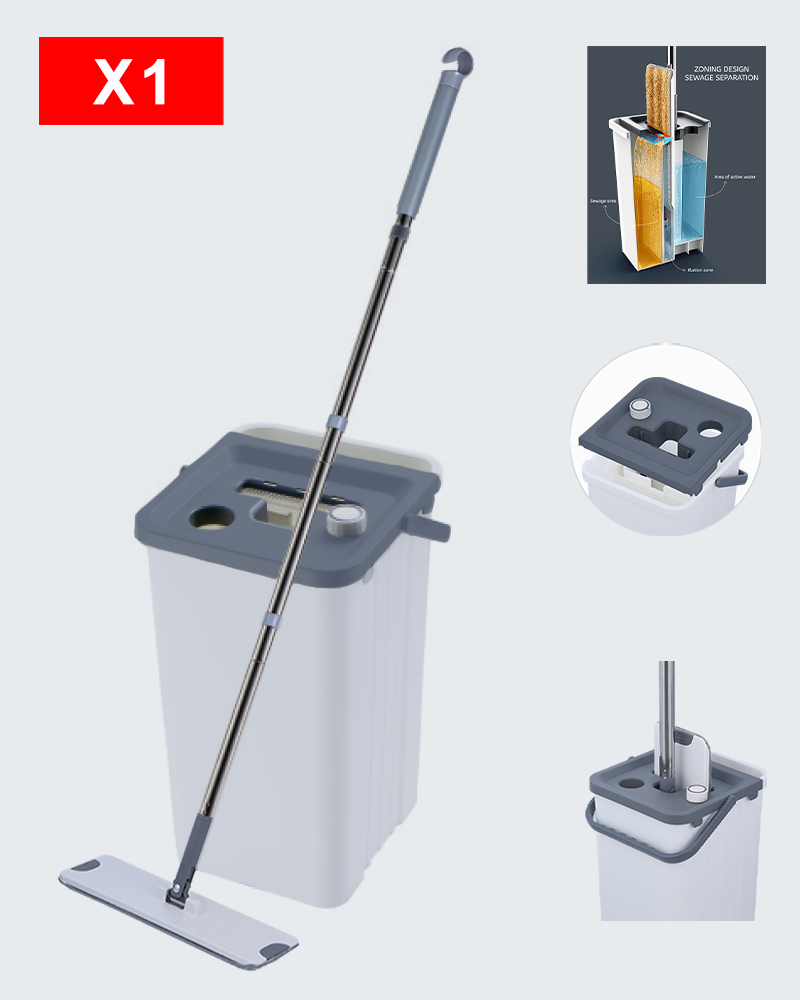
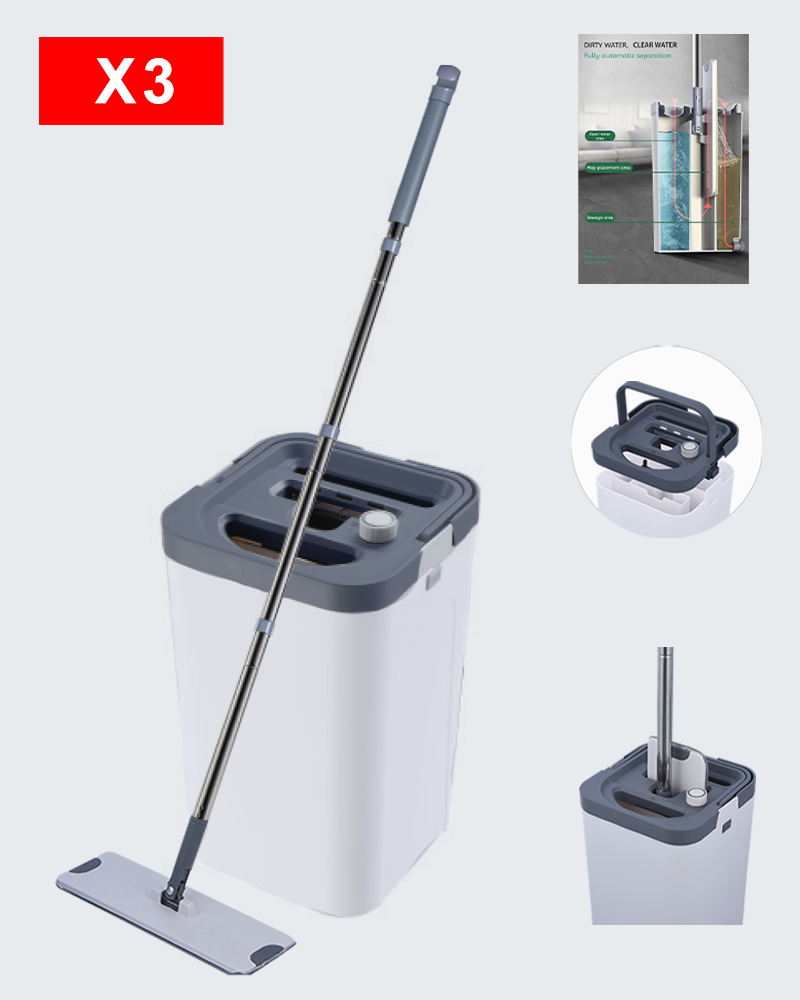
One of the most significant concerns with spin mops is the "dirty water loop." As you rinse a spin mop in its bucket, you are effectively dipping the mop back into a concentrated solution of the dirt you just removed from the floor. Even with "dual-chamber" spin buckets, the complexity of the mechanism makes it difficult to keep the cleaning solution truly pristine.
A flat mop system solves this through its modular pad design. In professional settings, a new pad is used for each room. This prevents cross-contamination between the bathroom and the kitchen—a critical health benefit. Furthermore, flat mop pads are machine washable and can withstand up to 500 wash cycles, ensuring you are always cleaning with a fresh, sterile surface rather than a graying, bacteria-harboring string mop head.
Frequently Asked Questions About Mop Selection
Are flat mops good for textured tiles?
Yes. While some believe only string mops can reach into grout lines, modern scrubbing flat mop pads are designed with varying fiber lengths specifically to agitate and lift dirt from textured surfaces and deep grout lines without the splashing associated with spin mops.
How often should I replace the pads on my flat mop?
For residential use, a high-quality microfiber pad lasts between 6 to 12 months. Unlike spin mop heads that become tangled and frayed, flat mop pads maintain their shape and cleaning efficacy through hundreds of machine washes.
Is a flat mop better than a spin mop for pet hair?
Absolutely. Spin mops tend to push pet hair around or leave it clumped on the floor. The electrostatic properties of a dry flat mop pad act as a magnet for pet hair, making it an excellent dual-purpose tool for both sweeping and mopping.
Does a flat mop take more effort to wring out?
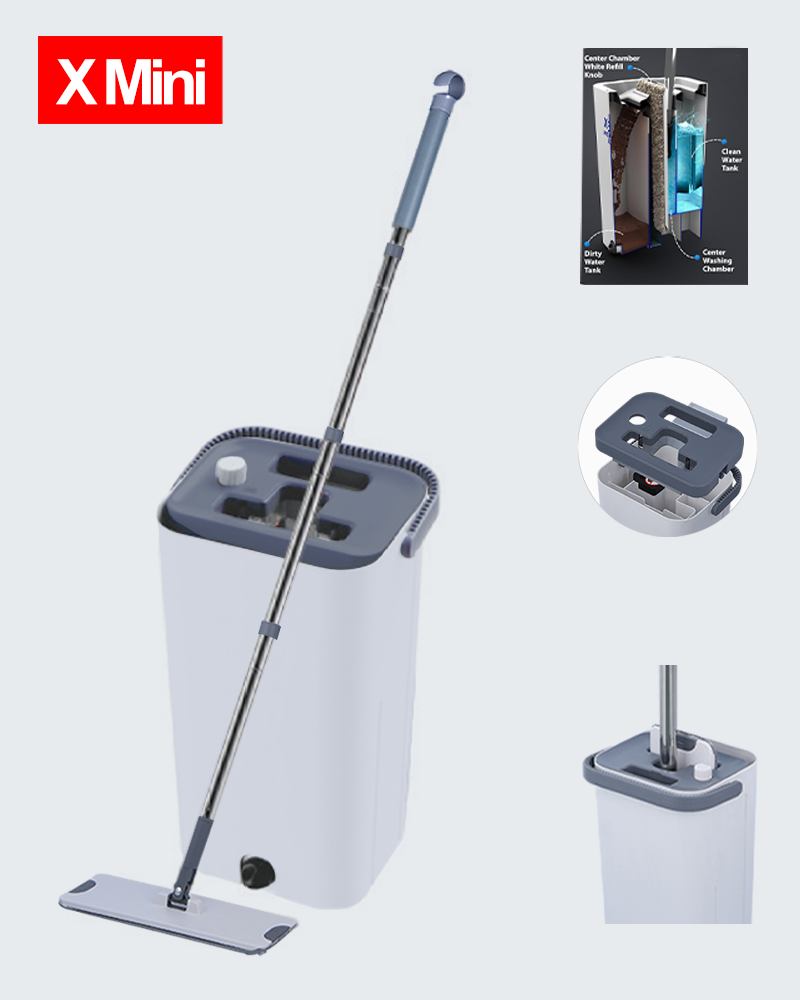
Not at all. Modern flat mop systems come with hands-free wringing buckets that are much more compact and easier to use than spin mop pedals, which are prone to mechanical failure over time.