
 English
 Español
 中文简体

Content
A buyer approves a 300 gsm mop pad sample in March, then receives a June production lot that pushes water across the floor instead of lifting it. The weight printed on the label is identical. The cloth is not. On a flat mop, 300 gsm is the most common starting specification for good reasons, but it measures area density, not cleaning performance. Two cloths at the same weight can differ in water pick-up, drying speed, and wash life by a third once fiber blend, pile structure, and backing are taken into account.
This guide covers what 300 gsm actually measures, how it compares with 250 and 350 gsm pads, which construction details decide whether a 300 gsm cloth performs, and what to check before releasing a bulk order.
What 300 gsm measures, and what it leaves out
GSM stands for grams per square meter, the area density of a fabric, typically tested to ISO 9073-1 or ASTM D3776. A 300 gsm cloth weighs 300 grams per square meter, or about 0.03 grams per square centimeter. The face of a 42 by 12 cm mop pad covers roughly 0.05 square meters, so the face fabric alone weighs about 15 grams. A finished pad with backing, stitching, and a hook-and-loop strip usually lands between 35 and 55 grams.
That number is useful because it travels well through a supply chain. It is easy to specify, easy to weigh, and easy to compare between quotations. What it does not tell you is how the weight is built. A dense, low-pile 300 gsm knit behaves very differently from a lofty terry loop at the same weight, and a pad with a laminated waterproof backing carries grams that never touch water.
| GSM band | Water pick-up per 45 g pad | Air drying time | Behaviour after 50 washes | Typical fit |
|---|---|---|---|---|
| 200 to 250 | 90 to 150 g | 35 to 45 minutes | Pile flattens, edges curl | Light duty, dry dusting, small flats |
| 260 to 300 | 130 to 220 g | 45 to 60 minutes | Moderate flattening, holds shape | General household wet mopping |
| 310 to 350 | 180 to 260 g | 60 to 80 minutes | Good resilience, slightly stiff | Large areas, daily heavy use |
| 360 and above | 220 to 300 g | 80 to 100 minutes | Durable but slow to dry, may jam wringers | Heavy soiling, check wringer slot first |
Why 300 gsm sits in the practical middle
Three forces meet at 300 gsm: how much water a pad can carry, how long it takes to dry, and how well it survives laundering. Move down to 220 gsm and the pad is light and quick to dry, but it wrings out to a damp film and needs two or three passes over the same stretch of floor. Move up to 380 gsm and the pad holds more water, yet it becomes stiff, slow to dry, and prone to dragging under a light mop plate.
At 300 gsm, a finished pad in the 40 to 50 gram range typically takes up somewhere between 130 and 220 grams of water, enough for a normal room before wringing. That translates into fewer trips to the bucket and a thinner film of water left behind, which matters on laminate and sealed timber where standing water dulls the finish.
The weight also affects hardware compatibility, which buyers often overlook. A pad that measures 12 mm thick at 300 gsm may compress fine through a press-style wringer, while a 16 mm pad at 400 gsm can bind in the slot, tear at the stitching, or ride up on the mop plate. Before approving a heavier cloth, confirm the thickness against the actual bucket the pad will ship with, not a lab sample of the mop head alone.
Cost per wash, not cost per piece
A 300 gsm pad usually costs more per unit than a 220 gsm pad but less than a 350 gsm one, and the interesting number sits in between. If a 250 gsm pad needs replacing after 40 washes and a 300 gsm pad lasts 70, the cost per clean square meter favors the heavier cloth even at a higher unit price. Ask suppliers for wash-cycle data rather than assuming a straight line between weight and life.
Where two 300 gsm cloths part ways
Weight is the entry ticket. The following details decide whether the cloth cleans.
- Fiber blend. Standard split microfiber is roughly 80 percent polyester and 20 percent polyamide. The polyamide component absorbs water and gives the cloth its softness; dropping to 10 percent saves cost and reduces pick-up. All-polyester cloth at 300 gsm can feel substantial yet behave like a thirsty sponge that releases water poorly.
- Denier after splitting. True microfiber splits to roughly 0.1 to 0.3 denier per filament. A cloth made from 1.0 denier or coarser filament weighs the same but lacks the fine capillary structure that traps grease and fine dust.
- Pile construction. Terry loop pile holds more water and resists flattening; cut pile releases soil into the bucket more readily and dries faster. Both can hit 300 gsm.
- Backing and lamination. A mesh or brushed backing adds grip, a thermoplastic film adds barrier properties, and a hook-and-loop panel adds convenience. None of these grams absorb water, so a 300 gsm laminated pad may carry only 250 gsm of working cloth.
- Finishing residue. Wetting agents, softeners, and optical brighteners can leave a film that slows water absorption in the first few washes. A fresh pad that beads water for ten seconds before soaking is usually carrying residue, not lacking weight.
For a closer look at how fiber selection changes hygiene outcomes rather than just hand feel, see this note on fiber material and disinfection efficiency in flat mops.
Matching cloth weight to the mop and bucket system
A 300 gsm pad is a sensible default for household wet mopping, but it is not the right answer for every bucket. Separation systems that keep clean and dirty water apart reward a slightly heavier cloth, because the pad can load up with soil and release it into the dirty chamber without carrying grime back across the floor. Compact buckets used in bathrooms and balconies favor a lighter, faster-drying pad, while large-capacity units used on long floor runs benefit from 320 to 350 gsm to reduce wringing frequency.
The practical rule is to fix the bucket first, then specify the cloth. Pad thickness, edge stiffness, and backing grip all interact with the wringer and the mop plate, and a cloth that performs well in a hand-wring test can still fail in a press wringer.
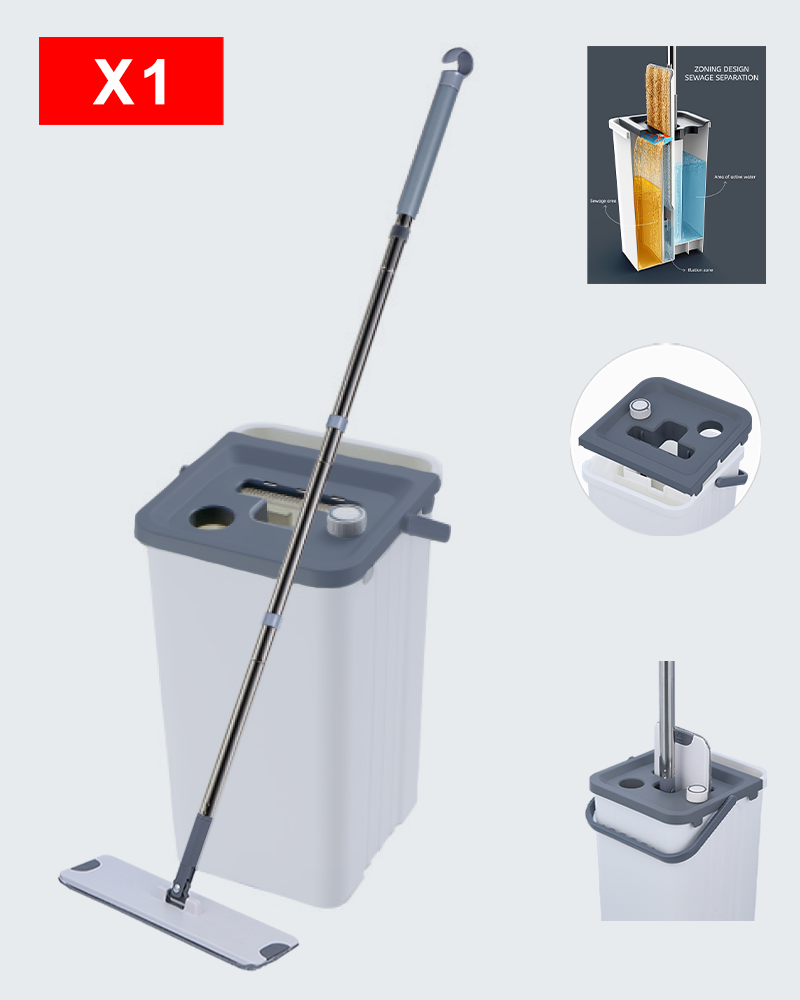
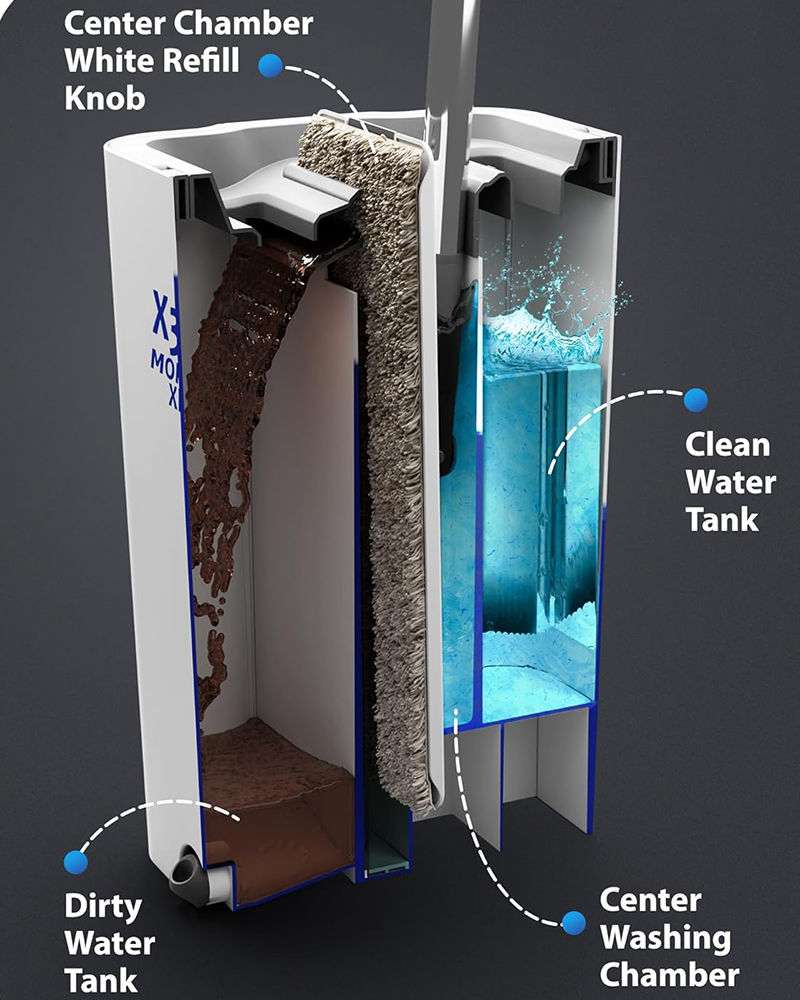
 Mopx Dual Zone Dual Control Separation Mop Bucket SetDual-zone, dual-control bucket separates clean and dirty water and lets wash and wring zones run independently, supporting heavier pad wringing.View Product →
A dual-zone, dual-control separation bucket suits 300 gsm pads because the wash and wring zones can be operated independently, so a heavier, water-laden pad is squeezed rather than dragged through clean water.
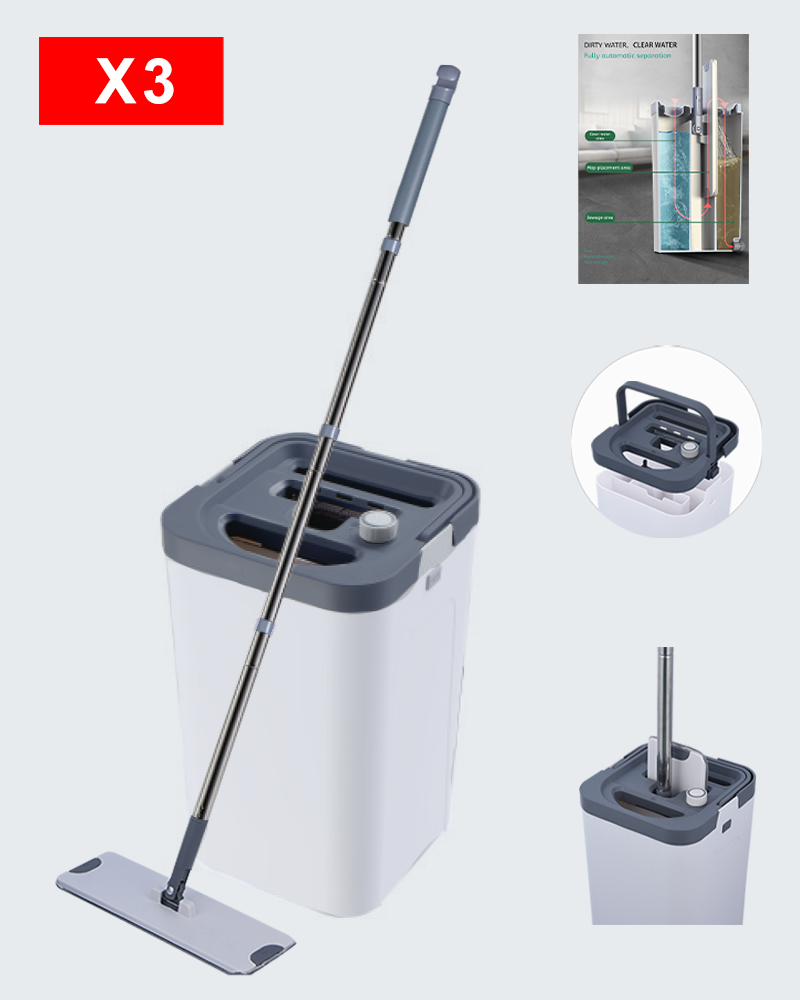
 Professional Mopx Big Capacity Flat Mop Bucket SetLarge-capacity flat mop bucket set with clean and dirty water separation, suited to long corridors and large floors where fewer refills per shift matter.View Product →
For long corridors, retail floors, and other large areas, the big-capacity professional configuration pairs naturally with denser 320 to 350 gsm pads, cutting the number of refills per shift.
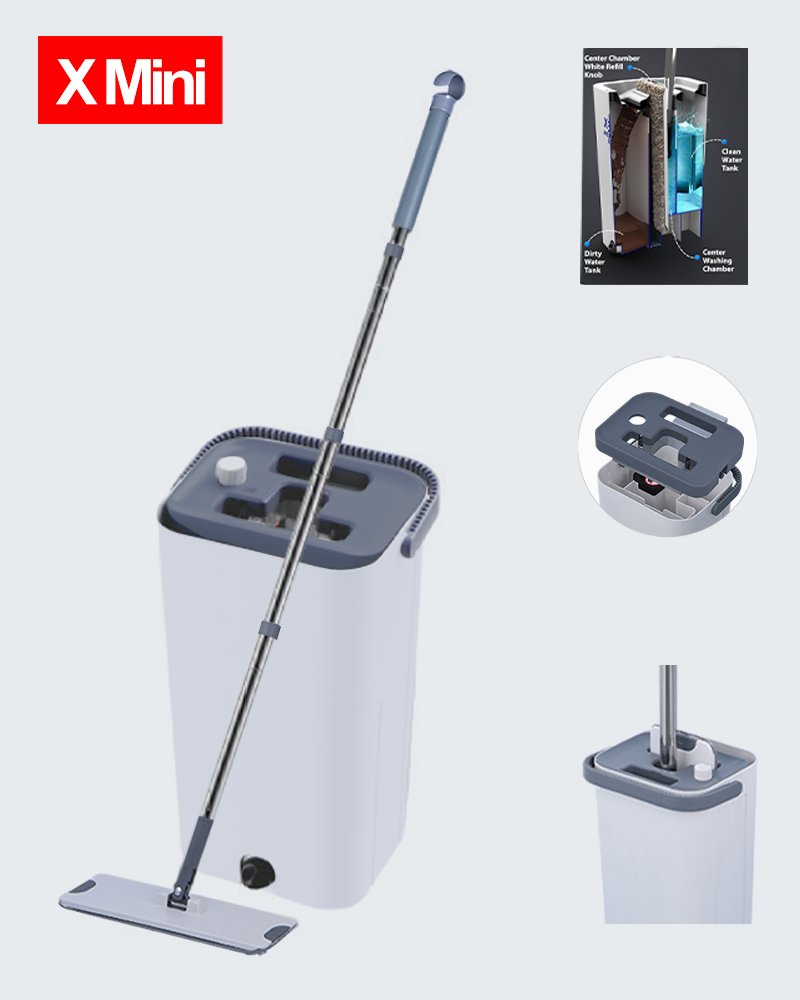
Wet And Dry Use Mopx Mini Flat Mop Bucket SetCompact wet-and-dry flat mop set with separated clean and dirty water, suited to small apartments and secondary bathrooms where quick-drying light pads help.View Product →
Small apartments and secondary bathrooms work better with the mini wet-and-dry set, where a 250 to 280 gsm pad dries quickly between uses and still handles dust on the dry pass. The full range of flat mop bucket sets follows the same logic of one mop platform with bucket variants for different floor areas and water-handling needs.
What to verify before approving a 300 gsm sample
Specify the test, not just the number, and put the tolerance in the purchase order. A five percent band is common and realistic for knitted cloth; a supplier quoting 300 gsm with no tolerance is describing a target, not a specification.
- Area density. Die-cut 100 square centimeters from five positions across the roll, weigh each on a 0.01 gram scale, and multiply by 100 to convert to grams per square meter. Record the average and the spread.
- Wash shrinkage. Run ten cycles at 40 degrees Celsius to ISO 6330, then re-measure length and width. Shrinkage above five percent changes the fit on the mop plate and shortens the pad edge life.
- Absorption rate. A drop of water on the surface should sink within about three seconds. Slower wetting points to finishing residue or a high polyester share.
- Lint and colourfastness. Rub a dark-coloured pad with a white cloth and check the crocking grade; anything below grade 4 will mark light floors and skirting boards.
- Thickness and compression. Measure the pad under the load the wringer applies, not on a flat bench, to confirm it will pass through the slot without binding.
Behind the sample, check the supplier system. ISO 9001 certification covers process control, BSCI covers social compliance, and both should be current rather than expired copies. Ask how incoming cloth is inspected, whether roll weight and width are logged per lot, and what the standard production lead time is. A manufacturer running a five-person R&D team with ten or more new models a year typically has the sampling discipline to hold a 300 gsm tolerance, and a factory within 50 km of Ningbo port keeps freight schedules predictable for export orders.
Keeping 300 gsm pads at their rated performance
Most complaints about 300 gsm pads come down to maintenance rather than manufacture. Fabric softener is the biggest offender: it coats the split fibers and blocks the capillary action that makes microfiber work, and a single softener cycle can leave a pad beading water for weeks. Rinse pads after every use, wash at 40 degrees Celsius without softener or chlorine bleach, and air dry rather than tumble dry, since heat sets the pile into a flattened mat.
Replacement timing matters for hygiene as well as cleaning. Once the pile stays flat when dry, the edges fray, or the pad leaves streaks after a normal wash, the cloth has lost its structure regardless of the weight on the label. A useful reference for cadence is this guide to flat mop replacement frequency and hygiene balance, which sets replacement against actual use intensity rather than a fixed calendar.
300 gsm is a checkpoint, not a certificate. It tells a buyer that the cloth sits in the weight band where absorbency, drying time, and wash life balance out for most flat mop programs, and it gives quality teams a number they can measure against five percent. Everything that decides whether the pad actually cleans sits beside that number: the polyester to polyamide ratio, the split denier, the pile structure, the backing, and the fit against the wringer it will ship with. Specify all of them, test a lot rather than a sample, and the next shipment will behave like the one you approved.