
 English
 Español
 中文简体

Content
- 1 Why Baseboard Dust Comes Back So Fast
- 2 Fiber, Moisture and Order: Three Variables That Change the Result
- 3 Why the Water in the Bucket Matters at the Wall
- 4 A Flat Mop Reaches the Edge Without the Kneeling
- 5 A Cleaning Order That Keeps Edges Cleaner for Longer
- 6 Narrow Gaps, Stairs and Rooms With Little Floor Space
- 7 What Buyers Should Check Before Ordering
- 8 Fitting Baseboard Dusting Into a Routine That Sticks
Baseboard dust is rarely a sign that someone skipped a week of cleaning. In most homes the same thin grey line settles along the wall edge within two or three days of wiping, and the reason usually sits in the room rather than in the cloth. Air movement lifts fine particles, static and a faint tacky film hold them, and the joint where wall meets floor gives them a quiet place to land.
The short version: stop trying to wipe more often, and start controlling the three things that decide how much dust sticks. That means the fiber you use, the amount of water you leave behind, and the order in which you clean the edge and the floor. Get those right and the same task takes roughly half the time, with noticeably longer gaps between passes.
Why Baseboard Dust Comes Back So Fast
Three mechanisms do most of the damage, and they reinforce each other.
First, downward airflow along exterior walls. In cooler months the wall surface runs below room temperature, so air touching it cools, sinks, and slides down the face of the wall. That slow curtain of air carries particles to baseboard height and then spreads them outward across the floor. Edges on outside walls always load up faster than interior partitions.
Second, heating and cooling airflow. Supply vents stir the lowest layer of air in a room, and return grilles pull it back out. What remains is a gentle circulation that keeps fine grit moving along the floor plane until it reaches the wall, where the flow stalls and the particles drop.
Third, static and residue. Semi gloss and satin paint films build a light electrostatic charge, and a cloth that is too wet leaves a micro thin layer of dissolved soil behind. Both surfaces behave like a weak adhesive.
The practical consequence is that an over wet wipe resets the clock. The edge looks clean for a day, then collects dust faster than before, and the conclusion is usually that baseboards cannot stay clean. They can, if the moisture is pulled back and the dust is removed before it bonds.
Fiber, Moisture and Order: Three Variables That Change the Result
These three settings decide whether edge cleaning is a five minute task or a twenty minute one.
Fiber controls whether you capture particles or simply move them through the air. Tightly woven microfiber holds fine dust through electrostatic attraction and capillary action, while a loose duster redistributes it around the room. Moisture controls whether the particle stays put once lifted. Slightly damp is enough, and anything that leaves a visible sheen on paint is already too wet. Order controls how much soil reaches the edge in the first place, because mopping from the wall outward rather than toward it keeps the joint from collecting a wet ridge of dirt.
| Method | Effect at the wall edge | What to watch for |
|---|---|---|
| Feather or wool duster | Lifts light dust but releases much of it back into the air | Fine particles resettle on the same line within hours |
| Dry microfiber cloth | Captures and holds grit through static attraction | Saturates quickly and needs frequent turning |
| Vacuum with a soft brush | Removes sand, hair and grit before any wiping | Stiff bristles can scuff painted edges and caulk lines |
| Flat mop with a damp microfiber pad | Cleans the baseboard base and the floor joint in one pass | Too much water leaves a sticky film that attracts dust |
| Wet cloth with detergent | Removes marks and fingerprints effectively | Unrinsed detergent residue grabs dust faster than bare paint |
Why the Water in the Bucket Matters at the Wall
Most baseboard dust is not dry soil. It is fine grit mixed with skin cells, cooking oils and the washing water that repeatedly gets pushed to the edge of the floor during mopping. Rinse a mop head in a bucket that is steadily getting dirtier, and you return that fine silt to the floor, where it is then driven against the wall and dries into a tacky film. The next layer of dust bonds to it almost immediately.
A separation bucket solves this by keeping the clean washing water apart from what is squeezed out of the mop head. The pad is rinsed in water that is close to clean rather than in the solution it just released, so less suspended soil is carried back to the edges. In practice that means fewer passes before the water in the clean chamber needs changing, and a wall edge that stays smooth instead of gradually turning dull.
The same principle argues for a drier pad near the wall. If the head leaves a wet line on the baseboard, the job is being postponed rather than finished.
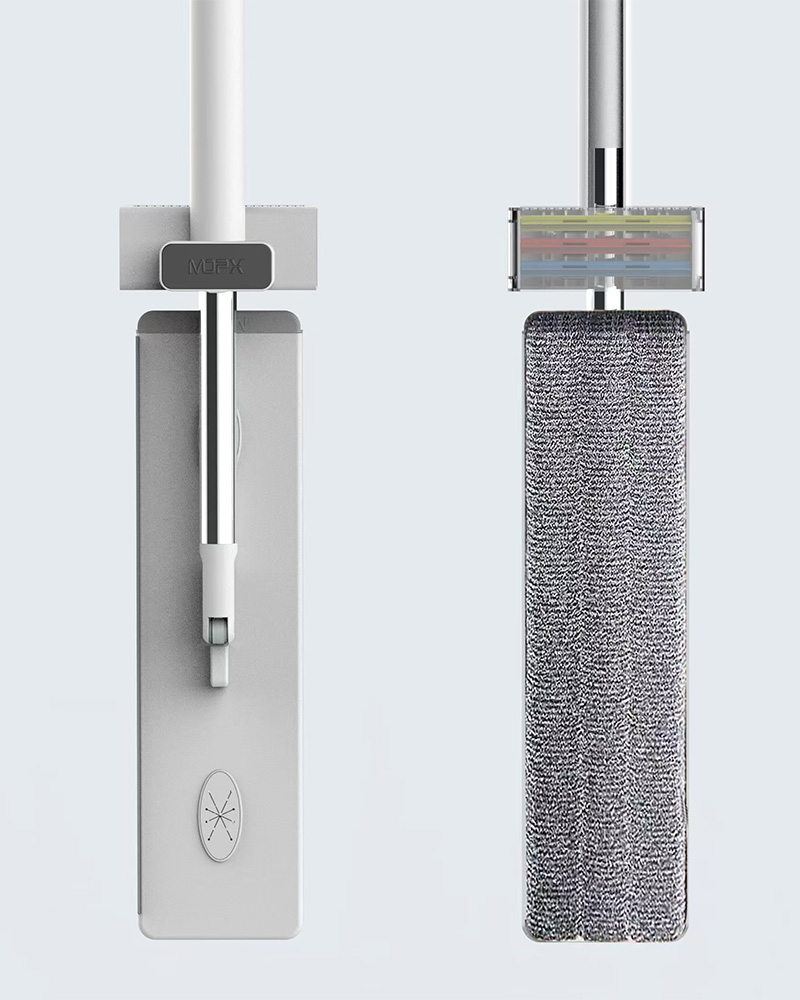
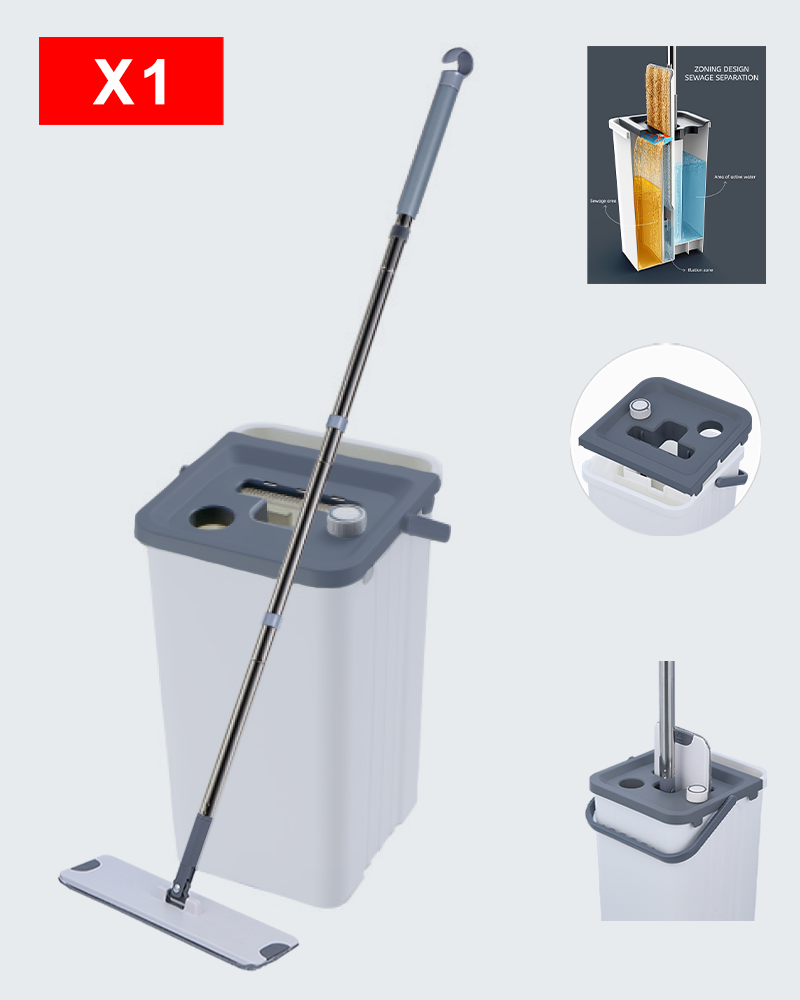
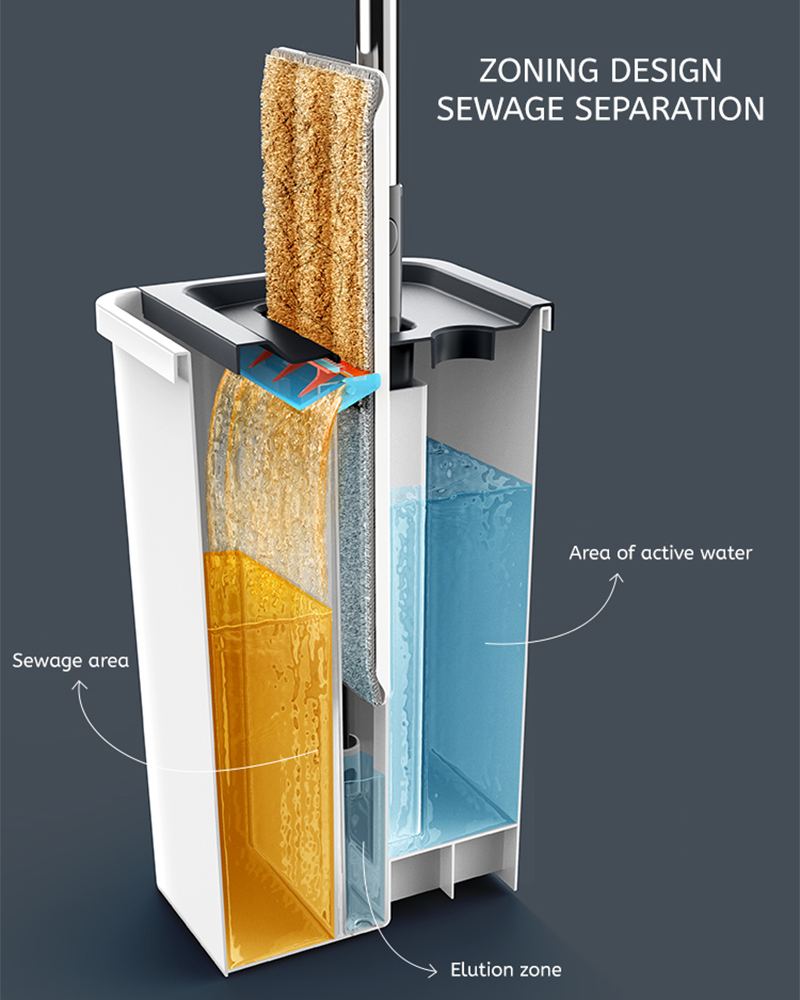 Clean and Dirty Water Separation Flat Mop Bucket SetA flat mop and separated-water bucket set for baseboard and wall cleaning, with a 360° swivel head that follows edges while the user stays upright.View Product →
A Flat Mop Reaches the Edge Without the Kneeling
A cloth in the hand works, but cleaning a four meter wall means crouching four or five times and often smearing dust onto the paint above the board. A flat mop head is low enough to sit against the base of the board and the floor joint behind it, and the swivel joint lets the pad follow the line of the wall while the user stays upright. The operator controls how much of the pad touches the paint, which is the part that prevents scuffing.
That matters for anyone repeating the task: a household doing a weekend reset, a cleaner working through serviced apartments, or a store team keeping aisles presentable. The difference between a controlled contact surface and a scrubbing motion is the difference between an edge that stays sharp and one that needs repainting. A closer look at the advantages of flat mops compared to ordinary mops explains why the head geometry, not the handle length, does most of the work.
A Cleaning Order That Keeps Edges Cleaner for Longer
Sequence is free. It costs nothing and it removes a large share of the repeat work.
- Work from the top down. Shelves, window sills and cabinet tops first, so nothing lands on a surface you have already finished.
- Vacuum dry before any wiping. Run a soft brush or a bare floor tool along the base of the board to lift sand and hair that would otherwise be dragged across the paint.
- Dust with a dry microfiber cloth or a dry pad, turning to a clean face after each wall. This step removes the bulk of the load.
- Wipe with a damp, not wet, pad. Move from the wall toward the middle of the room, never back into the joint.
- Rinse the pad between rooms. One fresh fill per room is cheaper than reworking an edge that has been coated in dirty water.
A hands free washing system makes steps four and five realistic on a normal schedule, because the pad is rinsed without being handled and the dirty water is separated from the clean supply.
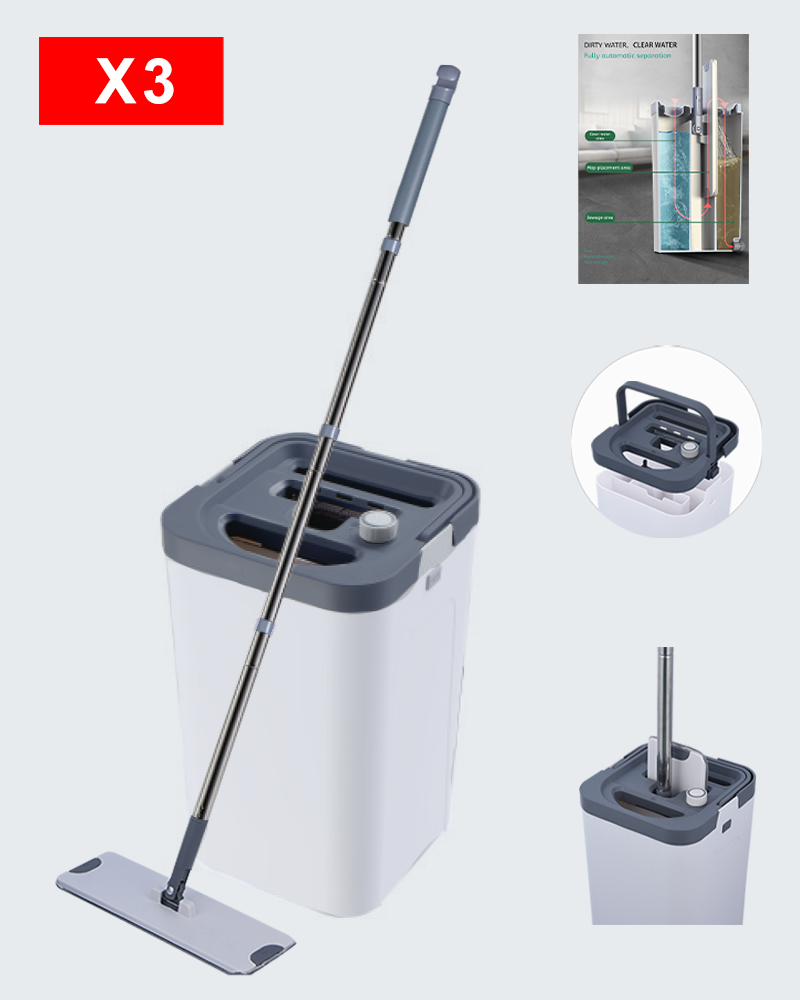
 Hands Free Washing Mopx Flat Mop Bucket SetA hands-free flat mop set with separated clean and dirty water, suited to hallway and bathroom touch-ups without handling the pad.View Product →
Narrow Gaps, Stairs and Rooms With Little Floor Space
Hallways, bathrooms, balcony edges and the strip behind a door are where baseboard dust is most visible and least convenient to reach. A full size bucket is awkward in a 1.2 meter wide corridor, and a wide mop head struggles under radiators and around toilet bases. A compact dry and wet set handles those zones without dragging the main cleaning kit out of the cupboard.
For this kind of spot work, the useful criteria are pad size, wringing force and how well the head fits under a 10 centimeter gap. Mini systems are not a replacement for a full floor clean, but they turn a two minute touch up into something people actually do instead of postponing.
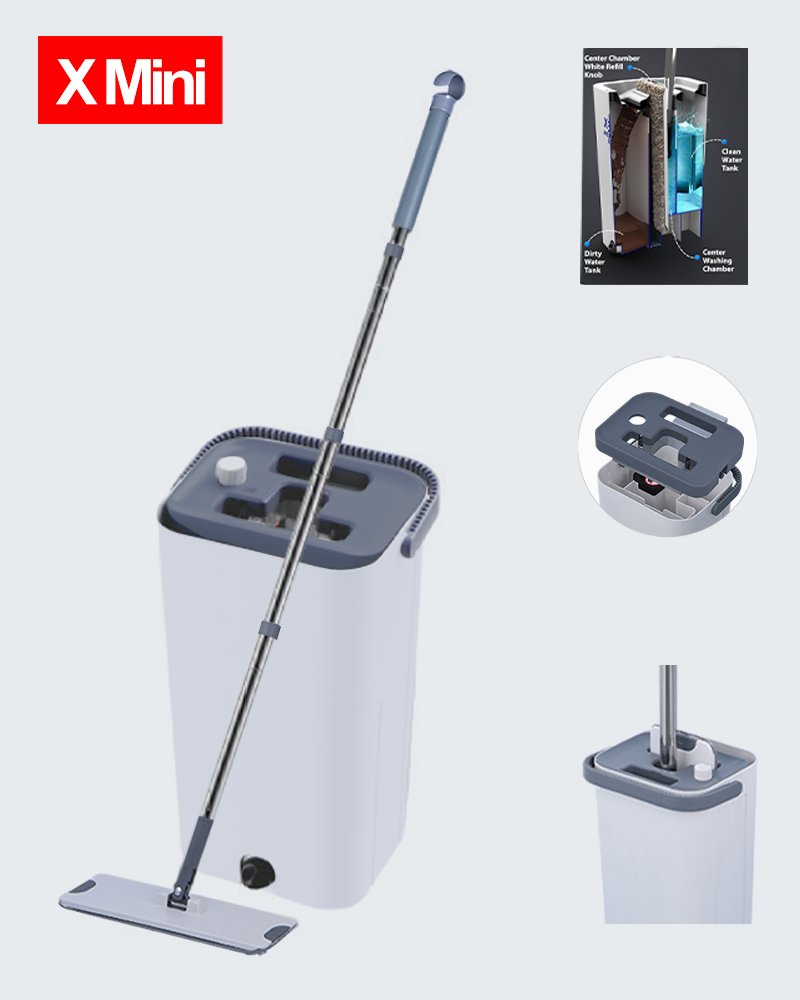
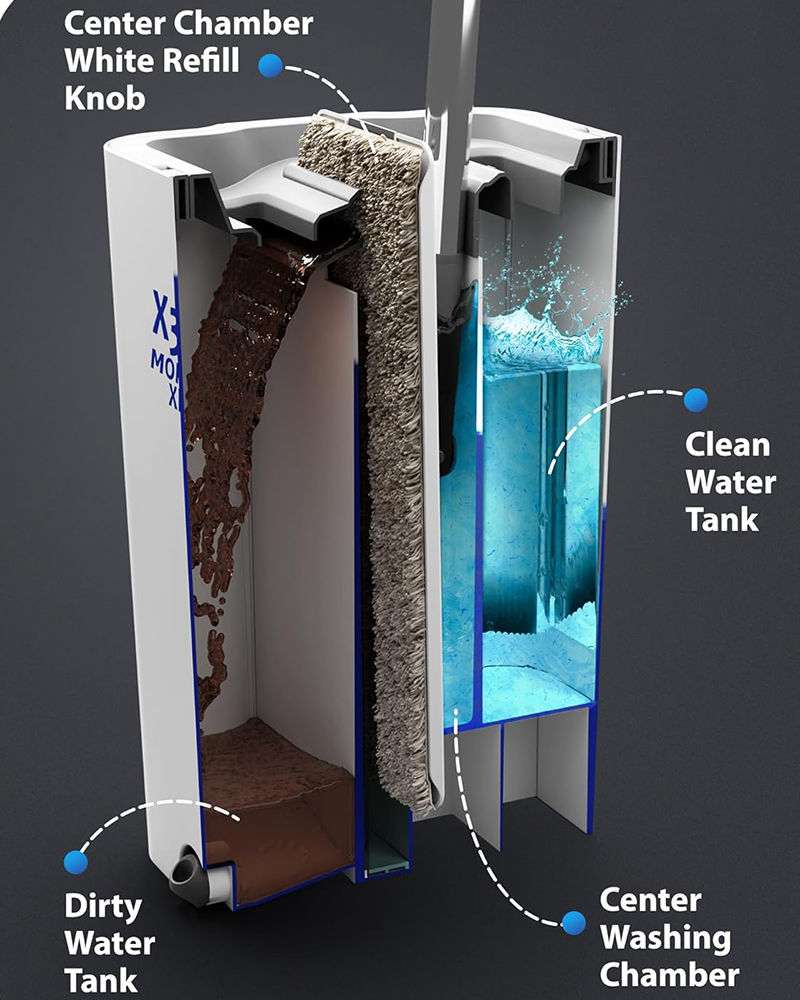 Wet and Dry Use Mopx Mini Flat Mop Bucket SetA compact mini flat mop set with a 360° rotating head and separated water compartments, useful for quick edge and corner touch-ups in small spaces.View Product →
What Buyers Should Check Before Ordering
For retail buyers, private label teams and importers, baseboard dust performance comes down to a few measurable specifications rather than marketing language.
- Pad weight and fiber denier. A pad below roughly 200 grams per square meter tends to shed fibers and saturate too quickly for edge work.
- Water release rate. A pad that drips when lifted will leave streaks on paint; a pad that releases nothing will not clean a floor joint.
- Head height and swivel range. Anything under about 5 centimeters with a 180 degree swivel reaches under radiators and low furniture.
- Bucket capacity and separation design. Chamber volume determines how many square meters can be cleaned before a water change.
- Certification and materials. ISO 9001 and BSCI documentation, plus recyclable polymer content, are increasingly requested in European and North American tenders.
- Lead time and tooling. Confirm the sampling window, mold ownership and packing format before committing volume.
A supplier that controls both the mop head and the bucket can tune these variables together, which is why sourcing the two components from one factory usually produces a more consistent result than assembling them from separate vendors.
Fitting Baseboard Dusting Into a Routine That Sticks
Cleaning frequency matters less than the conditions around it. Indoor relative humidity between 40 and 60 percent keeps static low and dust heavier, so it settles instead of circulating. Below about 30 percent, synthetic surfaces charge more readily and the same particles keep returning to the same line.
A workable rhythm looks like this: vacuum floors weekly with a brush pass along the walls, dry dust the boards every second week, and reserve the damp pass for monthly or for visible marks. In heating season, add one extra dry pass on exterior walls, because those are the edges doing most of the collecting.
Baseboard dust is a small problem with a mechanical cause. Airflow delivers the particles, static and residue hold them, and too much water guarantees the next layer arrives faster. Control the moisture, capture with tight microfiber instead of moving dust through the air, and clean in an order that keeps soil away from the joint. The line along the wall will still come back, but it will come back slower, and removing it will take a fraction of the time.