
 English
 Español
 中文简体

Content
- 1 Why the trim and the floor are one decision
- 2 Matching baseboard material to the floor underneath
- 3 A cleaning sequence that protects the baseboard line
- 4 Clean water is the part most routines get wrong
- 5 Large floors, fewer refills
- 6 Tight rooms and dry pickup
- 7 What trade buyers should confirm before ordering
Replacing a floor usually pushes the baseboard decision into the last week of the project. Reuse the old trim, buy new, or leave the wall bare. The workable answer is to keep a baseboard, choose its material according to the moisture the room will actually see, and settle how the floor to wall joint will be cleaned before the trim is fixed. Bare walls above new flooring leave the expansion gap visible, collect dust in a line that no vacuum head reaches, and force every mop stroke to stop short of the wall.
The phrase baseboard floor is not one product. It describes the meeting point of two: the finished walking surface and the trim that covers the gap between that surface and the wall. Buyers who treat them as a single line item usually pay for it later, either in swollen MDF or in a floor edge that never comes fully clean.
Why the trim and the floor are one decision
Wood, laminate and many engineered floors need a gap at the perimeter, commonly 6 to 12 mm, so the floor can move as humidity changes. That gap is not decorative and should not be filled with sealant. The baseboard is what hides it. A baseboard also takes the impact that a mop, a vacuum head and a chair leg would otherwise transfer to the painted wall.
Typical residential baseboard heights sit between 70 and 150 mm, with 90 to 120 mm covering most modern interiors. Taller profiles suit high ceilings and older properties. A base shoe, the small moulding at the bottom, lets the trim sit flat over uneven flooring and makes the joint easier to wipe. Check local building practice, because the same profile is called skirting, base moulding or baseboard depending on the market.
Matching baseboard material to the floor underneath
The pairing that fails most often is MDF trim in a room where the floor is regularly wet mopped. MDF is stable and takes paint well, but a swollen edge does not recover. PVC and cellular PVC trim cost more and can look slightly different under paint, yet they tolerate bathrooms, laundry rooms and entryways without changing shape.
| Floor surface | Common baseboard pairing | What it means for cleaning |
|---|---|---|
| Solid hardwood | Painted pine or hardwood trim with base shoe | Use a damp mop, never a wet one, because standing water at the edge darkens the grain |
| Laminate and engineered wood | MDF in dry rooms, moisture resistant core near sinks and doors | Water left at the seam swells the trim before the floor shows damage |
| Luxury vinyl plank | PVC or composite trim, often without base shoe | The floor tolerates moisture, but grit collects in the corner and needs a dry pass first |
| Ceramic and porcelain tile | Tile skirting or PVC trim | The grout line at the base traps residue and needs a soft brush or an edge scrub |
| Wall to wall carpet | Standard painted trim, no base shoe | The mop head should stop at the carpet edge so fibres do not wick moisture |
A cleaning sequence that protects the baseboard line
Work downward and finish at the wall. A dry pass with a microfibre pad lifts loose dust from the floor and from the top edge of the trim before any water is introduced, which stops that dust from turning into a film along the bottom edge. Wet work comes second, and the mop should be damp rather than dripping.
Two details decide the result. The first is reach, because a low profile head with a rotating joint gets under radiators, behind toilet bases and along the toe kick without bending the handle. The second is pressure at the edge, since the last 20 mm against the baseboard is where film builds up fastest.
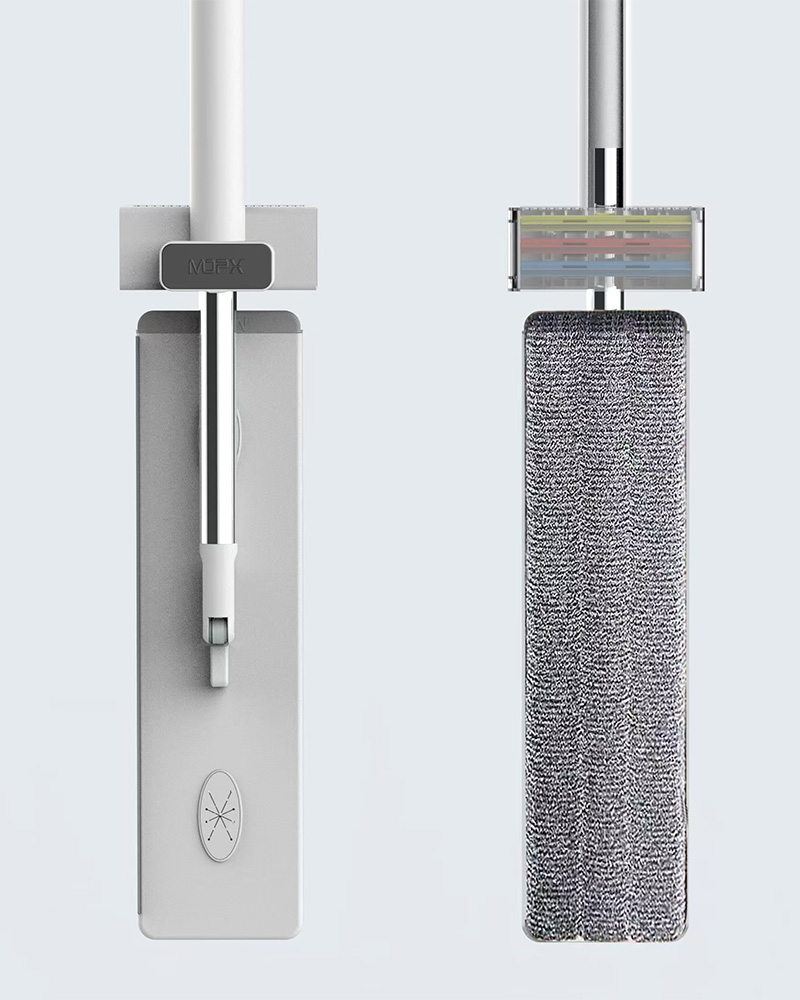
This is why head design matters more than fibre alone in corridors and along wall lines. A rotating mop head makes the turn along the baseboard without lifting the pad, and the same platform carries a dry or a wet pad depending on the pass.
Clean water is the part most routines get wrong
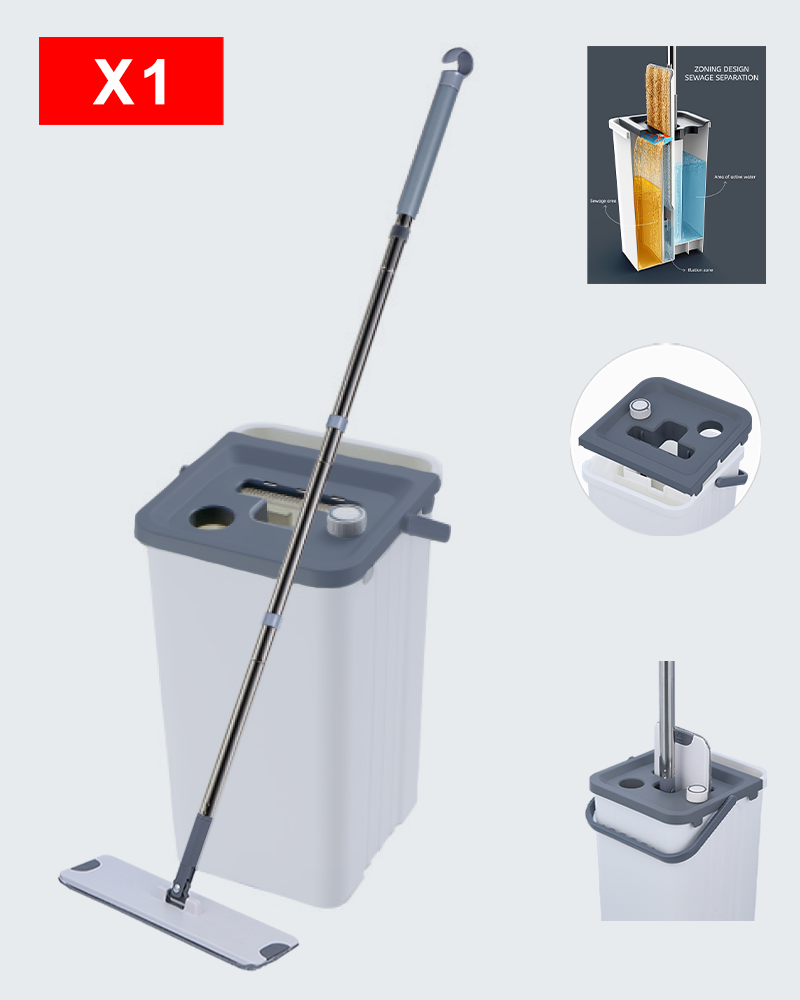
One bucket that starts clean and ends dirty means the final square metres are wiped with the soil lifted from the first. Along a baseboard the effect is easy to see, because loaded water is pushed into the joint and left there. A separation system keeps rinse water and dirty water apart, so the pad returns to the floor with clean water instead of a suspension of grit.
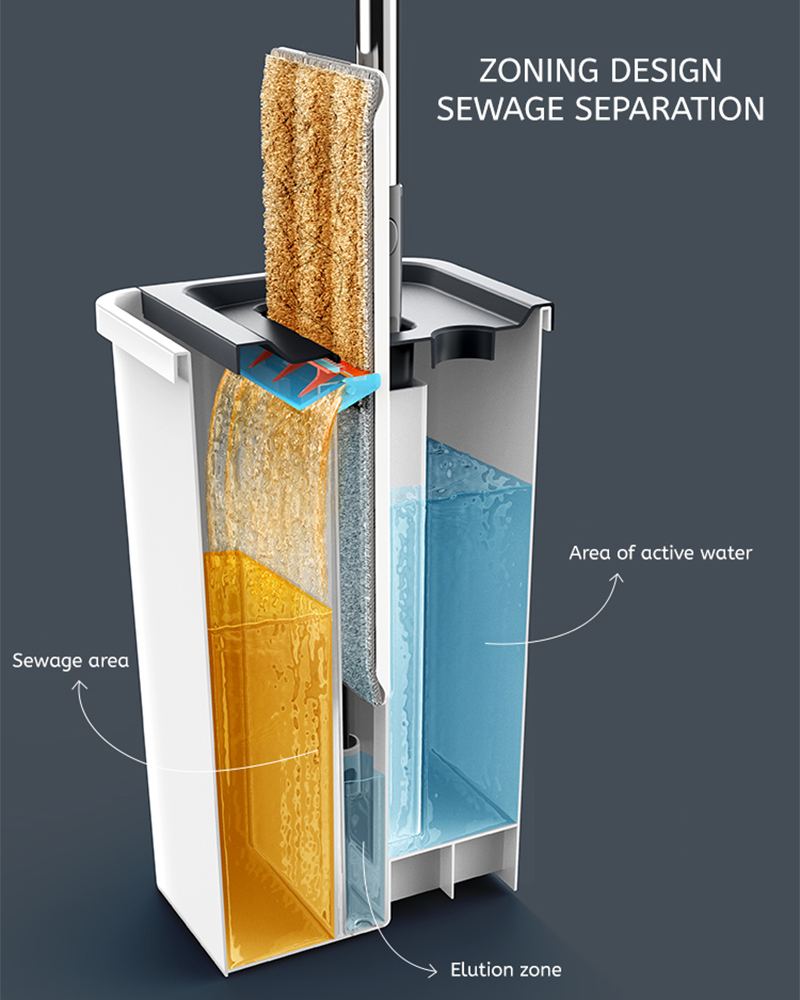 Clean and Dirty Water Separation Mop Bucket SetSeparate clean and dirty water compartments keep rinse water apart from collected grit, supporting cleaner mopping across mixed floor finishes.View Product →
In a home with two or three floor finishes the same logic applies. The pad should be rinsed before it moves from a tiled kitchen onto wooden flooring, otherwise grit collected on tile is now being pressed along a softer edge.
Large floors, fewer refills
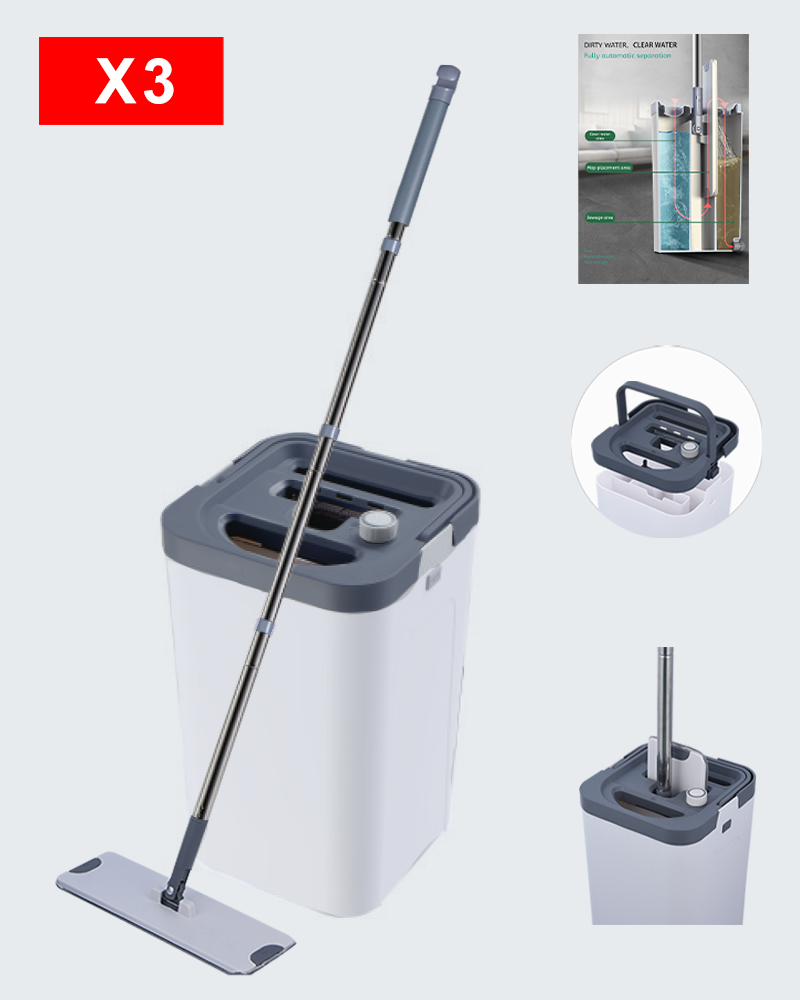
Open plan living areas, long hallways and small commercial rooms change the calculation. Above roughly 60 square metres per fill, the constraint is capacity rather than technique, and stopping to refill or empty a small bucket mid floor breaks the sequence and leaves the last stretch done with tired water.
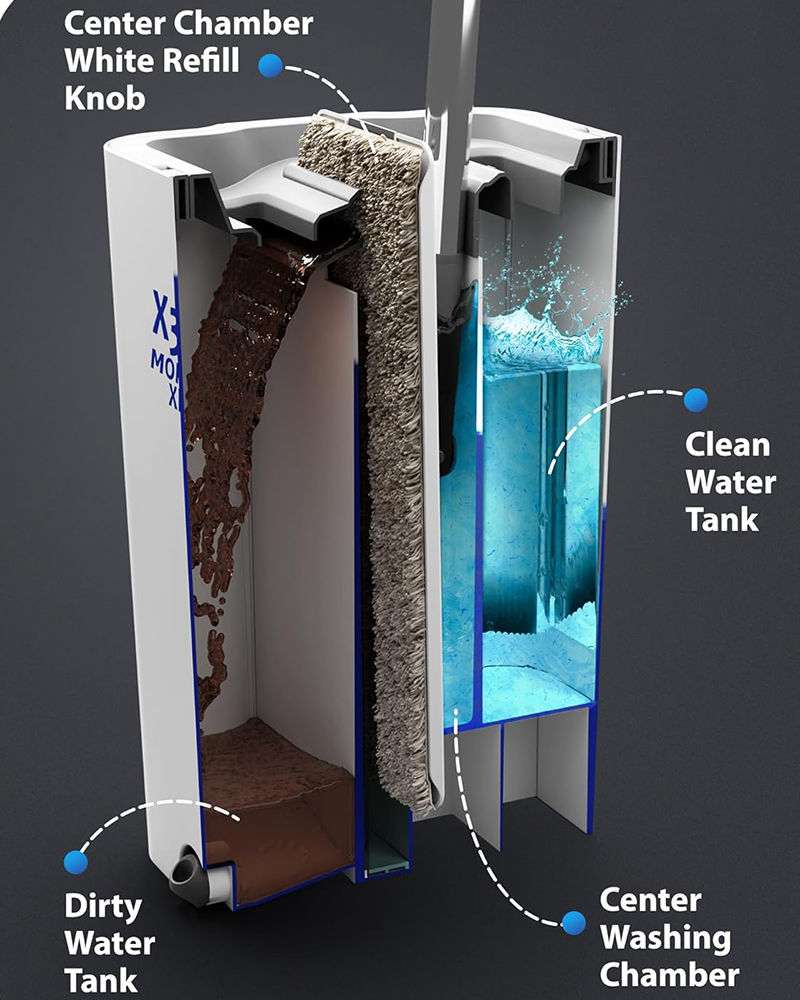 Professional MOP X Big Capacity Flat Mop Bucket SetLarge clean and dirty water capacities reduce refills during longer sessions, making it suitable for open-plan rooms and small commercial spaces.View Product →
Capacity is a buyer decision as much as a cleaner decision, because a larger bucket reduces labour time per square metre but takes more storage space in a retail carton. On the tool side, MOP X builds a single flat mop platform and pairs it with different bucket systems, which keeps pads and spare parts simple across a range.
Tight rooms and dry pickup
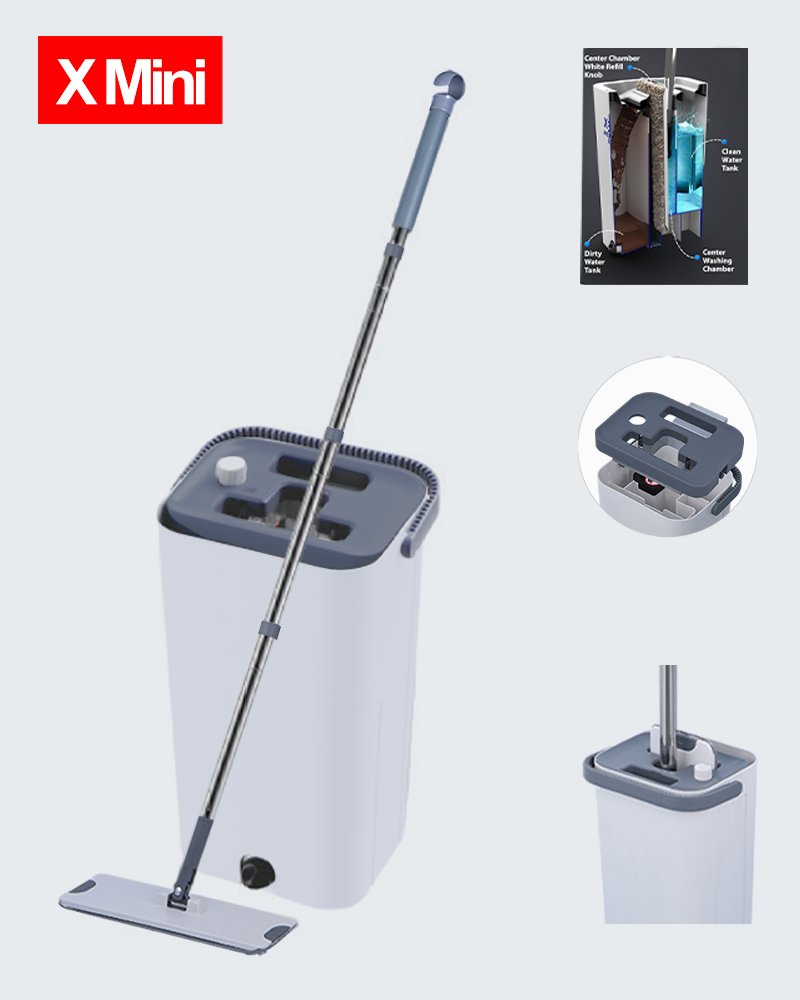
Bathrooms, balconies and small entryways rarely need a full bucket. They need a tool that works dry for hair and dust, damp for a spill, and then stores in a space narrower than a mop head. A mini set covers that case and keeps the main bucket in the utility room.
MOP X Mini Wet and Dry Flat Mop Bucket SetCompact set handles dry dusting and damp spills while separating clean and dirty water, fitting bathrooms, entryways and tight storage spaces.View Product →What trade buyers should confirm before ordering
Retail and private label buyers rarely purchase a single mop. They buy a programme that has to stay consistent across seasons. MOP X, the brand of Ningbo Yaxiang Cleaning Products, has worked in household cleaning tools since 2008, supplies more than 50 countries, and builds its flat mop and bucket range around the separation principle, with more than 40 national patents covering the series. Points worth confirming before a purchase order:
- Trim and mop clearance: request pad thickness and head height, then check both against the baseboard height and any base shoe in the target market
- Water handling: confirm whether the bucket separates rinse water from dirty water, and how the wringer behaves when the bucket is only half full
- Material declaration: recycled content is now a common tender requirement, and the manufacturer should state it per component rather than per carton
- Certification: ISO 9001 covers process control and BSCI covers social compliance, and both should be current rather than simply held at some point
- Lead time: a 30 day order to shipment cycle is realistic for a focused factory, but it depends on pad and carton artwork approval dates
- Logistics: a plant roughly 50 km from Ningbo port shortens inland transport, which matters most on repeat orders and mixed containers
The company runs a five person development team and reports at least ten new models a year, so a baseboard friendly head profile is a specification worth requesting where volume justifies tooling, rather than a fixed catalogue item.
The baseboard decision is cheap to get right at installation and expensive to correct later. Choose trim that matches the moisture the room will see, keep the base shoe when the floor is uneven, and plan the cleaning pass so water stops at the trim instead of soaking into it. A flat mop with reach, clean water separation and a pad that lifts dry dust first will keep that joint looking new for the life of the floor.