
 English
 Español
 中文简体

Content
The best cleaner for stone floors is a pH-neutral, stone-safe cleaner mixed at the label dilution and applied with a clean microfiber flat mop. That is the short answer. Stone is not one surface, though, and the wrong product can etch marble or travertine, strip a sealer, or leave a dull film that looks like dirt. A neutral cleaner in the pH 6.5 to 8 range gives the widest margin of safety while still lifting ordinary soil.
This matters most in kitchens, bathrooms, and entryways, where stone meets cooking oil, soap scum, road salt, and grit. A product that feels mild on a glazed tile can still be too acidic for calcium-based stone. The practical choice is to start with the stone type, confirm the cleaner is labeled for it, and then control dilution, dwell time, and water volume.
Why pH-neutral is the safest default for stone floors
Marble, travertine, and limestone contain calcium carbonate. Acid reacts with that mineral and etches the surface. Vinegar, lemon juice, citric acid cleaners, and some bathroom descalers can dull a polished finish in minutes. Etching is not dirt sitting on top of the stone. It is a change in the surface, and mopping harder will not fix it.
Strong alkaline degreasers and bleach-based products create a different risk. They can attack sealers, darken grout, or leave streaks that look like haze. Abrasive powders and melamine pads scratch polished stone and remove the sheen. Neutral surfactants are designed to suspend soil so microfiber can lift it away. That is why a mild cleaner plus good agitation usually outperforms a harsh cleaner plus scrubbing.
pH strips are inexpensive and useful for checking a diluted mix. Testing catches mistakes such as using a concentrate at full strength or mixing a product beyond its label ratio. If the diluted cleaner reads outside the neutral range, do not use it on acid-sensitive stone.
Match the cleaner to the stone, not just the room
A cleaner labeled for natural stone is the first filter. The second filter is the specific stone and finish. Honed marble, polished travertine, cleft slate, and sealed granite behave differently, and a sealer can change how a cleaner affects the surface.
| Stone type | Main risk | Best cleaner approach | Practical note |
|---|---|---|---|
| Marble, travertine, limestone | Acid etching, abrasives, strong alkali | pH-neutral stone cleaner at label dilution | Blot spills first. Avoid vinegar and lemon juice even in small amounts. |
| Slate | Acid dulling, sealer damage, over-wetting | Low-foam pH-neutral stone cleaner | Use less water on cleft or textured finishes and dry edges. |
| Granite | Sealer breakdown, streaks, bleach damage | pH-neutral cleaner labeled for sealed granite | Rinse if the label requires it. Do not assume acid resistance means acid is safe. |
| Quartzite | Variable mineral reaction, sealer sensitivity | pH-neutral stone cleaner after a patch test | Quartzite is not uniform. Test a hidden area before whole-floor use. |
| Engineered quartz | Resin damage from strong alkali or bleach | pH-neutral, non-abrasive cleaner | Avoid abrasive pads and harsh degreasers even though the surface is not natural stone. |
| Terrazzo | Alkali attack on binder, dulling, residue | pH-neutral cleaner matched to the binder and finish | Check the floor supplier guidance for cement-based and resin-based terrazzo. |
What a stone-safe cleaner label should tell you
Marketing words are less useful than a clear pH statement, a stone-safety claim, and a dilution ratio. Look for the following details before buying a concentrate or a ready-to-use product.
- A stated pH range or a clear pH-neutral claim, with a natural stone or stone-safe claim on the same label.
- No hydrochloric, phosphoric, citric, acetic, or sulfamic acid. No bleach, ammonia, or pumice.
- A dilution ratio for normal maintenance and a separate ratio for heavy soil if one exists.
- A residue-free claim only if it is credible for stone. Many neutral cleaners still need a clean-water rinse.
- Sealer compatibility guidance, especially for penetrating sealers and topcoat sealers.
- Low-foam behavior for flat mops and bucket systems. Excess foam leaves film and slows drying.
Scent and dye do not improve cleaning performance. Unscented, low-dye products reduce the chance of residue and are a sensible choice for large stone areas.
A safe mopping routine that protects the stone
The cleaner is only half the job. Water volume, mop condition, and rinsing decide whether the floor dries clear or streaks. Use this sequence for marble, travertine, limestone, slate, granite, quartzite, engineered quartz, and terrazzo.
- Dust mop or vacuum first with a soft microfiber pad. Grit acts like sandpaper under a wet mop.
- Mix the cleaner in a clean bucket at the label ratio. Keep rinse water separate from wash water when possible.
- Dip the microfiber mop, wring it until it is damp rather than dripping, and work in small sections.
- Let the cleaner dwell only for the label time. Do not let it dry on the stone.
- Rinse with clean water if the label calls for it, then dry the surface with a separate microfiber pad.
- Keep traffic off the floor until it is fully dry, and check the sealer at least once a year.
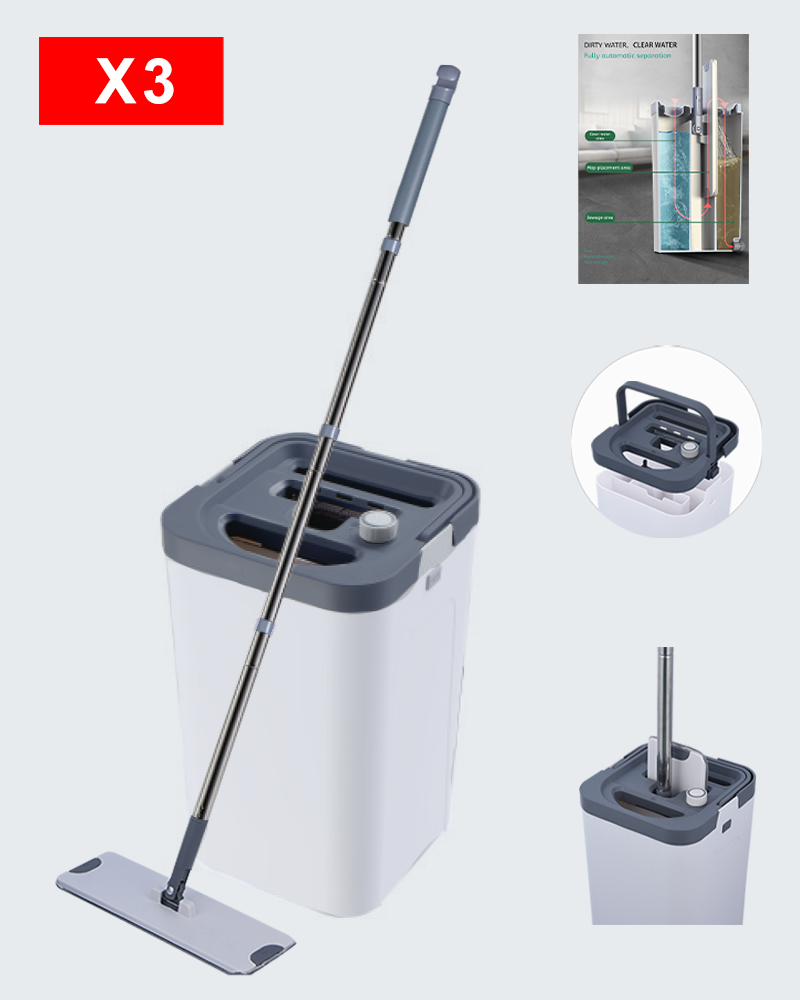
A bucket with clean and dirty water separation keeps rinse water cleaner for longer during large jobs. This is useful on stone because reusing dirty water spreads grit and oily film back across the surface. After the job, follow the steps to clean and maintain a flat mop after use so the microfiber does not carry grit into the next room.
 Clean and Dirty Water Separation Flat Mop Bucket SetKeeps clean and dirty water separate during larger stone-floor jobs, helping maintain cleaner rinse water and reduce grit spread.View Product →
On open stone floors, capacity affects technique. A bucket that runs dry or fills with dirty water forces extra trips and encourages over-wetting. A larger bucket system can keep the mix consistent and reduce the temptation to pour more cleaner onto the floor.
 Professional Big Capacity Flat Mop Bucket SetLarge-capacity separation system supports longer cleaning sessions with fewer refills, helping keep mix consistent on open stone floors.View Product →
Mistakes that make stone look dull
Most stone floor problems are avoidable. The common ones are not exotic chemical failures. They are ordinary habits repeated over time.
- Using vinegar as a regular floor cleaner on marble, travertine, or limestone.
- Pouring cleaner directly on the stone instead of diluting it in a bucket.
- Leaving standing water around grout lines, edges, and cabinet toe kicks.
- Using bleach, ammonia, or abrasive powder to remove a stubborn mark.
- Mopping with a dirty microfiber pad that has already picked up grit.
- Applying a new sealer over old sealer without stripping or testing first.
- Using a steam cleaner without checking the stone and sealer guidance, because steam can force moisture into vulnerable areas.
When cleaning is not enough
Some marks are not soil. A white ring or dull patch on marble may be etching. A cloudy area on slate may be sealer failure or efflorescence. A dark patch near a shower or exterior door may be moisture trapped under the surface. In those cases, a stronger cleaner is the wrong response. Use a stone restoration specialist to identify the issue before attempting polishing, stripping, or resealing.
For routine maintenance, keep one cleaner that is labeled for the stone, one clean microfiber mop, and one rinse bucket. Consistency matters more than product strength. A neutral cleaner used correctly every week will protect the finish better than a harsh product used once and followed by a repair bill.
The best cleaner for stone floors is the one that matches the stone, stays within a neutral pH range, and is applied with controlled water and a clean microfiber mop. Confirm the label, test a hidden area, rinse when required, and dry the surface. That routine keeps marble, travertine, limestone, slate, granite, quartzite, engineered quartz, and terrazzo looking clear without trading everyday soil for permanent surface damage.