
 English
 Español
 中文简体
中文简体
Content
- 1 How a Flat Mop Works: Design and Mechanics
- 2 Flat Mop vs. Traditional Mop Types: Performance Comparison
- 3 Flat Mop Pad Types: Choosing the Right Material for Your Floor
- 4 Seven Reasons a Flat Mop Is Worth Using Every Day
- 4.1 Lightweight Design Reduces Physical Strain
- 4.2 No Bucket Required for Routine Cleaning
- 4.3 Microfiber Pads Outperform Chemicals on Bacteria
- 4.4 Reusable Pads Are Economical and Sustainable
- 4.5 360-Degree Swivel Head Reaches Everywhere
- 4.6 Versatility: One Tool for Sweep, Dust, and Mop
- 4.7 Pad Hygiene Is Vastly Better Than Traditional Mop Heads
- 5 Where Flat Mops Have Limitations: Being Honest About Trade-Offs
- 6 Is a Flat Mop Safe for Your Specific Floor Type?
- 7 How to Use a Flat Mop Correctly for Best Results
- 8 What to Look For When Buying a Flat Mop
Yes — a Flat Mop is genuinely good for most household and commercial floor cleaning tasks, and in many situations it outperforms traditional string or sponge mops in speed, hygiene, and ease of use. Consumer surveys consistently show that flat mop users report 30 to 40% faster floor cleaning compared to traditional mop styles, largely due to the wide, low-profile head that covers more floor surface per stroke and slides under furniture with ease (Source: Good Housekeeping Institute Floor Cleaning Study, 2022).
Flat mops work by using a microfiber or cotton pad attached to a flat rectangular head, which glides across hard floor surfaces — hardwood, tile, laminate, vinyl, and stone — picking up dust, debris, and liquid through either dry sweeping or damp mopping action. The design is ergonomic, lightweight, and — when paired with reusable, washable pads — significantly more cost-effective and environmentally friendly than disposable alternatives over the product's lifetime.
That said, flat mops are not ideal for every situation. They perform less effectively on heavily textured or grouted floors where a traditional string mop can force liquid deeper into crevices, and they are generally not the first choice for cleaning up large liquid spills that require high-absorbency. Understanding where flat mops excel and where they have limitations is the key to making an informed buying decision. This guide covers all of it in practical depth.
How a Flat Mop Works: Design and Mechanics
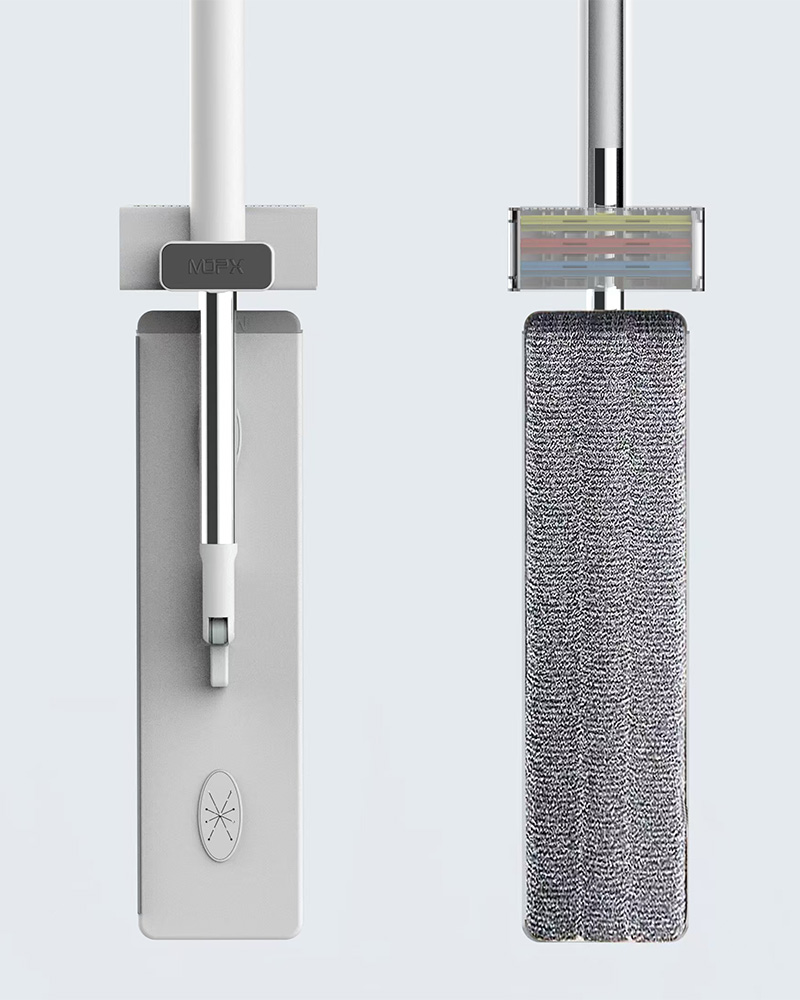
The flat mop's effectiveness comes from its fundamental design geometry. A rectangular or trapezoidal cleaning head — typically 30 to 60 centimeters wide — is attached to a telescoping handle via a swivel joint. The cleaning pad attaches to the head using hook-and-loop (Velcro-style) fastening, elastic pocket loops, or clip mechanisms, and can be changed in seconds without touching the dirty pad. The swivel joint allows the head to rotate 360 degrees and tilt to follow floor contours, reach under low furniture, and clean along baseboards without the user having to bend or contort.
Dry Sweeping Mode
In dry mode, a microfiber pad uses static electricity and the physical structure of ultra-fine fibers (typically 0.2 to 2 denier) to attract and trap dust, pet hair, and fine debris. Microfiber splits during manufacturing create a vastly larger surface area than conventional fiber — a single square centimeter of high-quality microfiber can contain up to 200,000 individual fiber strands (Source: American Cleaning Institute, Microfiber Technology Overview, 2021). This density makes dry flat mop pads significantly more effective at capturing fine dust than brooms or conventional dust mops, which tend to push debris rather than capture it.
Damp and Wet Mopping Mode
For damp mopping, the pad is lightly moistened with water and cleaning solution, then wrung or left damp before use. Most microfiber flat mop pads can hold 6 to 8 times their own weight in water, giving the user control over moisture application. The low-moisture approach is particularly beneficial for hardwood and laminate floors, where excess water causes swelling, warping, and finish damage over time. Flooring manufacturers including major hardwood associations consistently recommend using a damp (not wet) flat mop as the standard cleaning method for sealed hardwood floors, specifically because the flat mop's controlled moisture application avoids water pooling (Source: National Wood Flooring Association, Care and Maintenance Guide, 2023).
Spray Flat Mop Variant
Spray flat mops add an integrated cleaning solution reservoir in the handle, with a trigger mechanism that sprays a fine mist of solution directly ahead of the mop head. This eliminates the need for a separate bucket entirely and allows precise, targeted application of cleaning solution — particularly useful for spot cleaning and for users who want to use different solutions in different areas of the home. The spray mechanism typically delivers 0.5 to 2 ml per spray, providing controlled and minimal moisture application ideal for delicate floor surfaces.
Flat Mop vs. Traditional Mop Types: Performance Comparison
Understanding how a flat mop compares to alternative cleaning tools helps clarify where it delivers genuine value and where other tools remain more appropriate. The table below provides a structured comparison across the most relevant performance dimensions:
| Feature | Flat Mop (Microfiber) | String / Looped Mop | Sponge Mop | Steam Mop |
|---|---|---|---|---|
| Cleaning Speed | Fast — wide head covers large areas quickly | Moderate — narrower effective coverage | Moderate | Fast, but warm-up time required |
| Dry Dust Collection | Excellent — microfiber traps fine dust | Poor — pushes debris | Poor | Not applicable |
| Damp Cleaning | Excellent — controlled moisture | Good | Good | Excellent |
| Grout and Textured Floors | Moderate — limited penetration | Good | Moderate | Excellent |
| Under-Furniture Reach | Excellent — low profile head | Poor | Poor | Moderate |
| Hardwood Floor Safety | Excellent — low moisture | Poor — excess water risk | Moderate | Moderate — check manufacturer |
| Weight and Ergonomics | Very light (typically 0.5 to 1.2 kg) | Heavier (1.5 to 3 kg wet) | Moderate | Moderate to heavy (2 to 3.5 kg) |
| Hygiene | High — pads washed between uses | Low — string head hard to clean | Low — sponge harbors bacteria | High — steam kills bacteria |
| Running Cost | Low — reusable pads | Moderate — head replacement | Moderate — sponge replacement | Low — water only |
| Initial Cost | Low to Moderate | Low | Low | High |
The comparison table makes clear that the flat mop leads on ergonomics, dust capture, hardwood floor compatibility, under-furniture reach, and hygiene — four of the dimensions that matter most in everyday residential cleaning. Its limitations are most visible in deep grout cleaning and large liquid spill absorption, which are scenarios where a string mop or dedicated squeegee is more appropriate.
Flat Mop Pad Types: Choosing the Right Material for Your Floor
The cleaning pad is the most important component of any Flat Mop system, and choosing the right pad material for your specific floor type and cleaning task has a significant effect on both cleaning performance and floor protection. The following overview covers the main pad material categories and their optimal applications.
Microfiber Pads
Microfiber pads are the standard and most widely recommended pad type for flat mops. They are made from a blend of polyester and polyamide (nylon) fibers split to diameters of 0.2 to 2 denier — far finer than a human hair (typically 50 to 70 denier). This splitting creates wedge-shaped fiber cross-sections that act as microscopic scrapers and traps for dirt, bacteria, and liquid. Independent laboratory testing has shown that microfiber pads remove up to 99% of bacteria from hard floor surfaces when used damp with plain water, compared to 30% removal with a conventional cotton mop and water alone (Source: University of California Davis Medical Center, Microfiber vs. Cotton Mop Bacterial Removal Study, published in the American Journal of Infection Control, 2012). Microfiber pads are machine washable at 60 degrees C and can withstand 300 to 500 wash cycles before performance degrades, making them highly economical over time.
Cotton Pads
Cotton flat mop pads offer higher absorbency than microfiber and are preferred for wet mopping tasks involving larger volumes of liquid. Cotton is also a natural fiber that is free from synthetic materials, making it a preferred choice for users who prioritize natural or hypoallergenic cleaning products. The trade-off is lower dust capture in dry mode (cotton does not generate static charge as effectively as microfiber), slower drying time after washing, and a shorter useful lifespan — typically 100 to 200 wash cycles before fiber breakdown reduces performance.
Chenille Pads
Chenille pads feature a looped, textured pile structure that provides higher surface contact with moderately textured floors. The loops can work into shallow grout lines and surface irregularities better than a flat microfiber pad, making chenille an effective compromise between the dust-capturing capability of microfiber and the textured-floor performance of a string mop. Chenille pads are commonly used on glazed ceramic tile, textured vinyl, and natural stone with a brushed or honed finish.
Disposable Pads
Disposable flat mop pads — typically dry electrostatic sheets or pre-moistened disposable cloths — are designed for single-use convenience. They eliminate the need to wash and dry pads between uses, which is an advantage in high-traffic commercial environments with strict hygiene protocols or in healthcare settings where cross-contamination between rooms must be absolutely prevented. The environmental and cost trade-off of disposable pads is significant over time: a household using disposable flat mop pads once per week generates approximately 52 pad units of plastic-containing waste per year per mop, compared to near-zero waste for a reusable microfiber system. For most residential users, reusable pads are the more sustainable and cost-effective choice.
Pad Selection Guide by Floor Type
| Floor Type | Best Pad Type | Moisture Level | Notes |
|---|---|---|---|
| Sealed hardwood | Microfiber | Damp only | Avoid excess moisture; check manufacturer's guidance |
| Laminate | Microfiber | Damp only | Water can penetrate seams and cause swelling |
| Smooth ceramic tile | Microfiber or Cotton | Damp to wet | Non-porous surface; any pad works well |
| Textured or grouted tile | Chenille | Wet | Loops penetrate grout lines better |
| Vinyl / LVP | Microfiber | Damp | Microfiber safe for most vinyl coatings |
| Natural stone (polished) | Microfiber | Damp | Use pH-neutral cleaner; avoid acidic solutions |
| Concrete (sealed) | Cotton or Chenille | Wet | Higher absorbency needed for concrete dust |
| High-traffic commercial hard floor | Disposable or industrial microfiber | Damp | Hygiene protocols may require single-use per area |
Seven Reasons a Flat Mop Is Worth Using Every Day
Lightweight Design Reduces Physical Strain
A typical flat mop head and handle system weighs between 0.5 and 1.2 kilograms — significantly less than a traditional wet string mop with its loaded cotton head and bucket-dependent weight. This weight difference matters considerably for users with back problems, joint pain, or reduced upper body strength, and for anyone who needs to clean large floor areas on a regular basis. Occupational health research indicates that musculoskeletal complaints associated with mopping are significantly higher among workers using traditional heavy mop systems compared to lightweight flat mop alternatives (Source: Occupational Safety and Health Administration, Ergonomic Guidelines for Cleaning Workers, 2022). The flat mop's long, adjustable handle also reduces the need to bend, making it suitable for users of all heights.
No Bucket Required for Routine Cleaning
Spray flat mops and pre-moistened pad systems allow complete routine floor cleaning without filling, carrying, or emptying a bucket. Eliminating the bucket step alone saves an estimated 3 to 5 minutes per cleaning session — a time saving that compounds significantly for users who clean frequently. It also removes the bucket as a source of cross-contamination: traditional bucket mopping repeatedly dips a dirty mop head into cleaning solution, rapidly degrading solution cleanliness and spreading contaminants across the floor rather than removing them.
Microfiber Pads Outperform Chemicals on Bacteria
The bacteriological performance data for microfiber is compelling. As noted above, damp microfiber removes up to 99% of surface bacteria using only water — chemical disinfectants are not required for routine floor cleaning in standard residential environments. This has practical benefits beyond cost: it reduces chemical exposure for children, pets, and allergy sufferers who spend time on floors, and it eliminates the residue that chemical cleaners can leave on finished surfaces, which attracts dust and dulls floor finishes over time.
Reusable Pads Are Economical and Sustainable
A set of 4 to 6 high-quality microfiber replacement pads — sufficient to last a week of daily cleaning before laundering — typically costs far less than the equivalent in disposable cleaning sheets or traditional mop head replacements over a 12-month period. At 300 to 500 wash cycles per pad, a set of microfiber pads can last 2 to 5 years under typical household use. Over a 3-year period, a reusable flat mop system costs an estimated 60 to 75% less in consumables than a disposable sheet-based mopping system (Source: Environmental Working Group, Household Cleaning Product Cost Analysis, 2022).
360-Degree Swivel Head Reaches Everywhere
The pivoting swivel joint that connects the flat mop handle to the head is one of the design's most practically valuable features. It allows the mop head to:
- Slide completely flat under beds, sofas, and cabinets to reach dust and debris that accumulates in these zones
- Clean along baseboards and into corners without the handle obstructing movement
- Follow the user's natural walking direction without requiring awkward repositioning
- Clean stairs using a figure-8 or diagonal stroke that covers the full tread width
Versatility: One Tool for Sweep, Dust, and Mop
A flat mop with microfiber pads replaces three separate cleaning tools: a broom (or vacuum for pre-cleaning), a dust mop, and a wet mop. By switching between a dry pad and a damp pad, the same tool handles the complete floor cleaning sequence — dry sweep to capture loose debris, followed by damp mop to clean the surface — without putting down and picking up different tools. This consolidation is particularly valuable in smaller homes, apartments, or storage-limited environments.
Pad Hygiene Is Vastly Better Than Traditional Mop Heads
Traditional string and sponge mop heads are notoriously difficult to clean thoroughly between uses. The tangled fibers and sponge structure trap moisture, bacteria, and organic material, creating conditions for rapid microbial growth. Research published in the American Journal of Infection Control found that conventional mop heads used in healthcare settings harbored bacterial counts of 100,000 to 1,000,000 colony-forming units per gram of fiber after standard cleaning (Source: American Journal of Infection Control, 2015). Flat mop pads — flat, smooth, and fully machine washable at bactericidal temperatures — are fundamentally more hygienic by design.
Where Flat Mops Have Limitations: Being Honest About Trade-Offs
An honest evaluation of any cleaning tool must include its weaknesses alongside its strengths. Flat mops are highly effective in the majority of everyday cleaning scenarios, but the following situations reveal their limitations:
Deep Grout Cleaning
The flat, planar pad of a standard flat mop sits on the surface of the floor and does not force cleaning solution or scrubbing action into recessed grout lines. For deeply soiled or stained grout, a string mop (whose individual strands can work into the grout channel), a dedicated grout brush, or a steam cleaner is significantly more effective. For routine maintenance of grouted tile floors where grout cleaning is not the primary task, a flat chenille mop provides adequate performance.
Large Liquid Spills
For cleaning up large liquid spills — a knocked-over bucket, a significant kitchen mess, or post-party floor cleanup — a flat mop pad's absorbency, while respectable, is typically lower than a large-head string mop. A flat mop pad holding 6 to 8 times its weight in liquid may need to be wrung out and re-applied multiple times to absorb a significant spill, whereas a large string mop can absorb more volume per application and be wrung into a bucket more naturally.
Heavily Textured or Uneven Surfaces
Natural stone with a rough or cleft finish, highly textured terracotta tile, or irregular brick flooring do not suit the flat pad geometry well. The rigid rectangular head cannot flex to follow significant surface relief, leaving valleys and low points inadequately cleaned. For these surfaces, a string mop or scrub brush provides better contact with the full surface area.
Outdoor and Industrial Scale Cleaning
Flat mops are designed for indoor hard floor surfaces. For outdoor cleaning (patios, driveways, garage floors), the flat pad's relatively gentle cleaning action is insufficient for the level of soiling typical of outdoor surfaces. Similarly, for industrial cleaning involving large areas with heavy contamination — factory floors, warehouse aisles, food processing environments — industrial wet mop systems or auto-scrubbers are the appropriate tools.
Is a Flat Mop Safe for Your Specific Floor Type?
One of the most common questions about flat mops concerns their safety for different floor finishes. The good news is that a correctly used flat mop with the appropriate pad is safe for virtually all indoor hard floor surfaces. The risk factors are almost always moisture-related rather than abrasion-related — microfiber is non-abrasive and will not scratch or dull any properly sealed floor finish.
Hardwood Floors
A damp (not wet) microfiber flat mop is the recommended cleaning method for sealed hardwood floors by leading flooring associations. The key practice is to wring the pad thoroughly so it feels barely damp to the touch, and to move with the grain of the wood. Avoid leaving standing water or using a saturated pad. For engineered hardwood, the same principles apply — the thin real wood veneer layer is even more susceptible to moisture damage than solid hardwood, making the flat mop's controlled moisture application an advantage over any wet mopping method.
Laminate Floors
Laminate flooring is sensitive to water because the particleboard or HDF core beneath the decorative layer absorbs moisture readily, causing swelling and joint separation. Most laminate flooring manufacturers specify that only a damp — not wet — mop should be used, and that no water should be allowed to stand on the surface or penetrate seams. A flat mop with a lightly dampened microfiber pad is the ideal tool for this floor type. A spray flat mop that delivers a controlled mist ahead of the cleaning head is particularly suitable for laminate.
Tile Floors
Glazed ceramic and porcelain tile are the most forgiving of all hard floor surfaces in terms of moisture tolerance. A flat mop can be used damp, wet, or with a cleaning solution on tile without risk of surface damage. The limitation on tile, as noted above, is grout cleaning — a flat microfiber pad provides excellent surface cleaning of the tile itself but limited grout penetration.
Vinyl and LVP (Luxury Vinyl Plank)
Luxury vinyl plank is fully waterproof, but its UV-cured wear layer finish can be dulled by abrasive cleaning materials or harsh chemical cleaners. A flat mop with a microfiber pad and a pH-neutral cleaner is the ideal maintenance method for LVP, providing effective cleaning without chemical or mechanical damage to the finish. The microfiber's fine fibers are gentle enough for use on LVP surfaces with an attached foam backing, which can compress and fail over time if exposed to sustained heavy foot traffic from cleaning equipment.
Natural Stone
Polished marble, travertine, limestone, and slate floors require pH-neutral cleaning agents and non-abrasive cleaning tools. A microfiber flat mop satisfies both requirements and is widely recommended by stone care specialists. The critical rule for natural stone is to avoid acidic cleaners (including vinegar, lemon-based solutions, and most general-purpose bathroom cleaners), which etch the stone surface — regardless of the mop type used. Use only a stone-safe, pH-neutral cleaner with your flat mop on natural stone floors.
How to Use a Flat Mop Correctly for Best Results
Getting the best performance from a flat mop is straightforward, but a few technique details make a meaningful difference in cleaning quality and floor protection. The following step-by-step process reflects best practice for microfiber flat mopping on standard hard floor surfaces.
Dry Sweep First
Always begin with a dry microfiber pad pass before damp mopping. Dry sweeping captures loose dust, crumbs, pet hair, and debris that would otherwise turn into muddy streaks once a damp pad is applied. Work from the far corner of the room toward the door, using overlapping figure-8 or S-pattern strokes rather than back-and-forth pushing motions. The S-pattern keeps captured debris within the pad's fiber structure rather than pushing it back onto the clean floor. When the dry pad is visibly loaded with debris, remove and shake it out or replace it with a fresh pad before continuing.
Prepare the Damp Pad Correctly
For damp mopping, wet the microfiber pad under running water and wring it out until it no longer drips — the pad should feel damp but not wet when pressed against your hand. Alternatively, apply cleaning solution directly to the floor using a spray bottle or the integrated reservoir of a spray flat mop system, working in small sections. For hardwood and laminate, the pad should be only barely damp. For tile and vinyl, a slightly wetter pad is acceptable.
Use the Correct Stroke Pattern
- Start at the far corner of the room and work backward toward the exit to avoid walking over cleaned areas.
- Use a continuous S-pattern or overlapping parallel strokes, maintaining contact between the pad and floor throughout.
- Overlap each stroke by approximately one-third of the mop head width to ensure no strips of floor are missed.
- Tilt the mop handle forward to engage the front edge of the pad along baseboards and corners.
- Flip the pad to the clean side when one side becomes visibly soiled, then replace with a fresh pad when both sides are dirty.
- Allow the floor to air dry for 3 to 5 minutes before walking on it — the low moisture application of a flat mop typically dries in 2 to 4 minutes on standard hard surfaces.
Cleaning and Maintaining Microfiber Pads
- Machine wash microfiber pads at 60 degrees C (140 degrees F) to sanitize effectively and restore fiber performance
- Do not use fabric softener — softener coats the microfiber surface and dramatically reduces cleaning and dust-capture performance
- Do not wash microfiber pads with cotton items — cotton lint embeds in microfiber and reduces effectiveness
- Air dry or tumble dry on low heat — high heat can melt synthetic fibers and damage pad structure
- Shake pads out after use to remove loose debris before washing
- Replace pads when they no longer clean effectively or when microfiber loops visibly break down — typically after 300 to 500 washes
Cleaning Solution Guidance
For most hard floor surfaces, plain water with a damp microfiber pad is sufficient for routine maintenance cleaning. When a cleaning solution is desired:
- Hardwood and laminate: Use a dedicated wood floor cleaner diluted per label instructions, or a few drops of dish soap in a large bucket of water (wring pad very dry)
- Tile and vinyl: All-purpose floor cleaner at recommended dilution; avoid bleach-based products on colored grout
- Natural stone: pH-neutral stone-safe cleaner only — never vinegar, citrus-based, or ammonia cleaners
- Avoid: Concentrated solutions, undiluted detergents, oil soaps on sealed floors, and wax-based products on surfaces not designed for wax
What to Look For When Buying a Flat Mop
Not all flat mops deliver the same performance. The market ranges from entry-level budget options with poor pad attachment and flimsy swivel joints to professional-grade systems built for daily commercial use. The following criteria help identify a flat mop that will genuinely perform and last.
Head Width and Shape
For residential use, a head width of 30 to 40 centimeters provides a good balance between coverage speed and maneuverability in tighter spaces such as bathrooms, kitchens with appliances, and hallways. For open-plan living areas, kitchens, and commercial environments, a wider head of 40 to 60 centimeters reduces the number of strokes needed to cover the same floor area. Trapezoidal or angled-corner head shapes reach into corners more effectively than purely rectangular designs.
Swivel Joint Quality
The swivel joint is the component most likely to fail first in a flat mop system. A quality swivel joint should rotate smoothly through the full 360-degree range without sticking or grinding, and should maintain its angle under pressure without flopping freely when the mop is lifted. Test the joint at purchase if possible, or check user reviews specifically for joint durability. Joints that use a ball-and-socket mechanism tend to be more durable than simple pin-hinge designs.
Handle Material and Adjustability
Aluminum or stainless steel telescoping handles are significantly more durable than plastic handles and provide better rigidity during use — a key factor in cleaning effectiveness, as a flexible handle wastes effort. Look for a handle that adjusts from approximately 90 centimeters (compact for storage or low ceilings) to at least 130 centimeters (full-extension for comfortable upright use without bending). The handle locking mechanism should be secure enough that the handle does not telescope under mopping pressure.
Pad Attachment System
Hook-and-loop (Velcro) attachment is the most common pad fixing method and allows rapid, touch-free pad changes. The hook side on the mop head should be dense enough to grip the pad securely during use without the pad shifting or detaching during normal mopping strokes. Elastic pocket systems — where the pad has pockets at each end that slip over the mop head — provide a very secure hold but are slightly slower to change. Check that replacement pads are readily available for the specific mop model before purchase, as non-standard pad sizing can make replacement difficult.
Microfiber Pad Quality Indicators
- GSM (grams per square meter): Higher GSM indicates denser fiber construction. A cleaning-grade microfiber pad should be at least 200 GSM; premium pads are 280 to 350 GSM
- Polyester/polyamide ratio: An 80/20 polyester-polyamide blend is standard; higher polyamide content (up to 30%) increases absorbency and durability
- Wash cycle rating: Look for pads rated to at least 300 wash cycles; premium pads specify 500 cycles
- Split fiber construction: True split microfiber has a star-shaped cross-section visible under magnification; non-split microfiber appears round in cross-section and performs significantly worse
Flat Mop Buying Decision Matrix
| User Type | Recommended Head Width | Key Features to Prioritize | Pad Type |
|---|---|---|---|
| Small apartment (under 50 sqm) | 30 to 35 cm | Compact storage, lightweight | Microfiber, 2 to 3 pads |
| Medium home (50 to 150 sqm) | 35 to 40 cm | Swivel quality, durable handle, spray option | Microfiber + 1 chenille for tile |
| Large home (over 150 sqm) | 40 to 50 cm | Wide head, metal handle, high GSM pads | Microfiber x4, cotton x2 |
| Commercial / office | 50 to 60 cm | Industrial durability, disposable pad option | High GSM microfiber or disposable |
| Mixed hardwood and tile home | 35 to 40 cm | Spray mop with separate pads per surface | Microfiber for wood, chenille for tile |
| Pet owner | 40 cm | High-pile microfiber for hair capture | Long-pile microfiber x4 to 6 |