
 English
 Español
 中文简体
中文简体
Content
A dry microfiber pad run across a sealed oak floor comes back grey within three passes. The same floor swept with a broom keeps a thin film that settles again behind you, and a cotton string mop pushes that film into the plank seams where it mixes with water and dulls the finish.
For hardwood, a microfiber dust mop with a low profile flat head is the better default. It captures fine particles rather than pushing them around, it works dry so it never adds moisture to a surface that swells at the seams, and a flat pad slides under furniture a string mop cannot reach. What follows covers how the fiber behaves, how to match the pad to a floor finish, which measurements separate a good mop from a cheap one, and how long a pad should last.
Why Microfiber Collects Dust That Brooms Leave Behind
A broom works by contact alone. Bristle tips are thick, so part of the finest dust rolls ahead of them or lifts into the air and settles again minutes later. Microfiber adds two more mechanisms on top of contact.
- Fiber size. A quality filament measures roughly 0.1 to 0.3 denier and splits into wedge shaped lanes, so the pad presents millions of fine scraping edges instead of one flat cloth face.
- Static and capillary hold. Friction generates a small static charge that attracts dust, while the narrow gaps between split fibers draw particles inward and hold them until the pad is washed.
- Pile construction. A short, dense pile stays in contact with the floor and releases dust easily in the wash; a long fluffy pile glides over the surface and leaves the finer fraction behind.
Three variables decide most of the performance: filament denier, pad density in grams per square meter, and pile height. A 0.1 denier fiber at 300 gsm behaves nothing like a 1 denier decorative cloth at 180 gsm, although both are sold as microfiber. Fiber choice also affects hygiene results, which matters before comparing quotes: the fiber material in flat mops directly affects cleaning and disinfection performance.
Match the Pad and the Routine to the Finish
Hardwood is not one surface. Water tolerance and the right routine change with the finish, and a wet routine on an oiled floor is one of the fastest ways to create an expensive repair.
| Finish type | Water tolerance | Suitable microfiber routine |
|---|---|---|
| Surface sealed polyurethane | Short damp contact only; standing water damages seams | Dry pad daily, damp pad every one to two weeks with a pH neutral cleaner |
| Factory aluminum oxide, engineered and laminate boards | Tolerates light damp passes | Dry microfiber across the room, then a barely damp pad on traffic lanes |
| Hardwax oil or penetrating oil | Water marks the grain | Dry dust mopping only, refresh with the maker's oil on schedule |
| Waxed floors | Water lifts the wax layer | Dry pads only, keep a dedicated pad set for this floor |
The rule behind the table is simple. Dust moves with a dry pad, and moisture only ever arrives barely damp. A pad that leaves a wet trail across a plank is overcharged for hardwood, however mild the cleaner.
The Specs That Decide Whether a Dust Mop Feels Cheap
Two mops using the same pad material can behave completely differently in the hand. These are the numbers worth checking before ordering samples.
- Head width: 30 to 45 cm covers a hallway in three or four passes, while wider heads turn awkwardly in a bathroom.
- Head height: at or below 3 cm, so the pad clears the gap under a sofa, a toe kick, and a radiator.
- Pad density: 280 to 400 gsm for dust and damp work. Below 250 gsm the pad flattens after a few washes.
- Filament: split microfiber at 0.1 to 0.3 denier. Polyester handles dust pickup, polyamide adds water absorption.
- Swivel: a 360 degree joint with low friction, so the head tracks straight instead of flipping on turns.
- Fixing system: hook and loop backing changes fast, pockets hold position better at speed.
- Wash life: pads should survive 50 to 80 machine washes at 40 to 60 C before the pile collapses and pickup drops.
A flat mop platform with a low profile head and replaceable pads is the practical starting point for hardwood work.
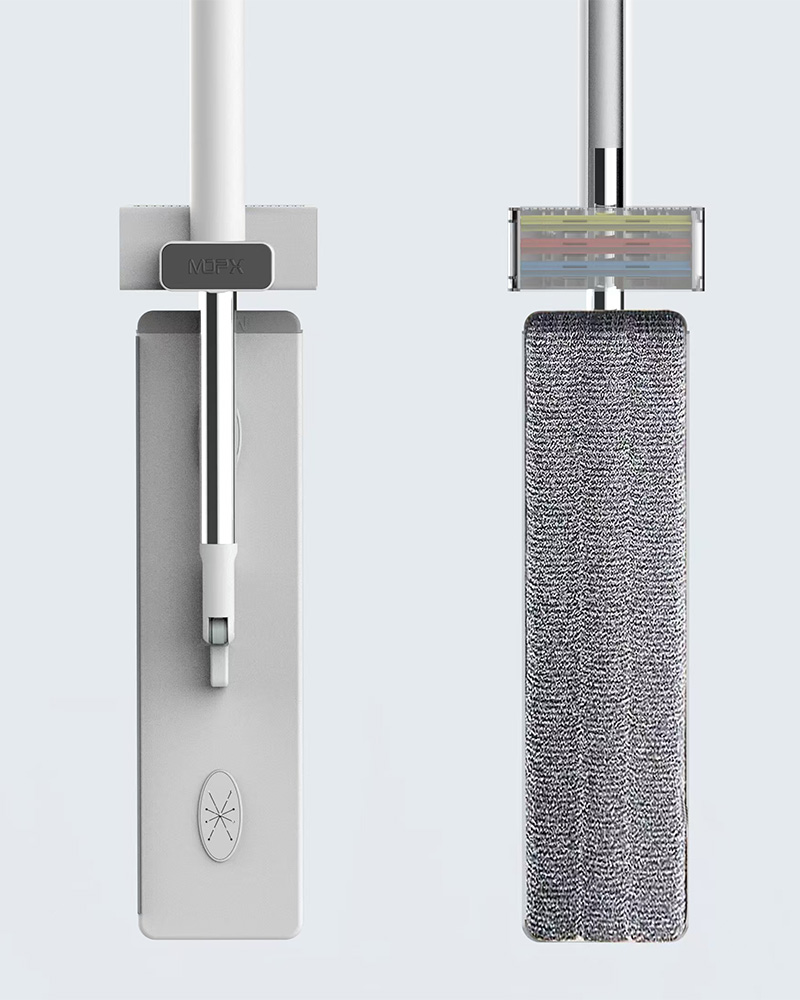
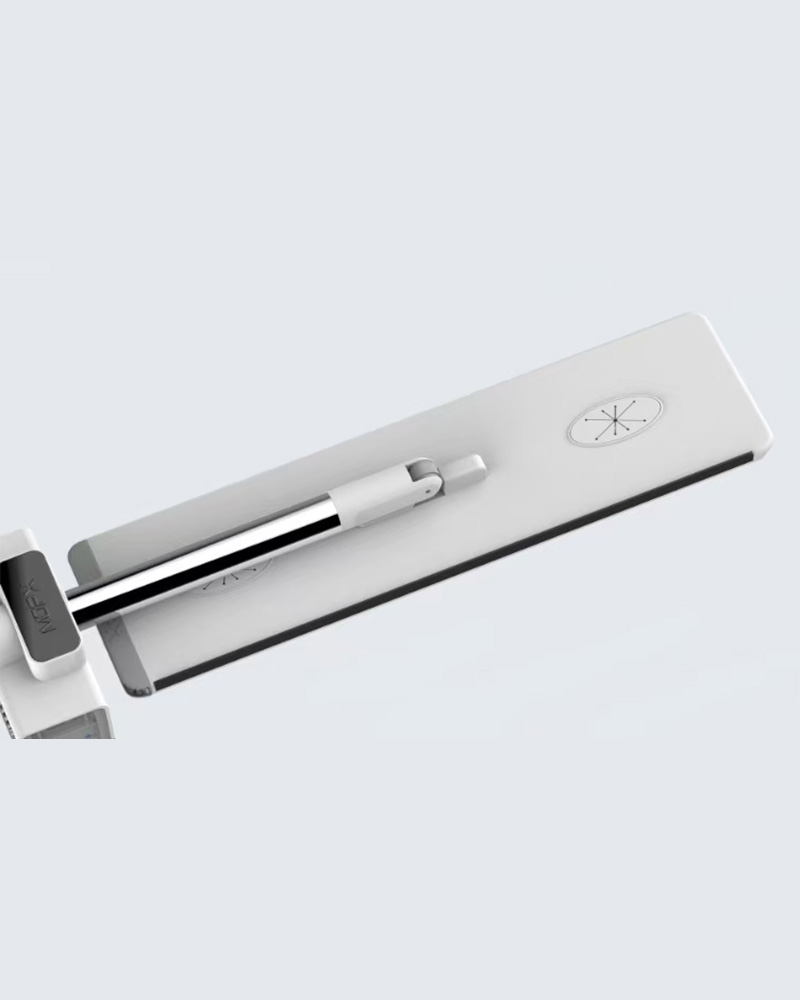 Mopx Flat Mop Floor Cleaning ToolA flat mop with 360° rotating head and dual-compartment clean/dirty water separation for hardwood, tile, and laminate floors.View Product →
Dry Dusting First, Damp Cleaning Second
Order matters more than product choice on hardwood. One workflow covers most homes.
- Push a dry microfiber pad along the plank direction, working from the far corner back to the doorway.
- Shake or vacuum the pad outdoors before it goes back on the frame, so dust leaves the room.
- For the damp pass, wet the pad, wring it until it stops dripping, and cross the surface once without scrubbing.
- Let the floor air dry for a few minutes instead of walking across it wet.
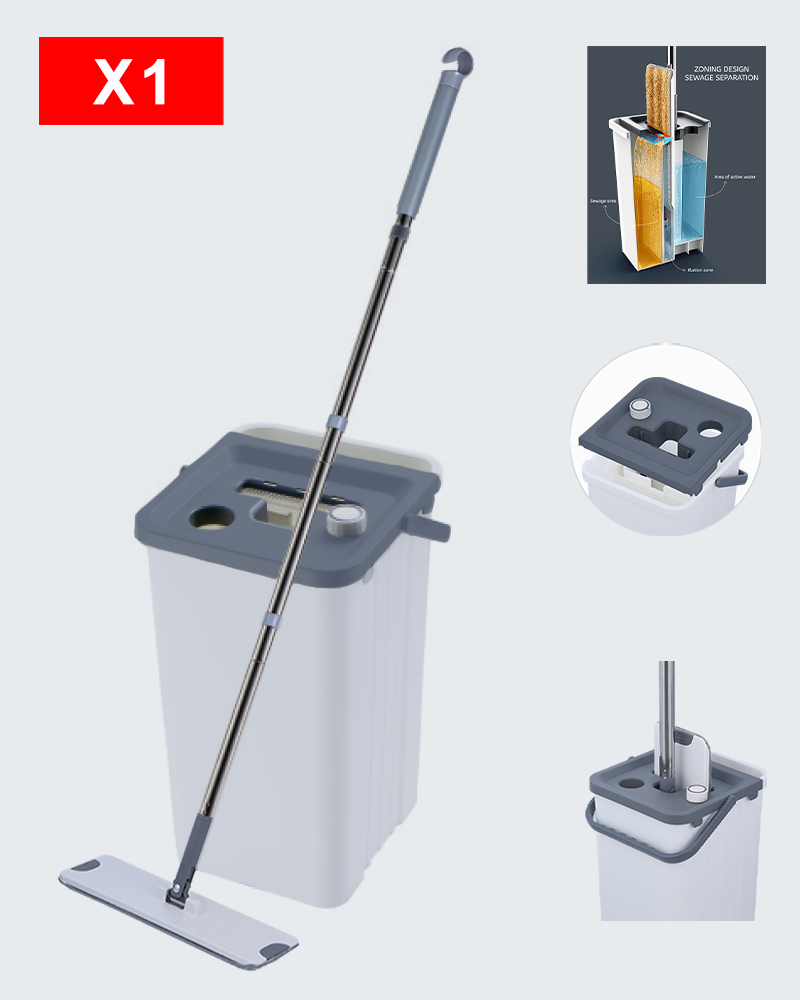
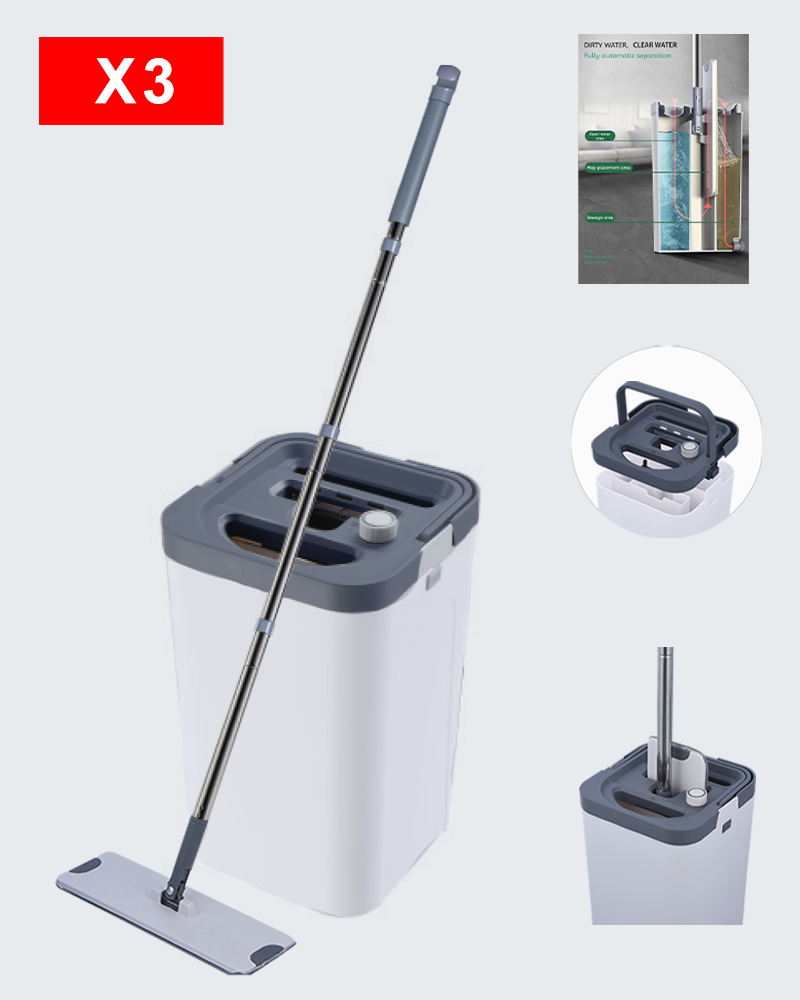
The most common mistake in a bucket routine is reusing dirty water. A single bucket reloads the pad with the soil it just lifted, so the last square meters get the dirtiest water of the session. Two compartment systems that keep clean and dirty water apart remove the problem without extra effort.
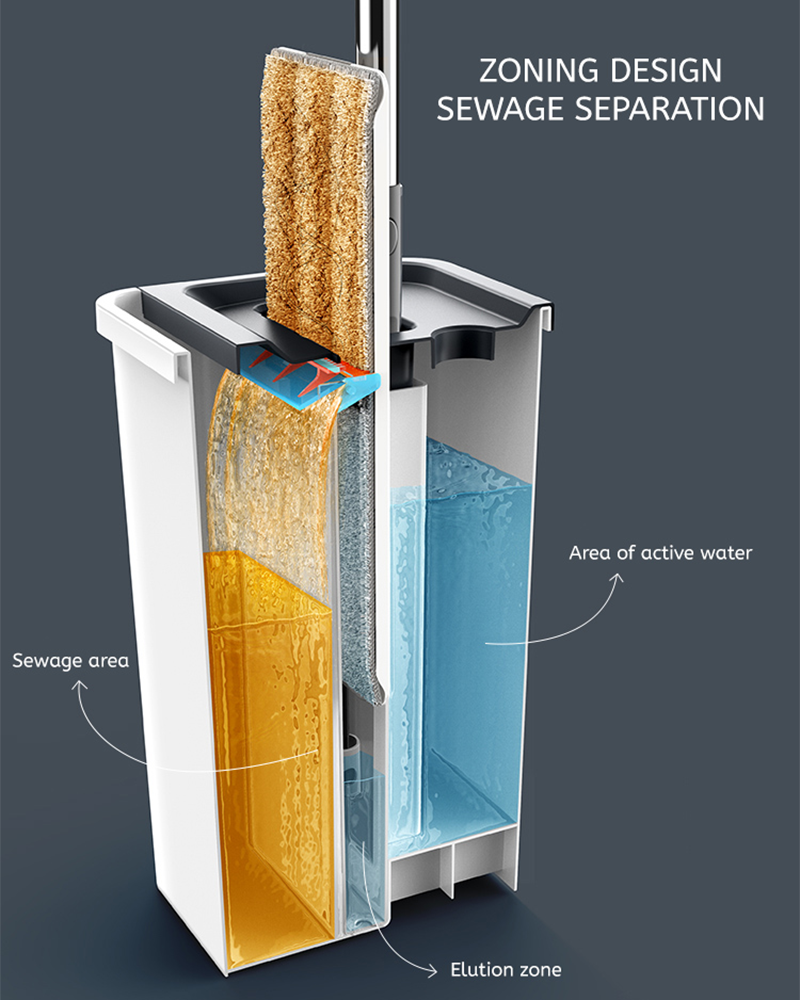 Clean and Dirty Water Separation Mop Bucket SetDual-compartment bucket set with a 360° flat mop head separates clean and dirty water for wet and dry floor cleaning.View Product →
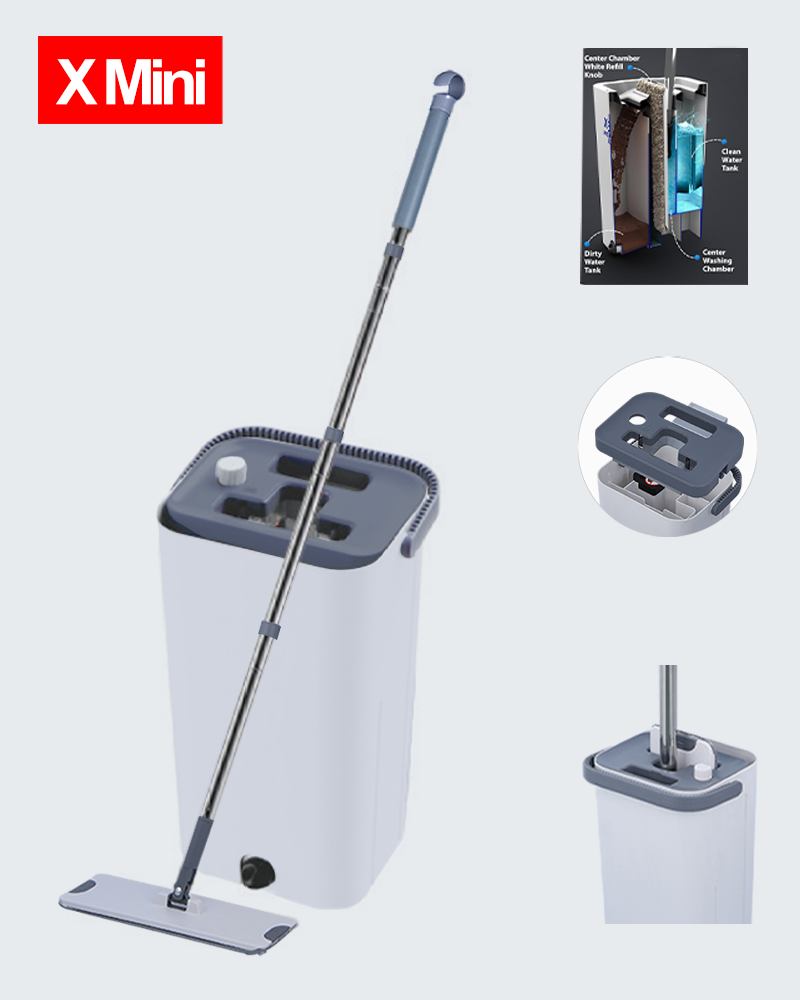
Storage space changes the answer for apartments, balconies, and small utility closets, where a compact dry and wet design that also handles a quick damp pass is often the only one that gets used regularly.
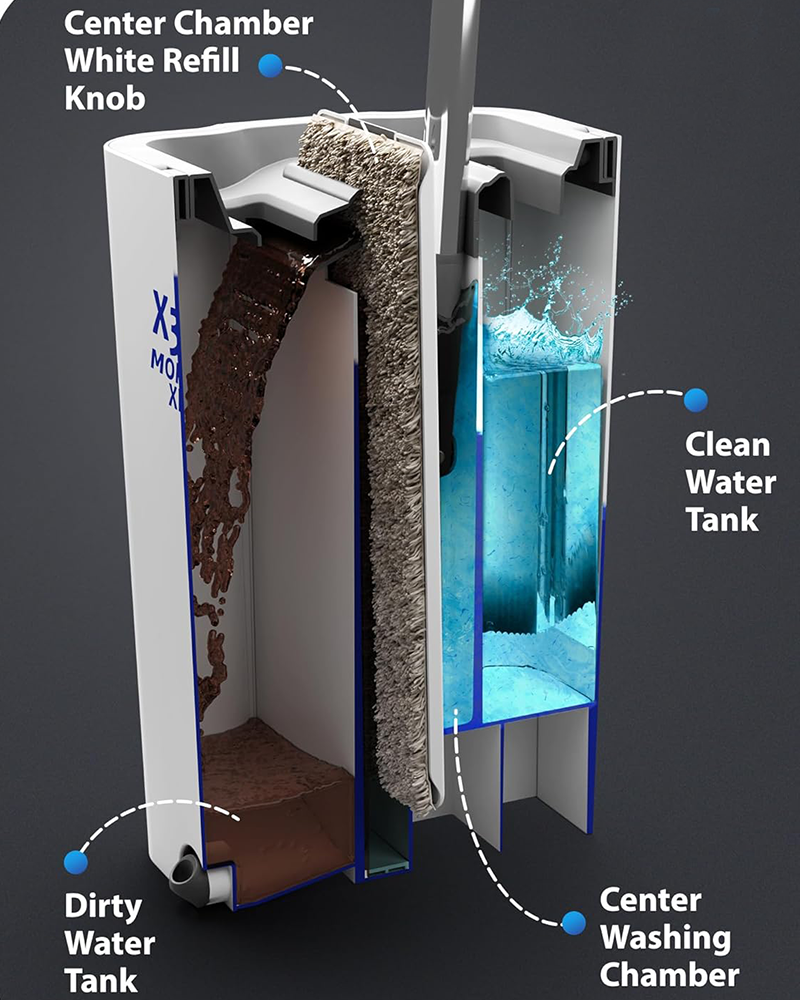 Mopx Mini Flat Mop Bucket Set for Wet and Dry UseCompact wet-and-dry mini flat mop bucket set with 360° rotating head and clean/dirty water separation, suited to tight storage and household or commercial cleaning.View Product →
Pad Care and Replacement
Microfiber loses its grip for a predictable reason. Detergent residue and fabric softener coat the split fibers, and once the surface is coated the pad stops holding a static charge. Machine washing at 40 to 60 C with a small amount of ordinary detergent, no softener, and no chlorine bleach keeps the fiber working, and air drying or a low heat tumble preserves the binding.
A home dust mopping a sealed floor daily can expect roughly three to six months per pad, or 50 to 80 washes. Replace a pad when it no longer lifts a visible grey line in one pass, when the edges fray, or when the backing curls and stops gripping. Keep separate pads for the bathroom, the kitchen, and the wood floors. A pad that has cleaned a bathroom floor carries residue that no wash removes completely, and cross use is the fastest route to dull patches on a hardwood finish.
Notes for Retailers and Private Label Buyers
The specification work above applies equally when a mop is sourced rather than bought off a shelf. Lock several details into an inquiry before samples are produced: pad density and fiber blend with a tolerance such as plus or minus 5 percent, head width and height in millimeters, handle material and finish, backing type, and the tested wash cycle count. Packaging artwork, barcode placement, and carton drop test requirements belong in the same document, because changing any of them later resets tooling and timelines.
MOP X, the brand of flat mop and bucket systems made by Ningbo Yaxiang Cleaning Products, has supplied household cleaning tools since 2008 for retail and brand customers in more than 50 countries. The company's flat mop platform pairs one mop head with bucket variants that separate clean and dirty water, use a hands free wringing design, or scale capacity up and down. The company states ISO 9001 and BSCI certification, a five person development team releasing at least ten new products a year, more than 40 patents on the MOP X cleaning separation range, and a 30 day production window from order confirmation to shipment from Ningbo.
A Short Buying Checklist
Strip the decision down to five questions and most of the noise disappears.
- What finish is on the floor, and how much water can it tolerate?
- Is the pad density at or above 280 gsm with split microfiber at 0.1 to 0.3 denier?
- Does the head sit under the lowest furniture in the room?
- Can the pads be washed 50 times or more without losing pickup?
- Does the bucket or wringer keep clean water away from dirty water?
Answer those five and a microfiber dust mop for hardwood floors stops being a choice between similar looking products. It becomes a tool with a defined specification, a known routine, and a predictable replacement date.