
 English
 Español
 中文简体

Content
- 1 The Three Numbers Behind Every Good Floor Cloth
- 2 Reading a Microfiber Floor Cleaning Cloth Spec Sheet
- 3 Why Fiber Choice Affects Hygiene, Not Just Absorbency
- 4 Matching the Cloth to the Mop Head and Bucket
- 5 Wringing Method and Where Cloths Wear Out First
- 6 Replacement Cycle and Laundry Reality
- 7 Color Coding and Cross Contamination Control
- 8 OEM Sourcing Checklist for Floor Cloths and Mop Systems
- 9 Choosing the Right Bucket Set for the Job
A floor cloth looks like a simple purchase until the first complaint arrives. A buyer approves a sample that feels thick and soft, the first shipment sells well, and three weeks later returns start coming back because the cloth smears water across the floor instead of absorbing it, and the edges curl after twenty machine washes.
The short answer is that the performance of a microfiber floor cleaning cloth is decided by three numbers and one seam: the fiber blend ratio, the filament thickness, the fabric weight in grams per square meter, and the way the edge is finished. Color, hand feel and packaging sit on top of those four decisions, and none of them will rescue a cloth built on the wrong blend. This article explains what each value does in real use, what to check on a spec sheet, and where buyers most often lose money on repeat orders.
The Three Numbers Behind Every Good Floor Cloth
Microfiber describes filament thickness, not a feeling of softness. Conventional textile fibers run around 1.0 dtex or thicker. A cleaning microfiber splits down to roughly 0.1 to 0.3 dtex, which turns a single filament into a cluster of wedge shaped strands. Those wedges form capillary channels that lift water, oil and fine dust off hard surfaces instead of pushing soil into grout lines and joints.
Blend ratio
Most floor cleaning cloths use 80 percent polyester and 20 percent polyamide. The polyamide, usually nylon, is the component that lets the fiber split and gives the cloth its spring back and oil pickup. A 100 percent polyester cloth can feel pleasant and cost less, but it behaves like a wiping rag: it moves water around rather than holding it, and it loses shape quickly. Raising polyamide to 30 percent improves absorbency and hand feel, with two costs that matter at volume: longer drying time and a higher unit price.
Fabric weight
For wet floor work, 300 to 350 GSM is a practical working range. Below 250 GSM the cloth flattens under hand pressure and needs frequent re-wetting. Above 400 GSM it holds more water but becomes harder to wring and may not clear a narrow wringer slot in a bucket system. Ask your supplier to state GSM as a range with a tolerance, then verify it by weighing a fixed size sample rather than trusting a datasheet alone.
Reading a Microfiber Floor Cleaning Cloth Spec Sheet
A spec sheet without numbers is a brochure. The table below lists the values that actually change how a cloth performs on the floor, and what each one does in daily cleaning.
| Parameter | Working range | Effect in use |
|---|---|---|
| Fiber blend | 80 percent polyester, 20 percent polyamide | Balances absorbency, oil pickup and drying speed |
| Filament thickness | 0.1 to 0.3 dtex split fiber | Determines capillary pickup and surface contact |
| Fabric weight | 300 to 350 GSM | Water holding capacity and wringer clearance |
| Water absorption | 4 to 7 times its own dry weight | How much floor one wet pass can cover |
| Shrinkage after 5 home washes | Under 5 percent | Fit on a fixed size mop head over time |
| Laundry life | 50 to 100 home washes, 200 to 300 industrial cycles | Replacement frequency and cost per clean |
| Edge finish | Overlock, ultrasonic weld or bias tape | Fraying, lint release and snagging on surfaces |
| Colorfastness | Grade 4 or better | Color coding stays readable after laundering |
Why Fiber Choice Affects Hygiene, Not Just Absorbency
On hard, non porous floors a cloth does two jobs at once: removing visible soil and lowering the microbial load left behind. Split microfiber achieves this mechanically. The fine filaments reach into the micro texture of tile, vinyl and sealed stone, and capillary action holds what they pick up instead of releasing it back onto the floor. Wipe studies commonly report bacterial removal rates above 95 percent on hard surfaces when a microfiber cloth is used with a clean, folded face and a fresh section per zone.
That figure collapses when the cleaning water is already dirty. Mopping from a single bucket of cloudy water means the last section of floor receives a cloth rinsed in the first section's soil. For buyers specifying a complete system, the cloth and the water management design have to be evaluated together, which is why we covered how fiber material affects disinfection efficiency in a separate technical note.
A two compartment bucket keeps rinse water apart from the water that returns from the floor, so the cloth reloads with clean water on every pass. For a cloth rated at 300 GSM and above, that separation is the difference between a system that meets a hygiene specification and one that only looks like it does.
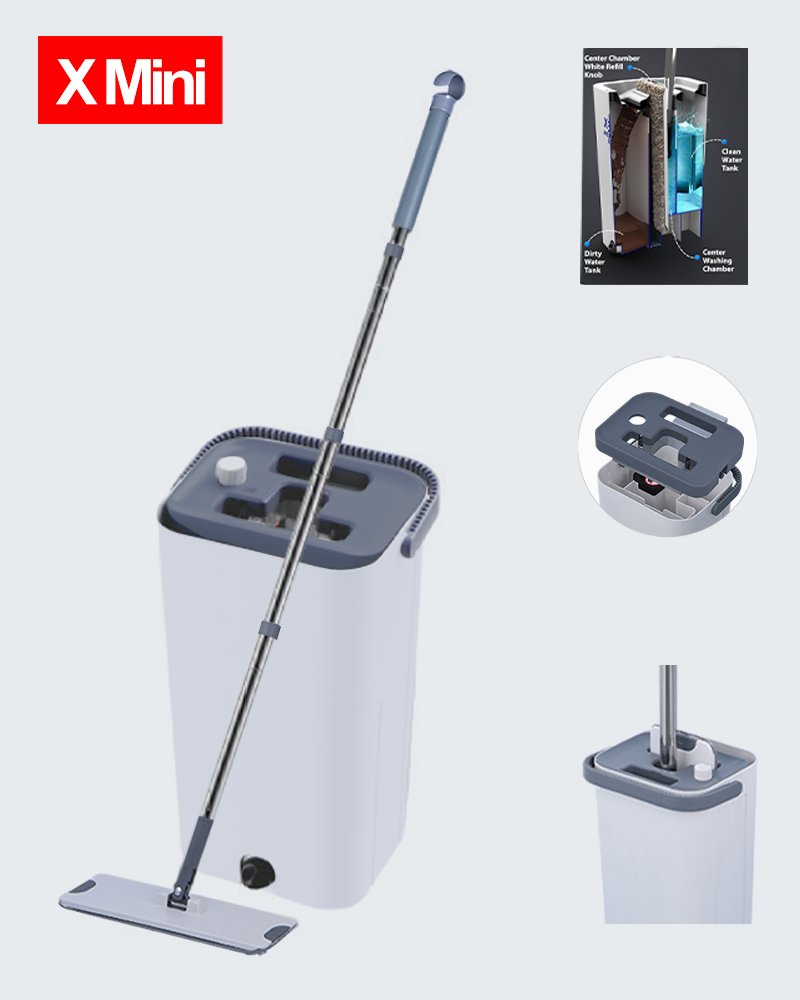
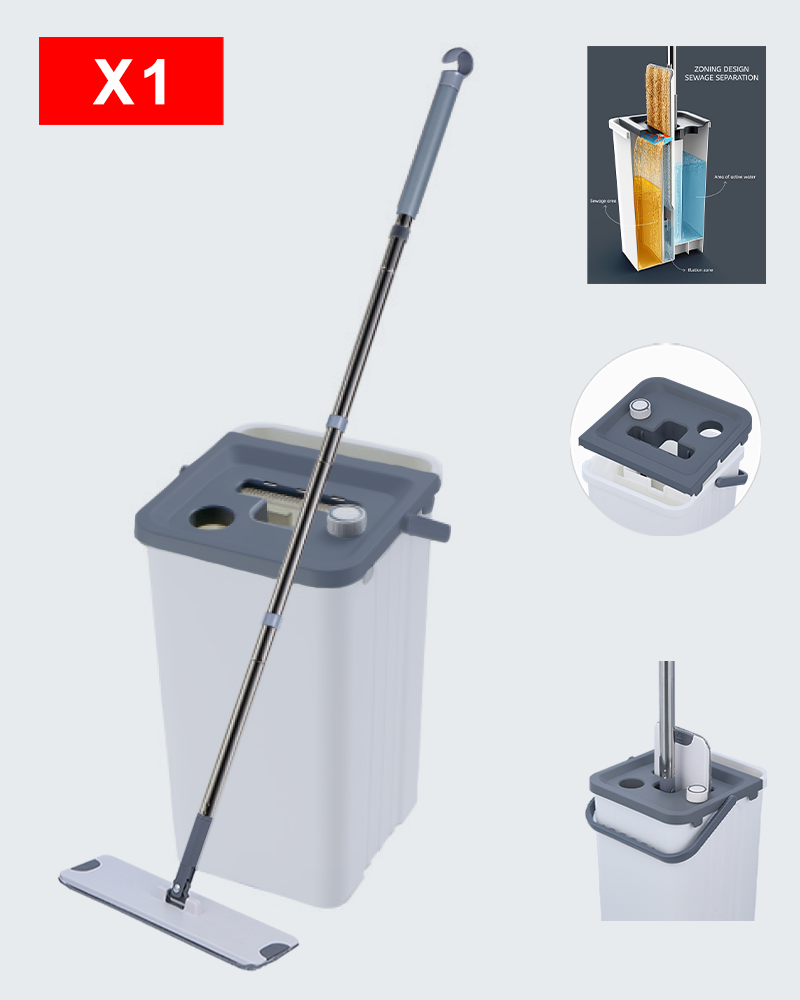
 Clean and Dirty Water Separation Flat Mop Bucket SetFor workflows where rinse water must stay separate from return water, this flat mop set supports 360° cleaning and hands-free wringing.View Product →
Matching the Cloth to the Mop Head and Bucket
Cloth and hardware are one system. A 350 GSM cloth specified for one mop head may be too thick for another bucket's wringer slot, and a cloth cut two millimeters long will bunch under the clips and wear through at the corners within weeks. Four compatibility points are worth confirming before tooling is approved.
- Attachment method: hook and loop backing, sleeve pocket or clips. Hook and loop changes fastest but adds a backing layer that increases total thickness.
- Head dimensions: measure the plate, not the old cloth. Worn cloths stretch, and building a new size from a stretched sample shifts every unit in the order.
- Wringer clearance: test the thickest production cloth in the actual bucket, including the seam allowances, not just a flat fabric swatch.
- Backing material: laminated foam improves grip on smooth tile but slows drying and can delaminate in hot industrial laundry.
Wringing Method and Where Cloths Wear Out First
Manual twisting is the fastest way to destroy a microfiber cloth. The pile mats down along the twist line, fibers break, and absorbency drops well before the fabric looks worn. Cloths used with a hands free wringer keep their pile structure far longer because the water is pressed out rather than sheared out. For households and contract cleaners working through several rooms in one session, that single design decision often extends cloth life by half.
When the wringing action is consistent, the cloth also releases a predictable amount of water, which is what keeps a floor from being left too wet to walk on.
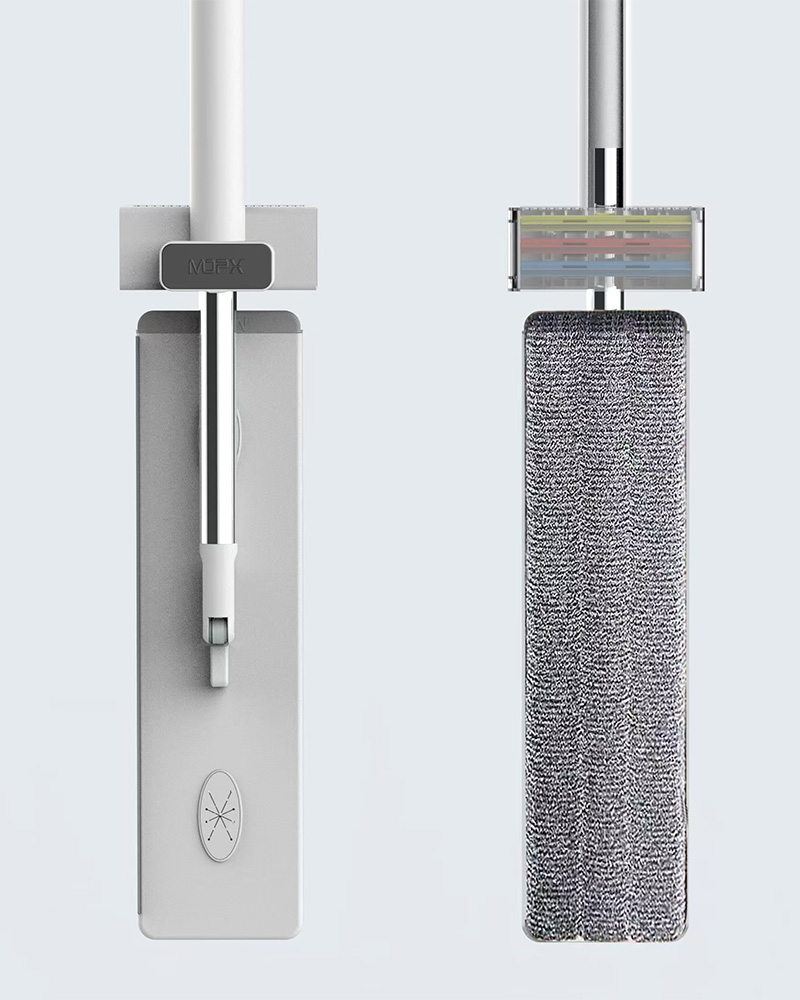
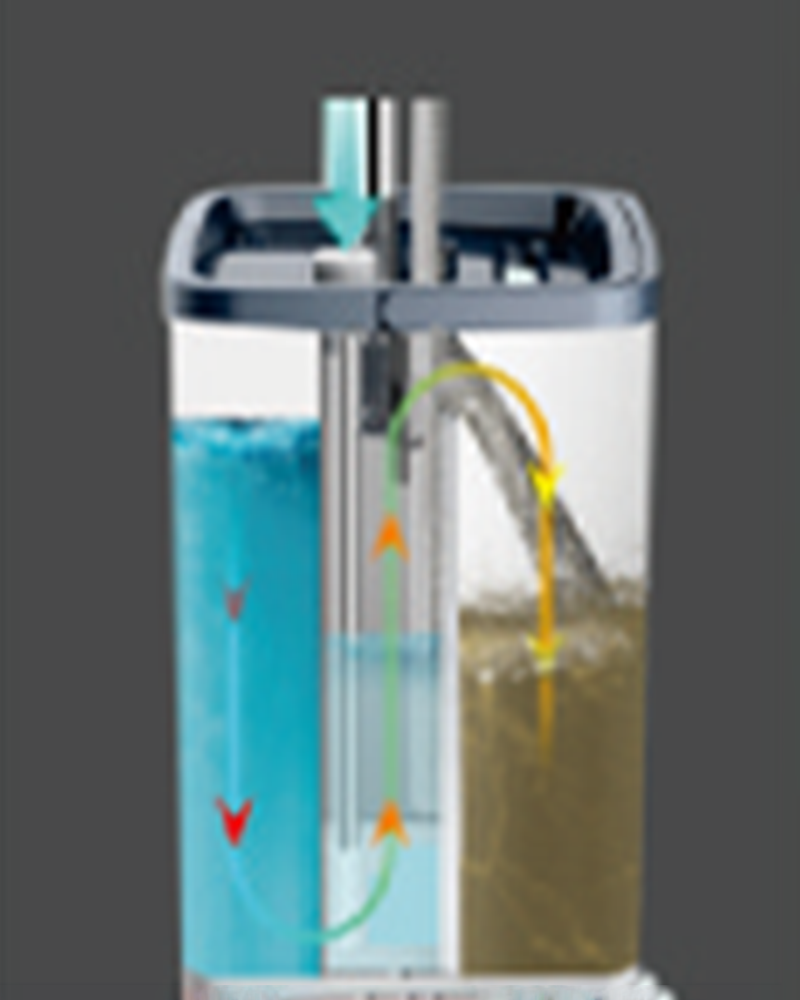 Hands Free Washing Mopx Flat Mop Bucket SetWith hands-free wringing and a 360° flat mop head, this set suits wet or dry cleaning and controlled water release on tile and hardwood.View Product →
Replacement Cycle and Laundry Reality
Buyers usually underestimate how much laundering shortens cloth life. Realistic planning numbers are 50 to 100 machine washes for domestic use and 200 to 300 cycles for industrial laundry, assuming the washing process is controlled. Three habits cut those numbers sharply.
- Chlorine bleach attacks polyamide, so a bleach based wash breaks down the fiber that makes microfiber work.
- Fabric softener coats the filaments and blocks the capillary channels, so the cloth stops absorbing even though the fabric is intact.
- Overloading the dryer at high temperature causes shrinkage and edge distortion, which then causes poor fit on a fixed mop head.
A cloth needs replacing when the pile stays flat after washing, water sits on the surface for a second before soaking in, the edges fray, or the cloth still smells after a clean wash cycle. Tracking replacement by wash count rather than by calendar month gives procurement a predictable cost per square meter cleaned.
Color Coding and Cross Contamination Control
Color coding is only useful if it survives laundering, which is why colorfastness of grade 4 or better belongs in the specification. A workable four color scheme assigns one color to kitchen and food areas, one to bathrooms and toilets, one to general hard floors and one to glass or high touch surfaces. When colors fade into each other after twenty washes, staff stop trusting the system and start defaulting to whichever cloth is closest.
OEM Sourcing Checklist for Floor Cloths and Mop Systems
- Lock the specification in writing: fiber blend, filament thickness, GSM with tolerance, cut dimensions with tolerance and edge finish.
- Request a wash test report showing shrinkage and appearance after 5, 25 and 50 cycles, not just a single pre-shipment inspection.
- Confirm colorfastness grade and restricted substance declarations, including AZO free statements for the destination market.
- Approve the golden sample against the written specification, and keep that sample sealed for future shipments.
- Agree packaging, labeling and barcode requirements before production, since retail ready packing often changes the carton count.
- Confirm minimum order quantity, tooling cost for custom sizes and the delivery schedule. A realistic production window from order confirmation to shipment is around 30 days for standard configurations.
- Verify factory management systems, such as ISO9001 for process control and BSCI for social compliance, especially if your retail channel requires a factory audit.
Choosing the Right Bucket Set for the Job
Once the cloth specification is fixed, the remaining decision is capacity and water handling. The right match depends on how much floor a user covers in one session.
- Apartments, bathrooms and small retail units: a compact wet and dry set allows dry dust pickup and wet mopping with the same tool.
- Whole home hard flooring: a separation set keeps rinse water clean across several rooms without a mid session water change.
- Large open floors and frequent mopping shifts: a high capacity set reduces refill stops, which is usually the main labor cost in floor cleaning.
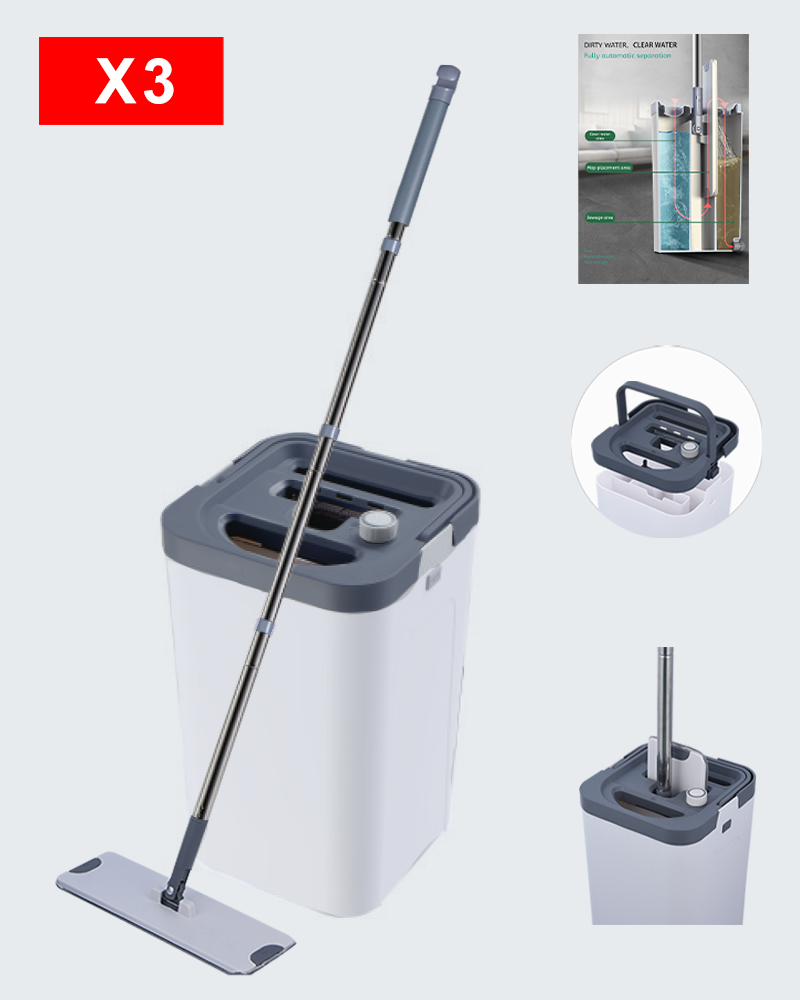
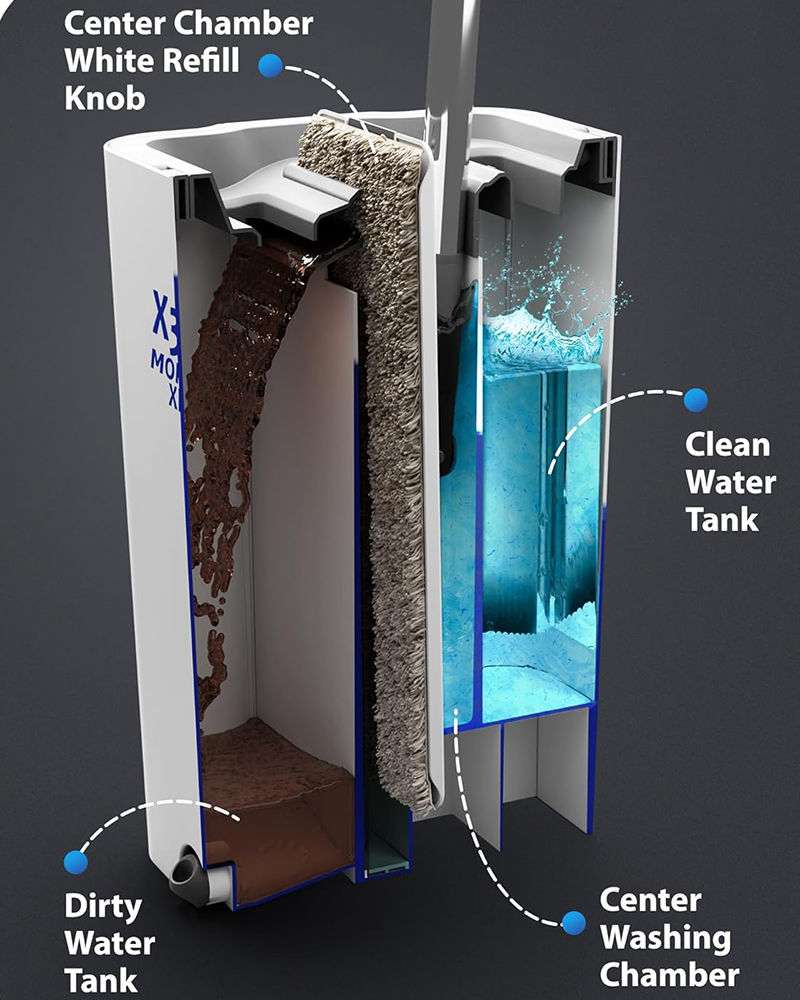 Professional Mopx Big Capacity Flat Mop Bucket SetWhen larger floor areas call for capacity and water separation, this heavy-duty flat mop set pairs 4.5 L compartments with 360° cleaning.View Product →
A microfiber floor cleaning cloth is a small line item with an outsized effect on how a mop system is judged. Blend, filament thickness, GSM and edge finish decide whether the cloth cleans, how many washes it survives and whether it fits the hardware it was bought for. Buyers who put those four values in writing before tooling starts spend far less time on returns and rework than buyers who approve a sample on feel alone.
If you are sourcing cloths, mop heads or complete bucket systems for a private label program, you can review the flat mop and bucket range built around separation cleaning, then send your specification for a quotation and sample.