
 English
 Español
 中文简体

Content
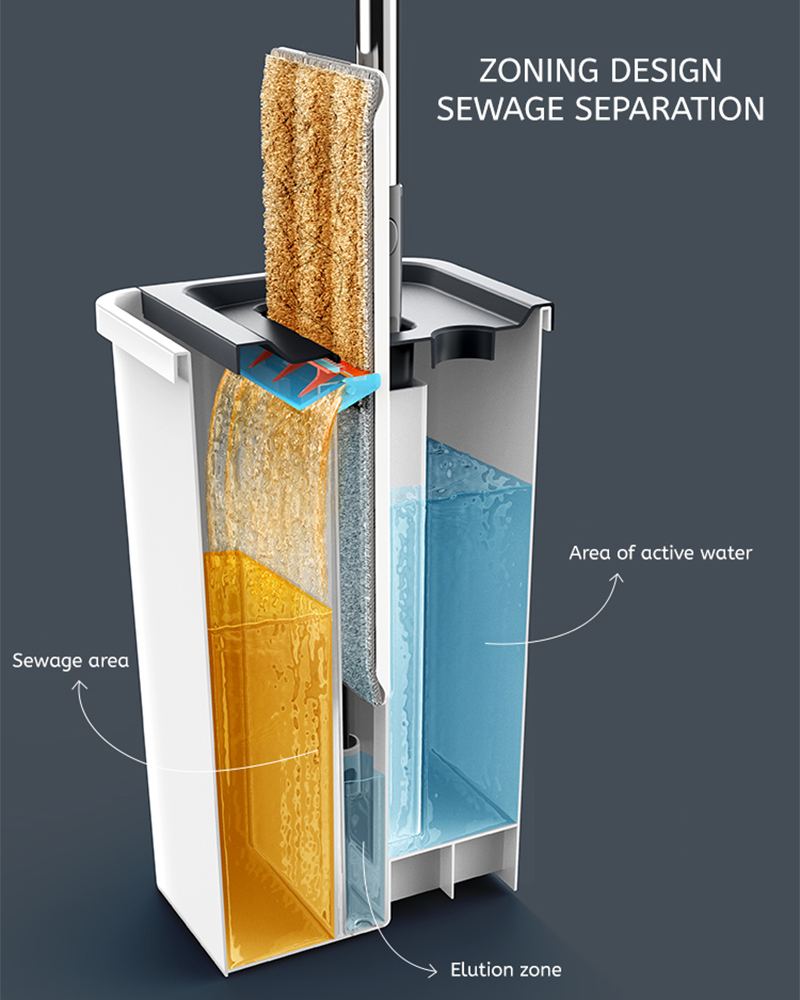
A mop system with clean water solves a simple but costly problem: the mop head should not go back into the same dirty water you just removed from the floor. In a standard single bucket, every dip adds soil, grease, and bacteria to the solution. A clean water system separates the rinse supply from the waste stream, so the mop is rinsed with water that has not already been used. The result is less cross contamination, fewer passes over the same area, and more consistent floor appearance.
For buyers and product teams, the key question is not whether a bucket has a divider. It is whether the design controls the full water path: fill, rinse, wring, and drain. That path determines cleaning performance, user effort, and the replacement parts you will need to support after the sale.
What a Mop System With Clean Water Actually Does
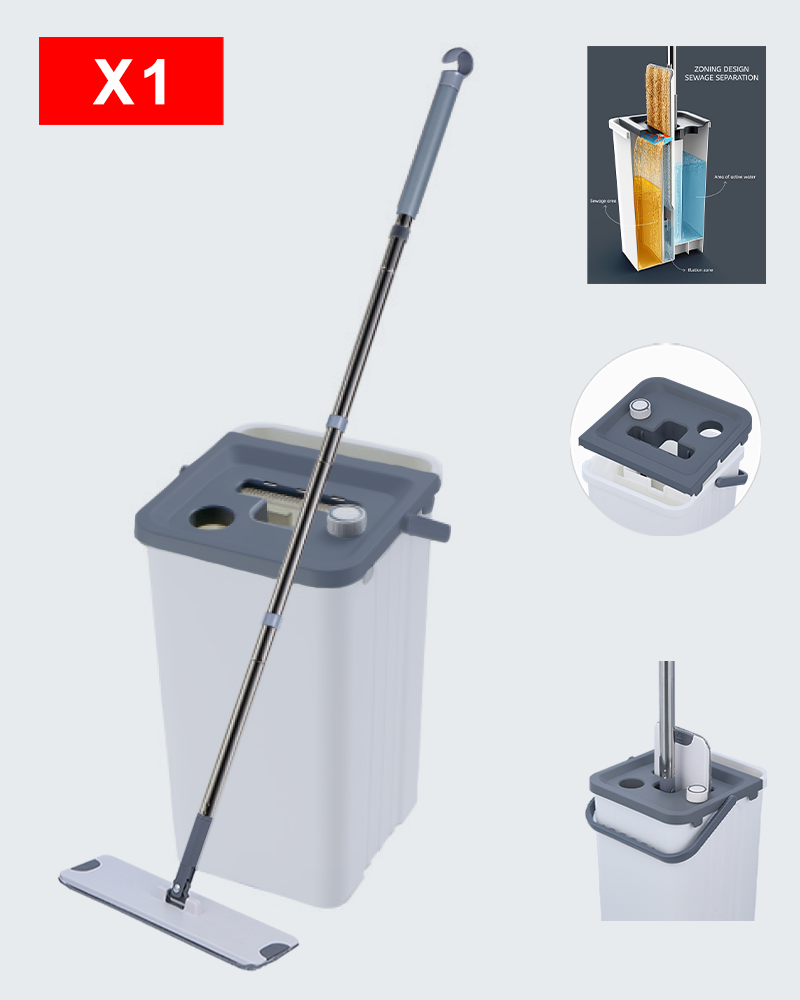
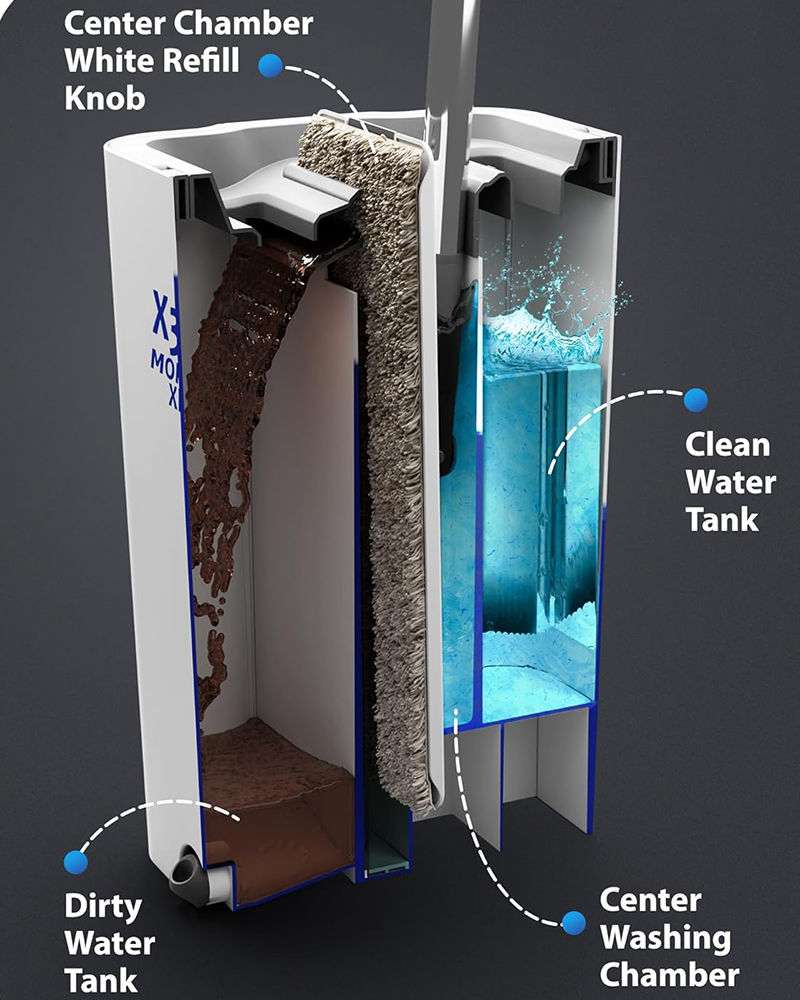
A true clean water mop system uses two water zones. The clean zone holds fresh water for wetting or rinsing the mop pad. The dirty zone collects the water that returns from the floor. On flat mop bucket sets, this is often built as a dual compartment bucket or a bucket with a rinse station and a separate waste tank. The mop head enters the clean water, picks up moisture, cleans the floor, and then returns to a scraper or wringer that pushes dirty water into the waste side. The mop never sits in the soil it just lifted.
This matters most on hard floors such as tile, vinyl, laminate, and sealed stone. On these surfaces, dirty rinse water leaves a film that can look like haze or streaks. A clean water system keeps the rinse step cleaner, so the final pass is more likely to leave an even finish. It also reduces the need to change the whole bucket after every room, which saves water and time in larger homes or light commercial spaces.
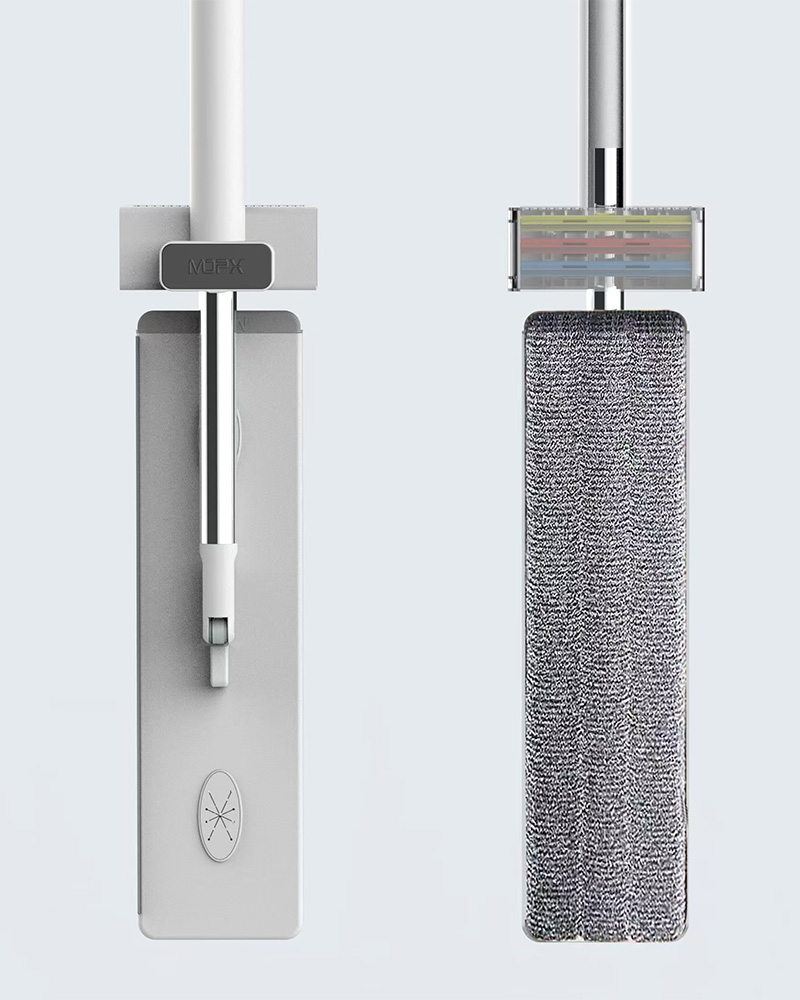
 Clean/Dirty Water Separation Flat Mop Bucket SetA two-compartment mop bucket set with a 360° flat mop, designed to keep rinse water cleaner on hard floors.View Product →
Design Choices That Affect Real Cleaning
Not every separation system performs the same way. The differences show up in how much clean water is available, how easily the mop is rinsed, and how often the user has to stop and refill. The table below summarizes the main design points to compare.
| Feature | Function | Buyer impact |
|---|---|---|
| Dual compartment bucket | Keeps clean and dirty water in separate chambers | Reduces cross contamination and extends usable rinse water |
| Dual zone dual control | Lets the user manage rinse and wring steps separately | Improves control on uneven floors and mixed soil levels |
| Hands free wringer | Removes water without touching the mop pad | Less hand contact and better hygiene for households |
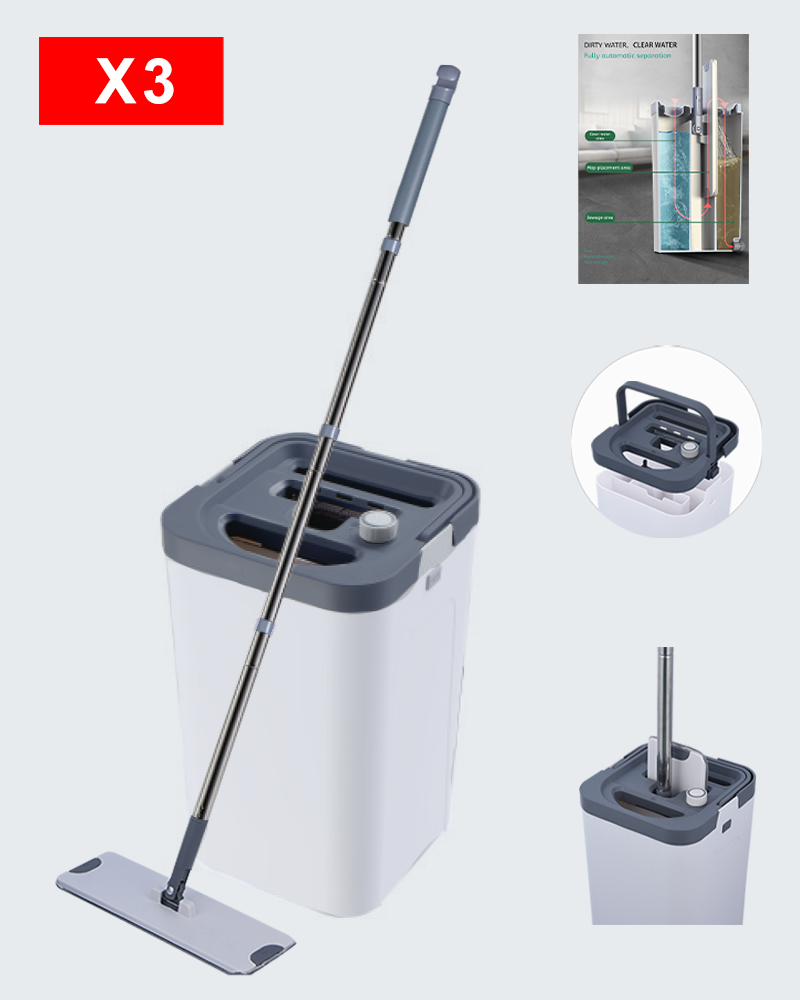
| Automatic water system | Moves water through the bucket with less manual lifting | Reduces effort and can speed up large area cleaning |
| Big capacity tank | Holds more clean water and waste water | Fewer refills for open plan rooms, shops, and offices |
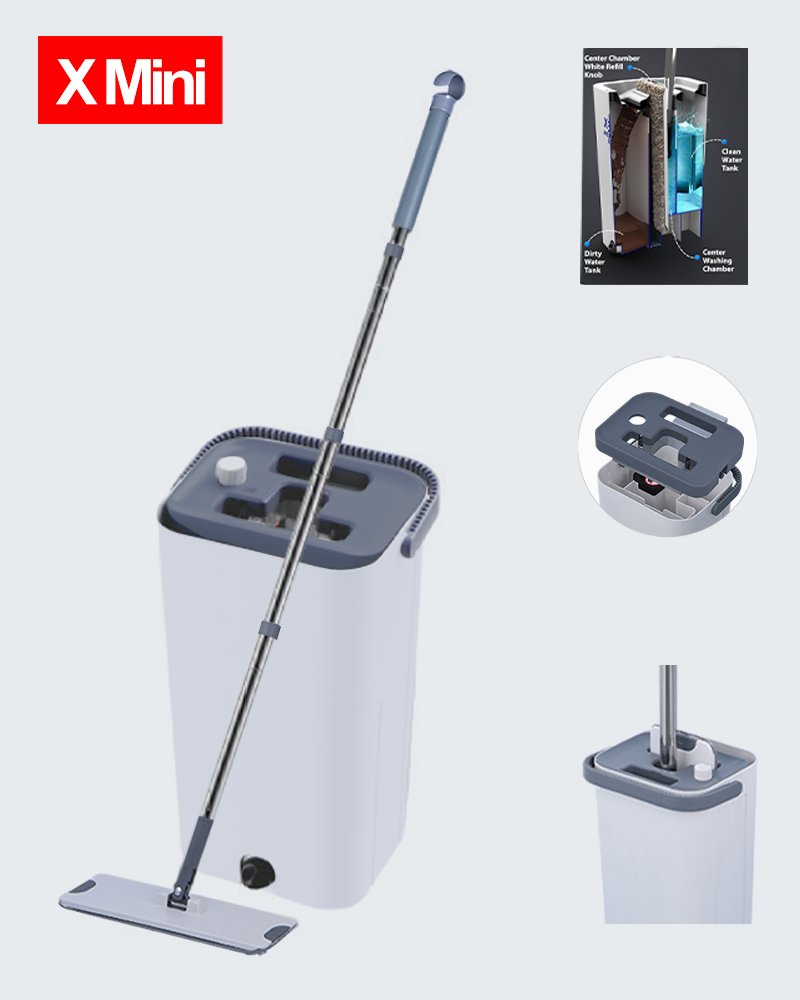
| Mini size bucket | Uses a compact footprint | Fits small bathrooms, balconies, and storage cupboards |
Capacity is often the first specification buyers underestimate. A 5 liter clean water tank may be enough for a small apartment, but a 10 liter or larger system can cut refill stops in half on a 100 square meter floor. The dirty water tank matters just as much. If it fills before the clean tank is empty, the user still has to stop, and the separation benefit is limited.
 Mopx Dual Zone Dual Control Mop Bucket SetDual-zone mop bucket set with independent controls, a 360° flat mop, and 3 L clean and 4 L dirty water compartments for tile and hardwood.View Product →
Wringing force and pad compatibility
The wringer or scraper must remove enough water for the floor type. Too wet, and the user leaves puddles. Too dry, and the pad drags. For sourcing, ask for wringing force data or test reports if available. Also confirm that the mop pad size, backing, and fiber type match the bucket station. A clean water system only works when the pad can release soil into the rinse zone and pick up clean water again.
Performance Checks Before You Buy or Source
For a household buyer, the decision is mostly about floor area, storage, and effort. For a retailer, brand, or importer, the decision is about repeatable quality and after sales support. The checks below apply to both, but they matter most when you plan to order in volume.
- Water path: confirm that dirty water cannot flow back into the clean chamber during normal use or when the bucket is tilted.
- Seal and valve quality: look for gaskets, check valves, or one way paths that resist grit and hard water scale.
- Wringer cycle life: ask for test data on the number of wringing cycles before failure, not just a visual sample.
- Pad fit and wear: check whether replacement pads are standard, easy to source, and compatible with the mop head.
- Tank volume: compare clean and dirty capacity, because the smaller tank controls how often the user stops.
- Packaging and carton size: confirm the packed volume, because bucket sets are bulky and freight cost can change the landed price.
- Certification and audit status: ISO9001 and BSCI are useful baseline signals for process control and social compliance.
- Lead time: for private label programs, a 30 day production and shipping window can be realistic for a focused flat mop bucket set, but it depends on tooling, packaging, and order quantity.
MOP X has supplied flat mop bucket sets since 2008 and offers a range of separation models, including dual zone and large capacity versions. If you are comparing formats, review the flat mop bucket sets by water path and tank size rather than by color or handle alone.
 Professional Mopx Big Capacity Flat Mop Bucket SetA large-capacity flat mop bucket set with clean/dirty water separation, a 360° mop head, and 4.5 L tanks for commercial spaces and large homes.View Product →
Common Mistakes and How to Avoid Them
A clean water mop system can still disappoint if the user follows the wrong routine or if the product is specified for the wrong room size. These are the mistakes that appear most often.
- Buying a two bucket setup and calling it a clean water system. Two separate buckets are better than one, but they still require the user to carry and manage two containers. A true clean water system keeps the clean and dirty water in one controlled unit.
- Choosing a small dirty tank. If the waste chamber fills after one room, the user will pour it out and may accidentally mix it with clean water. Match total tank volume to the largest floor area the product will serve.
- Ignoring the wringer. A weak wringer leaves the pad too wet, which creates slip risk and longer drying time. A wringer that is too aggressive can wear out pads faster. Test the actual pad and bucket together.
- Skipping maintenance. The dirty water chamber, scraper, and pad need regular cleaning. Residual soil can cause odor and reduce separation performance. A simple rinse and dry routine after each use protects the system.
- Assuming all pads fit. Pad thickness, fiber, and backing affect water release. Use the pad specified for the bucket, and keep a spare set for heavy cleaning days.
For a practical maintenance routine, see this guide to flat mop cleaning and maintenance. It covers the steps that keep the water path clear and the pad ready for the next use.
The Bottom Line
A mop system with clean water is worth considering when floor hygiene, user effort, and repeatable results matter. The best designs do not just separate water. They control how clean water reaches the pad, how dirty water leaves the pad, and how easily the user can empty and clean the system. Check tank balance, wringing performance, pad compatibility, and replacement part availability before you buy or source.
For households, the right choice is usually the largest system that still fits the storage space. For brands and retailers, the right choice is the system with a clear water path, stable tooling, and a supplier who can document quality and lead time. MOP X focuses on flat mop and bucket systems built around clean and dirty water separation, with the product range and customization support to match different markets.