
 English
 Español
 中文简体

Content
You are halfway through dinner prep. The raw chicken is on the board, the tap is running, and you grab the same cloth you used on the counter ten minutes ago. That small reach is where most cross contamination actually begins, and it is the easiest link in the chain to break.
One way to help prevent cross contamination is to hold a firm boundary between the dirty side of a task and the clean side. A separate board for raw meat and for ready to eat food. A separate cloth for the sink and for the countertop. Separate water for washing the mop and rinsing the floor. Separation works because it removes the transfer path instead of trying to kill everything that travels along it.
Handwashing still belongs first on any list, and food safety guidance repeats it for good reason. But hands are only one carrier. Cloths, sponges, tongs, boards and mop water carry the same load, and they are the carriers people forget between tasks.
Why separating tools works better than scrubbing harder
Cleaning and sanitizing do two different jobs. Cleaning lifts soil off a surface with detergent and friction. Sanitizing reduces what is left to a safer level, and it only works on a surface that is already clean and stays wet for the full contact time on the label.
Skip the separation step and both jobs fail at once. A cloth loaded with raw meat juices does not clean a countertop. It paints a thin film of contaminated liquid across a wider area, so the counter looks clean while carrying bacteria to the next thing that touches it. The same logic applies to a mop. Dirty water does not rinse a floor, it redistributes whatever the last room left in the bucket.
The practical rule is blunt. If a tool has touched raw meat, a bathroom floor or a bin, it does not touch anything else until it has been washed and dried.
Where cross contamination hides in a normal home
Most of the risky moments are ordinary and repeat several times a day:
- Raw meat juices left on the counter, wiped once with a dry cloth that is then used on the sink.
- One cutting board for chicken, salad and bread, with a quick rinse in between.
- A dish towel that dries hands, wipes spills and buffs glasses within the same hour.
- Raw meat stored above ready to eat food, so drips land on what will not be cooked.
- One mop and bucket shared across kitchen, bathroom and entryway, with the water changed only at the end.
- Damp mop heads and cloths stored in a closed cupboard, where bacteria multiply between uses.
Every item on that list has a fix that costs almost nothing. Color code the cloths. Give raw meat its own board. Cover and lower the meat in the fridge. Change mop water before it turns grey. Hang everything to dry in open air.
The floor is the surface most people skip
Floor care gets far less attention than countertops, yet a mop bucket is a near perfect transfer device. The mop head picks up soil, goes back into the water, releases that soil, and then carries the mixture to the next square metre. On a single bucket setup the water gets darker and heavier with organic load as you work, so the last stretch of floor is effectively rinsed with the dirt from the first stretch.
This is where hardware matters more than effort. A bucket with two separate compartments keeps rinse water apart from water that has already been used. The mop is washed on one side, wrung into the other, and returns to the floor with clean water rather than a suspension of what it just lifted. It is the same separation principle as a second cutting board, applied to a tool that covers a much larger area.
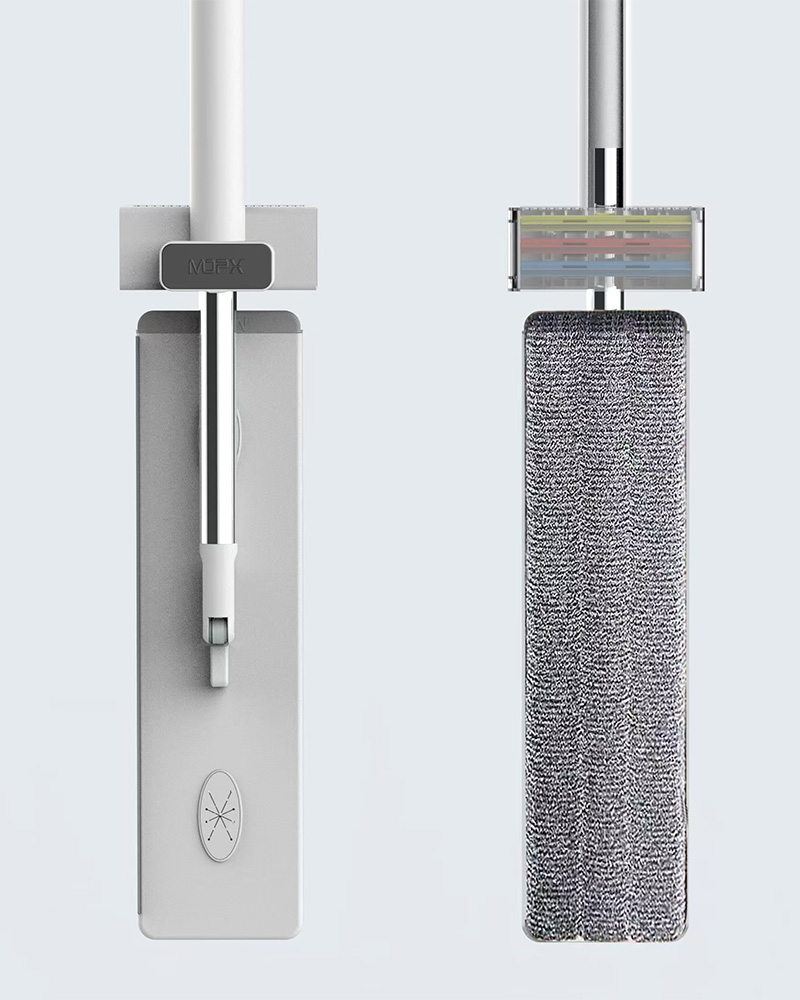
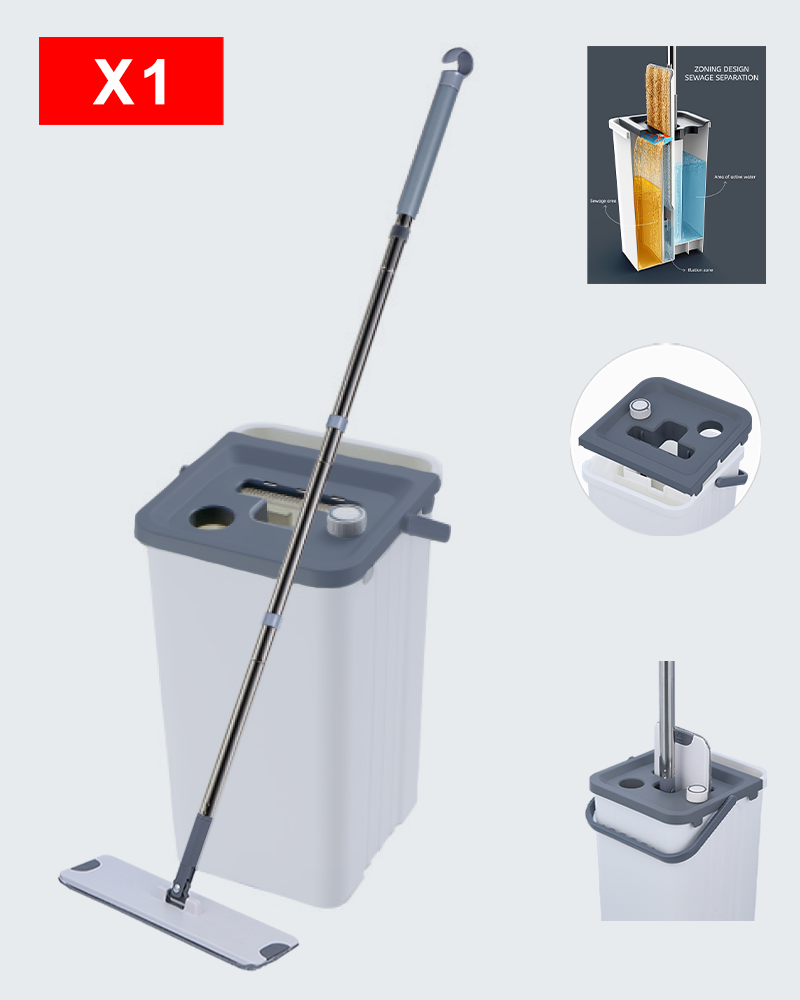
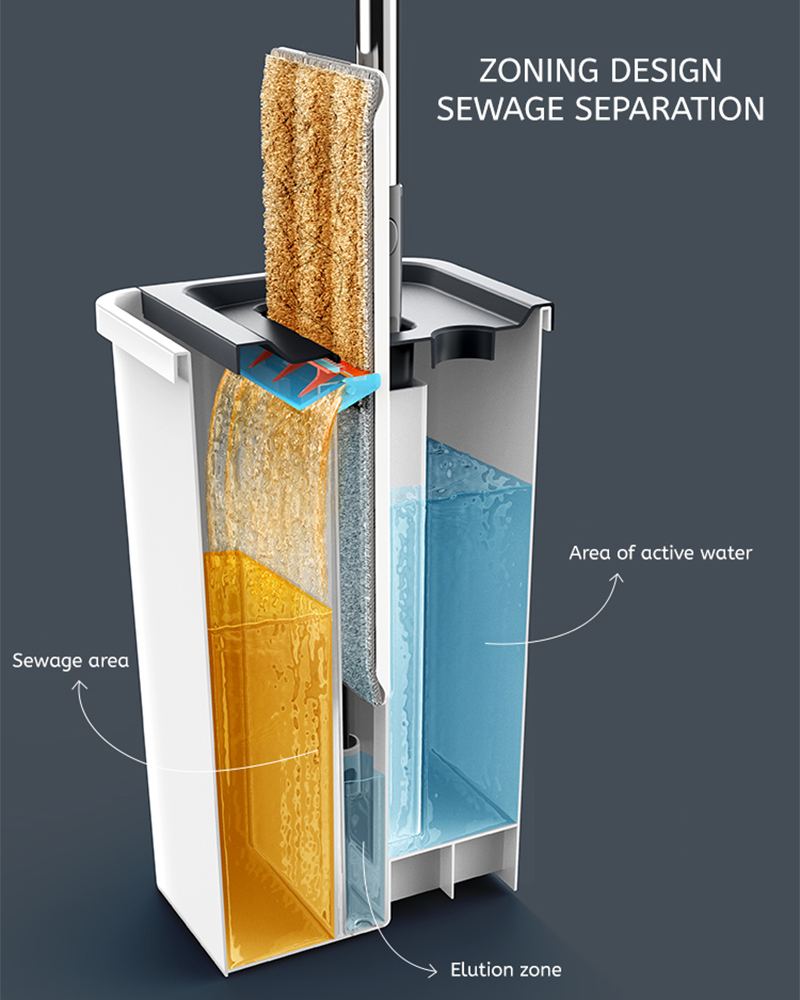 Clean and Dirty Water Separation Mop Bucket SetDual-compartment bucket keeps rinse water separate, and the 360° flat mop supports wet or dry cleaning in homes, offices, and commercial spaces.View Product →
MOP X has built its flat mop range around that idea since 2008, with a dual compartment system that holds clean and dirty water in separate chambers. For a household the benefit is a floor that is genuinely rinsed. For a retail buyer the benefit is a feature a shopper can understand in one sentence, which is often what decides whether a product sells through.
How the common mopping setups compare
All three setups below move water, but they move contamination very differently. What separates them is not the mop head, it is where the water goes after it leaves the floor.
| Setup | How water is handled | Main risk | Best fit |
|---|---|---|---|
| Single bucket | Mop returns to the same water for the whole room | Soil and microbes recirculate and spread as the job goes on | Small spills and quick touch ups on one hard floor |
| Two bucket method | Wash water in one bucket, rinse water in another, wringer between | Works well but depends entirely on operator discipline | Trained crews with written procedures |
| Separation bucket system | Compartments and wringer path built into one unit | Low, because the hardware enforces the split | Homes and ready to use kits sold through retail |
Two bucket mopping is a sound method and standard in professional cleaning for a reason. Its weakness is human. Once a crew is rushed, the rinse bucket quietly becomes a second wash bucket. A built in separation design removes that decision, which is why it holds up better in a home where nobody is following a written procedure.
What buyers check before ordering cleaning tools
If you are sourcing mops and buckets rather than using one, the separation feature is only the starting point. Retail and brand buyers tend to test the same handful of things, and most of them are settled long before the carton reaches the store.
Points worth putting on a specification sheet
- Water capacity per compartment, and how the wringer path keeps the two streams apart in normal use.
- Mop pad fibre and how the head is replaced, because replacement heads are a repeat purchase category.
- Wringer mechanism durability, tested over repeated cycles rather than a single demonstration.
- Material and recycled content claims that can be documented, since sustainability wording is scrutinised in several markets.
- Packaging cube against container load, which decides freight cost per unit more often than the ex works price.
- Factory certification and audit records, such as ISO 9001 and BSCI, plus a realistic production lead time.
MOP X is a flat mop manufacturer based in Cixi, roughly 50 km from Ningbo port, working as an OEM and ODM supplier since 2008. The company reports more than 40 national patents on its cleaning separation series, a five person development team releasing at least ten new models a year, and a 30 day window from confirmed order to shipment. Those figures are worth confirming in a supplier audit, but they set a reasonable baseline for a first conversation.
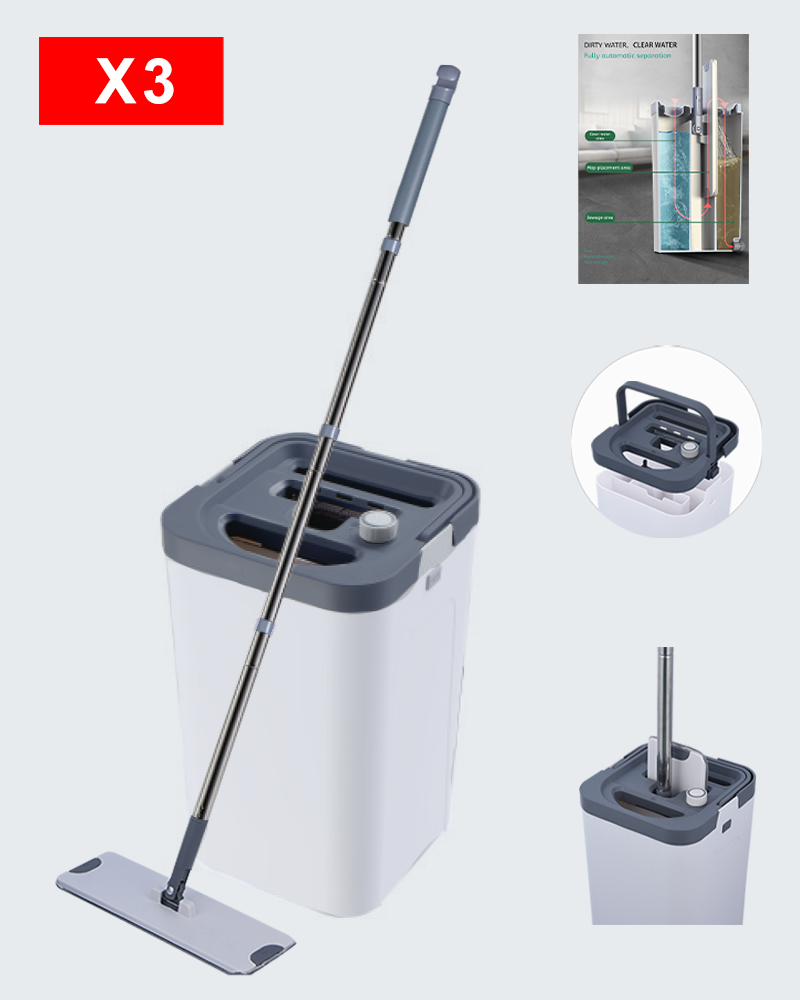
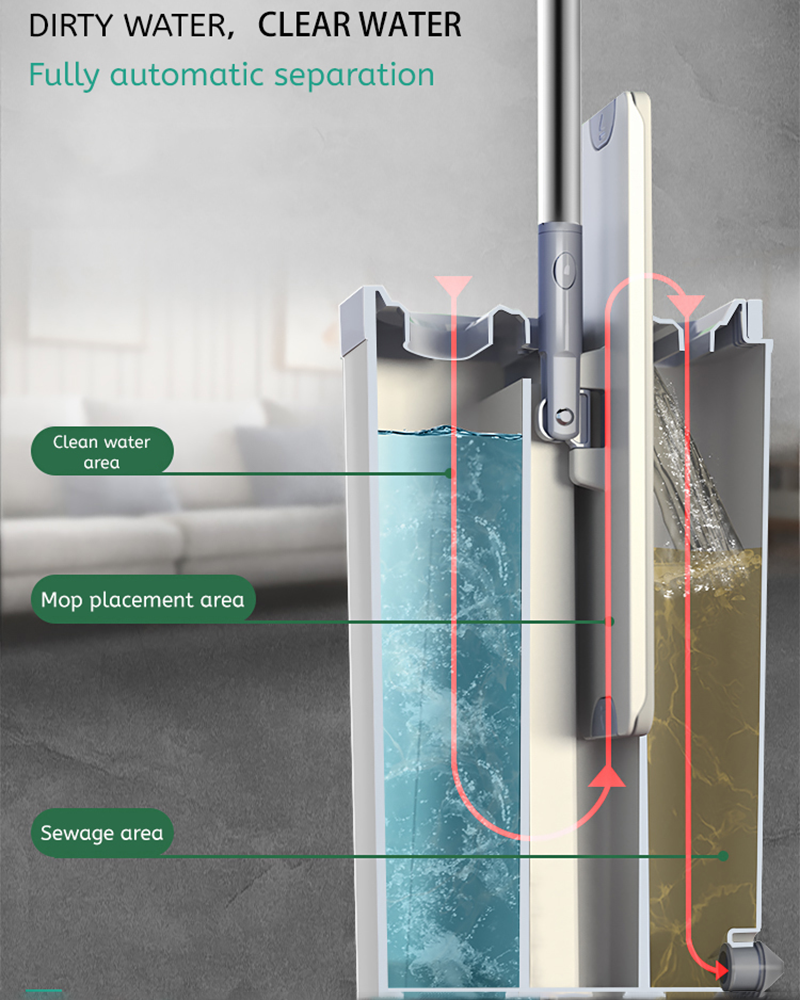 Mopx3 Cleaning Separation Flat Mop Bucket SetThree-compartment water separation keeps clean and dirty water apart, while the 360° flat mop handles wet or dry cleaning in homes and offices.View Product →
The flat mop bucket set range covers the usual retail positions: a hands free washing model for shoppers who do not want to touch the mop head, a dual zone dual control version for more flexible cleaning, a big capacity option for larger floors, and a compact wet and dry model for small flats and bathrooms. Ranges like this are normally built so one platform supports several price points without new tooling.
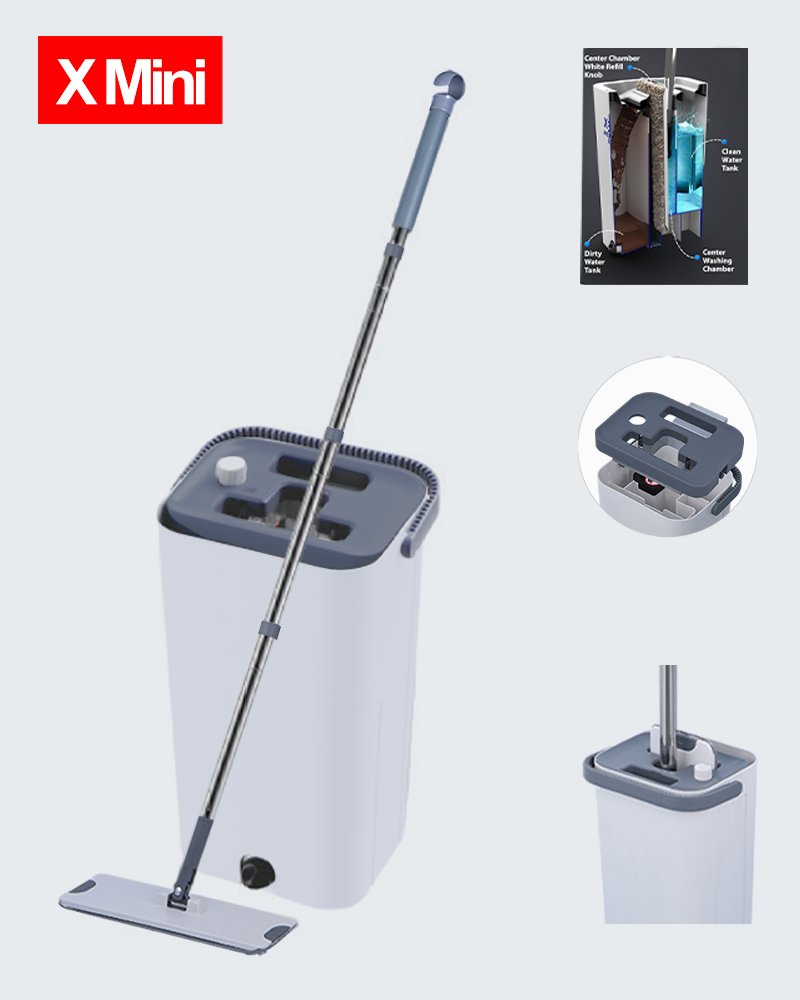
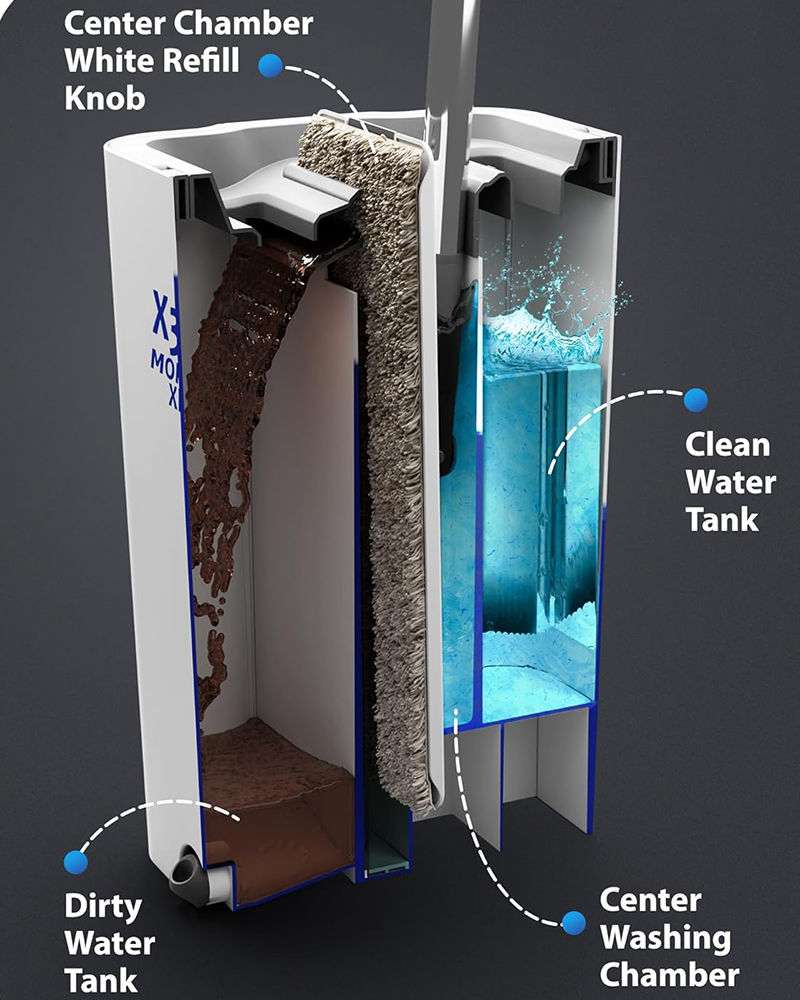 Wet and Dry Use Mopx Mini Flat Mop Bucket SetCompact mini set with clean/dirty water separation and a 360° flat mop for small homes, balconies, and bathrooms, in wet or dry mode.View Product →
The mini wet and dry set is the clearest example. It suits small homes, balconies and bathrooms, and it answers a question buyers ask constantly: what do we offer the customer who has very little storage space.
A routine that survives a busy week
- Wash hands with soap and warm water for at least 20 seconds before and after handling raw meat.
- Assign tools by zone. One board and one cloth for raw food, another for ready to eat food, another for the bathroom.
- Clean first, sanitize second, and let the sanitizer stay wet for the contact time stated on the label.
- Change mop water before it looks dirty, and rinse the bucket after every session.
- Dry mop heads, pads and cloths fully in open air before they go back into storage.
- Store raw meat covered and below ready to eat food, and wipe the shelf afterwards.
None of these steps takes long. What makes them last is design. A second board costs little, and a bucket that keeps clean and dirty water apart does the separation for you on the days when you are tired and not thinking about it.
Cross contamination is rarely a dramatic mistake. It is the same cloth, the same board, the same grey mop water, used one more time because the job is nearly finished. Pick the one break in that chain you can make permanent, whether it is a color coded cloth system or a bucket with two chambers, and it keeps working on the days when nobody is paying attention.