
 English
 Español
 中文简体

Content
- 1 A quick reference by floor type
- 2 How much cleaner is actually too much
- 3 Why the water in the bucket decides the result
- 4 The mop head contributes as much as the liquid
- 5 A six-step routine that works on most hard floors
- 6 Where mopping usually goes wrong
- 7 Capacity, effort and small spaces
- 8 Buying decisions for retailers and own-brand programmes
Most sticky floors are not caused by the wrong cleaner. They are caused by too much of the right one, spread around with water that was already dirty. The short answer to what to mop a floor with is warm water, a small dose of a cleaner that suits the finish, and a mop head that gets rinsed often enough that the last square metre of floor receives roughly the same water quality as the first.
That answer only becomes useful once you know your floor type, your dilution, and how your bucket handles clean and dirty water. The sections below work through all three, in the order they usually cause problems.
A quick reference by floor type
The table below is the version worth taping inside a cleaning cupboard. It assumes a normal household concentration of dirt, not renovation dust or pet accidents, which need a different approach.
| Floor type | What to mop with | What to watch for |
|---|---|---|
| Glazed tile and porcelain | Warm water with 1 to 2 drops of mild dish soap per litre, or a neutral cleaner at label dilution | Over-wet mopping that pushes water into skirting and grout lines |
| Vinyl, LVT and linoleum | pH-neutral cleaner, roughly 1 part to 50 parts water unless the label says otherwise | Standing water at seams and edges, which weakens adhesive over time |
| Laminate | Neutral cleaner misted onto a nearly dry microfiber pad, not poured on the floor | Any free water, which swells the core board and lifts joints |
| Sealed hardwood and engineered wood | Wood-specific pH-neutral cleaner, light mist, single pass with the grain | Vinegar, oil soap build-up, and repeatedly rewetting the same damp patch |
| Marble, travertine and other stone | pH-neutral stone cleaner only | Acids including vinegar, which etch the polish permanently |
| Grout and textured tile | Mild alkaline cleaner or diluted oxygen bleach, worked in with a soft brush | Bleach on coloured grout, and letting solution dry inside the joints |
How much cleaner is actually too much
Residue, not dirt, is the usual reason a floor looks dull two days after cleaning. Surfactants are designed to lift oil and hold it in water; when the water evaporates on the floor instead of being picked up, the surfactant stays behind as a thin film that attracts dust. The fix is concentration, not effort. A neutral cleaner at 1:50 is often stronger than a general-purpose cleaner at full strength, because the diluted product can be picked up and removed.
Two household mixes are worth knowing precisely. For a 5 litre bucket of warm water, half a cup of white vinegar is a reasonable light-acid mix for hard water film on tile and vinyl, but it has no place on stone or on any floor with a wax or oil finish. For the same bucket, two or three drops of dish soap is enough for greasy kitchen floors; a full squeeze produces foam that dries into streaks.
Water temperature matters less than most people assume. Warm water dissolves product faster and evaporates faster, which helps on tile and hurts on wood, where a fast-drying film can leave a haze. On timber, cool water and a barely damp pad give the cleaner time to work without soaking the surface.
Why the water in the bucket decides the result
Put a clean mop into a bucket of clean solution and mop a hallway. Halfway down, that solution is grey. From that point on you are redistributing suspended soil across the remaining floor, and no amount of extra pressure removes it. This is why two-bucket systems became standard in commercial cleaning, and why the design of the bucket now matters as much as the liquid inside it.
Separation systems keep the rinse water apart from the wash water so that the pad is charged with clean water on every pass. On a 20 square metre open-plan living area, that difference is visible: the last few metres stay bright rather than turning into a smear. It also cuts the amount of detergent needed, because the working solution is not diluted by dirty returns.
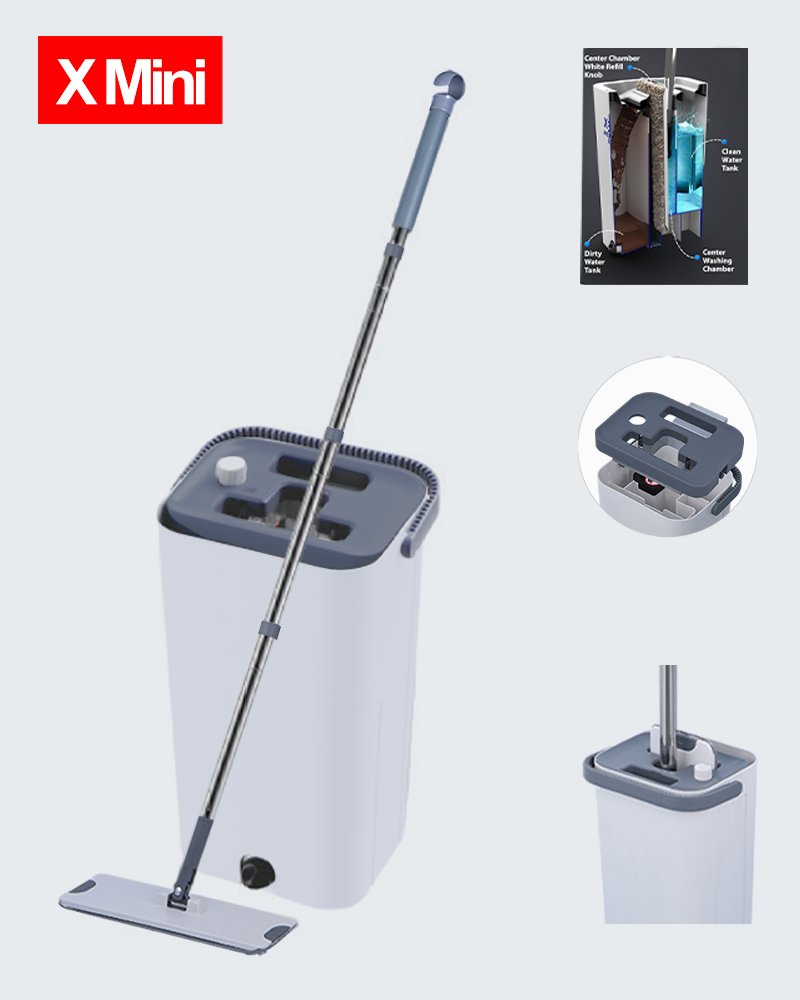
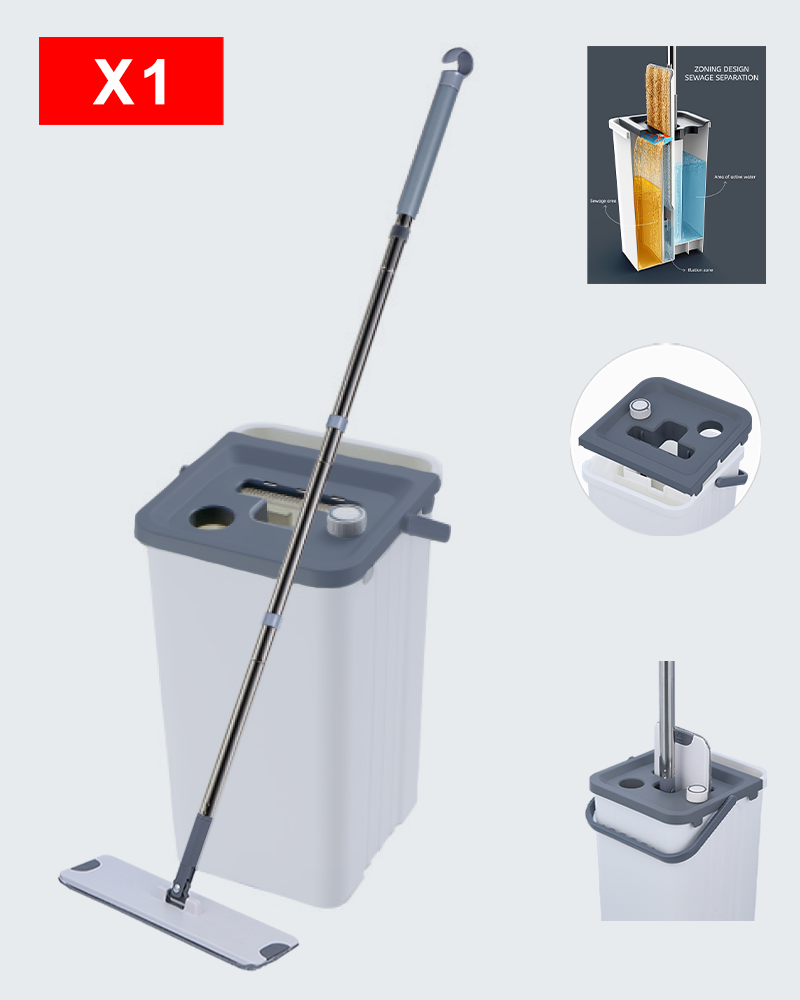
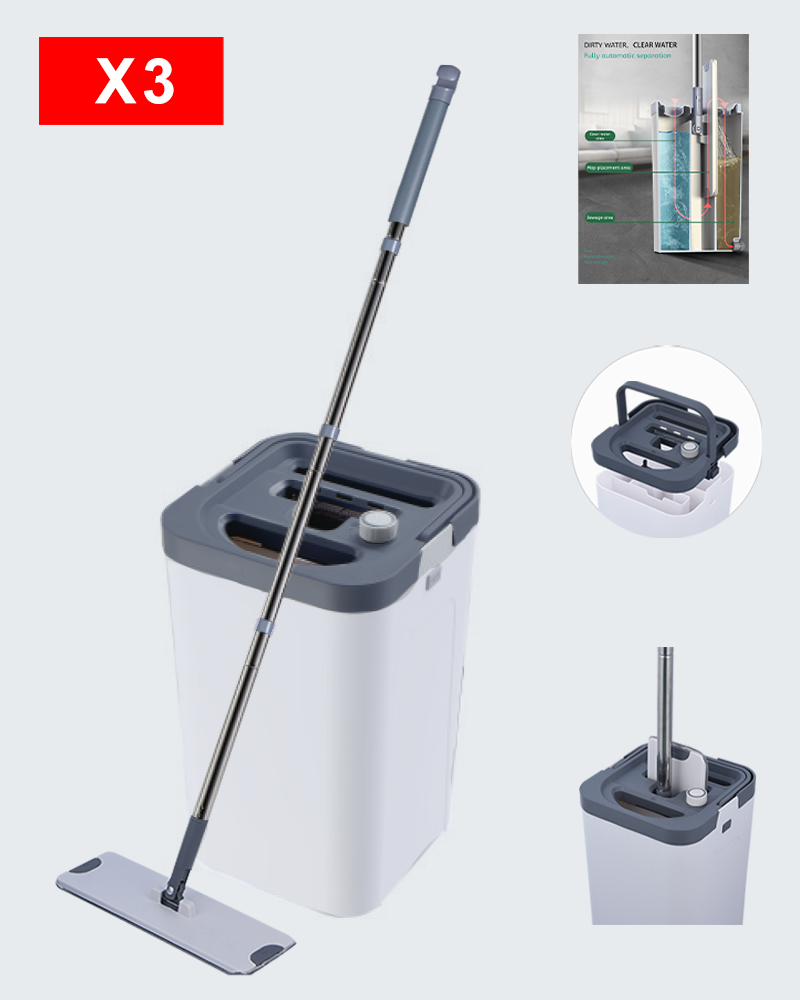
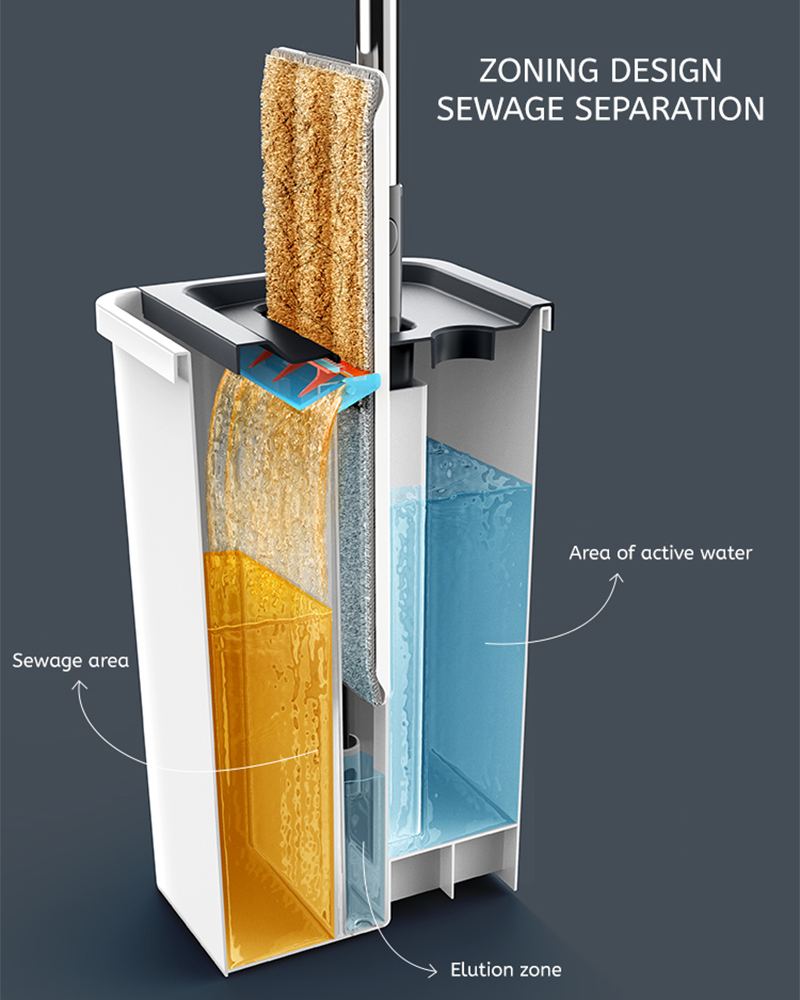 Clean and Dirty Water Separation Flat Mop Bucket SetSeparate clean and dirty water compartments help keep rinse water cleaner across a full flat, with a 360° flat mop and hands-free wringing.View Product →
For homes where the mop is used twice a week rather than twice a month, the practical benefit is water consumption. A separated bucket handles a full flat with one fill, while a single-bucket routine often needs a mid-clean change.
The mop head contributes as much as the liquid
Microfiber pads trap grit and grease mechanically, which means they clean well with plain water and need less chemistry. Cotton string mops hold a lot of liquid, which suits rough tile and concrete but leaves wood far too wet. Sponge mops release water predictably but flatten quickly and are hard to rinse clean. Chenille and looped microfiber sit in between, with more scrubbing power and a slower release.
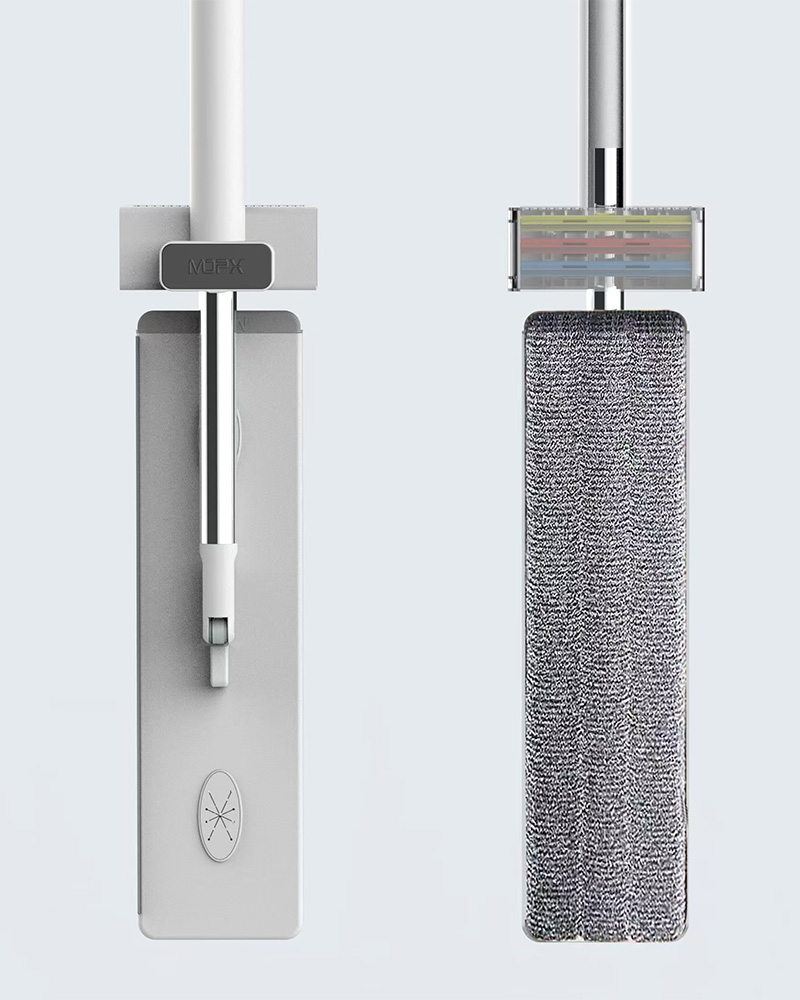
The shape of the head changes the technique too. A flat pad reaches under radiators and along skirting without splashing, and it can be flipped to a dry side for a final pass. A round spinning head covers ground faster in open rooms but struggles in corners. If you are still deciding between formats, this comparison of flat mops and ordinary mops is a useful starting point: flat mop versus ordinary mop.
A six-step routine that works on most hard floors
- Remove loose grit with a vacuum or a dry microfiber pad. Mopping over sand is how finishes get scratched.
- Fill the bucket with warm water and measure the cleaner rather than pouring by eye.
- Wet the pad, then wring or squeeze it until it is damp rather than dripping.
- Work in sections of roughly 2 by 2 metres, starting at the far wall and moving toward the door.
- Rinse or swap the pad before it turns grey, and change the water when it stops looking like water.
- Leave the floor to air dry without walking on it for ten minutes, or buff with a dry pad on stone and tile.
Steps four and five are where most cleaning time is lost. A pad that is rinsed twice per room cleans better than a pad that is pressed harder once.
Where mopping usually goes wrong
- Using hot water on wood, which flashes off and leaves detergent haze.
- Adding more product when the floor still looks dull, instead of rinsing the pad.
- Mopping in circles, which spreads soil back over cleaned areas.
- Storing a damp pad in a closed bucket, which produces a sour smell within a day.
- Ignoring the rinse step on tile, where detergent film shows under low sunlight.
Capacity, effort and small spaces
Room size should decide the tool as much as the cleaner. A 40 square metre ground floor with a hallway and kitchen needs a bucket that holds enough solution for a single fill and a wringer that removes water without a second person. Large-capacity systems exist for exactly that reason, and they also reduce the number of trips to the tap.
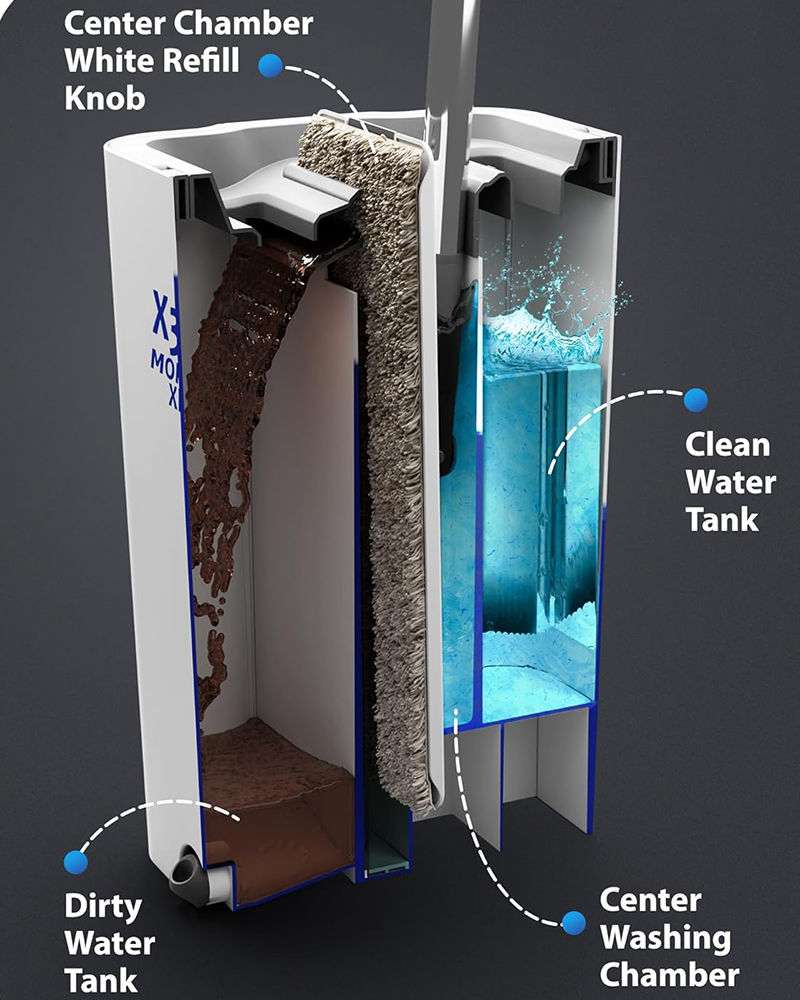 Professional Big Capacity Flat Mop Bucket Set with Water SeparationLarge 4.5 L clean and dirty water compartments suit bigger floors, while the 360° flat mop handles wet and dry cleaning around furniture.View Product →
Small flats and bathrooms have the opposite problem: a full bucket is heavy, awkward to empty and rarely needed. A compact set that handles both wet and dry passes covers a 30 square metre flat with one fill and stores in a cupboard. Where hand strength or wrist strain is a factor, a hands-free wringing mechanism removes the twisting step entirely.
 Hands Free Washing Flat Mop Bucket Set for Compact SpacesA hands-free wringer avoids touching the mop head, and the compact 4 L bucket suits small flats, bathrooms, and routine wet or dry cleaning.View Product →
Buying decisions for retailers and own-brand programmes
The same variables scale up when a buyer is specifying a mop and bucket range rather than choosing one for a kitchen. Pad weight, fibre blend, wringer geometry and bucket volume all affect the landed cost and the packaging size, and small changes in any of them change how the product performs on the shelf. A supplier that controls the moulding, the pad construction and the assembly in one facility can hold those tolerances across repeat orders, which matters more than a single sample that cleans well.
MOP X has manufactured flat mops and bucket systems in Ningbo since 2008, shipping to retail and private-label programmes in more than 50 countries, with separation and wringing designs covered by more than 40 national patents. Details of the manufacturing base and the OEM and ODM process are on the MOP X company page.
Choosing what to mop a floor with comes down to three decisions made in the right order: identify the finish, dilute for that finish, then use a mop and bucket that keep clean water clean until the last pass. Get those right and the floor dries clear without a second attempt.