
 English
 Español
 中文简体

Content
- 1 Start With the Gap, Not the Gadget
- 2 The Four Jobs Under a Bed
- 3 Tools That Reach Without Moving Furniture
- 4 Why a Flat Mop Works Under Low Furniture
- 5 Small Spaces and Adjustable Beds
- 6 Dust Control Matters as Much as Reach
- 7 After Cleaning: Protect the Next Result
- 8 A Buying Checklist for Under Bed Cleaning Tools
- 9 The Practical Shortlist
Most under bed cleaning problems start with the wrong tool, not with a lack of effort. A queen bed can leave only 10 cm to 20 cm between the frame and the floor, and a standard vacuum floor head or mop head may not fit. The practical answer is to measure the gap first, then match three tools to three jobs: dry dust and hair, damp wiping, and regular upkeep. If the clearance is below 8 cm, choose a crevice tool or a very low profile duster. If it is 8 cm to 15 cm, a flat mop or long reach vacuum attachment usually works. Above 15 cm, a robot vacuum can help with maintenance, but it will not replace edge cleaning.
Start With the Gap, Not the Gadget
Measure the lowest point of the bed rail, not the mattress height. Also check for center supports, storage boxes, and skirting boards that reduce access. A tool that fits one bed may fail another because the limiting factor is often the height of the head plus the angle of the handle. For household buyers, the useful specification is not handle length alone. It is head height, joint angle, and whether the tool can turn without lifting the bed.
A simple rule helps. Under 8 cm, use a flexible crevice tool, a thin electrostatic duster, or a microfiber cloth wrapped around a flat handle. From 8 cm to 15 cm, a low profile flat mop and a long reach vacuum attachment cover most dry and damp work. Above 15 cm, many robot vacuums can pass, but corners and baseboards still need manual attention. For product buyers and brand owners, this is why under bed cleaning tools should be specified by clearance range and floor type, not just by category name.
The Four Jobs Under a Bed
Under bed space usually holds four kinds of work. Treating them separately prevents the common mistake of using one wet tool for every problem.
- Loose dust, lint, and pet hair on hard floors or carpet edges.
- Small debris such as crumbs, hair ties, and paper fragments.
- Sticky marks, light grease, and dried spills on hard flooring.
- Dust control after cleaning so particles do not settle again.
Dry removal comes first because wetting dust only turns it into mud that is harder to reach. A vacuum with a narrow attachment is the safest first pass. A damp mop or cloth follows only where the floor is washable. A dust trapping product can be used last, but it should be tested on a hidden area because some sprays leave a film on wood or laminate.
Tools That Reach Without Moving Furniture
The best under bed cleaning tools are not always specialty products. Several common tools work well when their limits are understood. The table below compares the main options by job and clearance.
| Tool | Best use | Watch-outs |
|---|---|---|
| Long reach vacuum attachment | Dust, hair, and crumbs in gaps around 8 cm to 20 cm | Use a HEPA filter where possible and avoid blocking airflow |
| Electrostatic duster | Light dust on hard floors and baseboards | Not suitable for crumbs or heavy hair |
| Flat mop with low profile head | Damp wiping and edge cleaning under low furniture | Wring well and avoid soaking wood or laminate |
| Handheld air blower | Loosening dust in open gaps before vacuuming | Can spread dust unless the room is contained |
| Robot vacuum | Regular upkeep where clearance fits | Not a replacement for corners and tight edges |
| Dust trapping spray | Final dust control on sealed hard floors | Test for residue and follow the label |
A long reach vacuum attachment is the most reliable first tool because it removes dust instead of moving it. Look for a flexible crevice tool with a soft tip so it does not scratch the bed frame. An electrostatic duster is useful for light surface dust, but it should be washed or replaced after use. A flat mop is the best choice for damp wiping because its head can slide under the rail without lifting the bed.
Air blowers need care. They can push dust out of a gap, but they also push it into the room. Use short bursts and vacuum immediately. Robot vacuums are helpful for maintenance, but many need at least 8 cm to 10 cm of clearance, and they still miss the last few centimeters along the wall. A dust trapping spray can reduce settling, but overuse can create a sticky layer that attracts more dust.
Why a Flat Mop Works Under Low Furniture
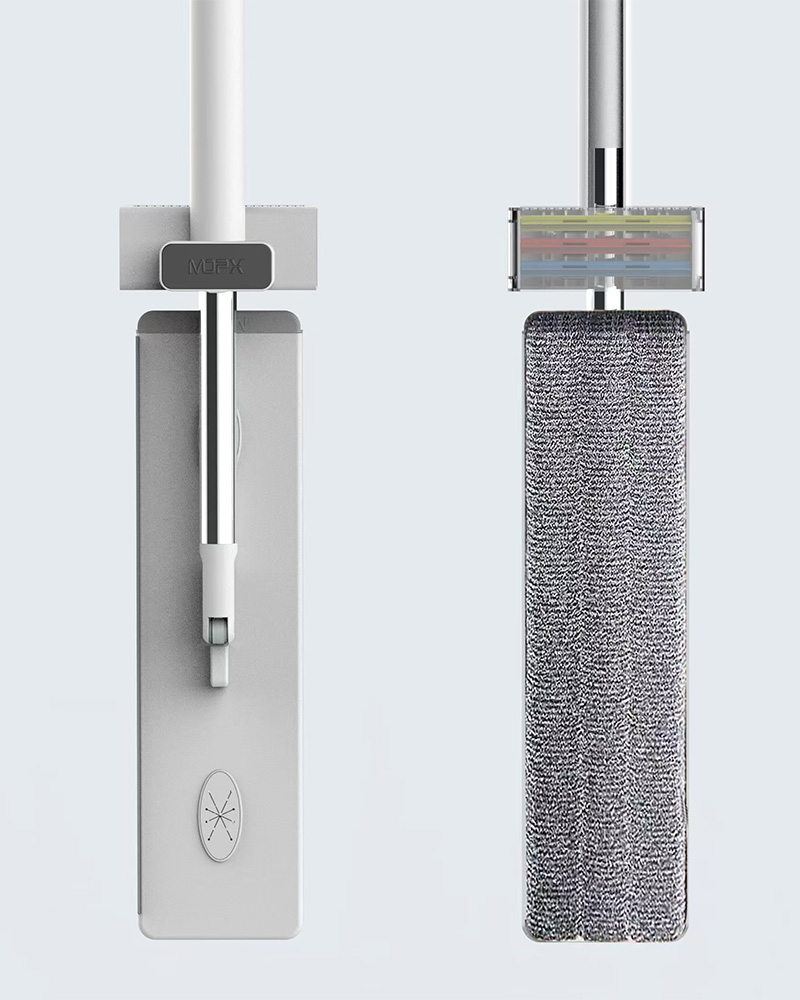
A flat mop works under a bed because the cleaning surface is wide, thin, and usually backed by a swivel joint. That combination lets the head lie close to the floor while the handle stays at a comfortable angle. For damp wiping, microfiber is a practical material because it lifts fine dust and holds light moisture without dripping. The key is to use the mop damp, not wet. Excess water can swell wood, dull laminate, and leave streaks that are hard to see under low light.
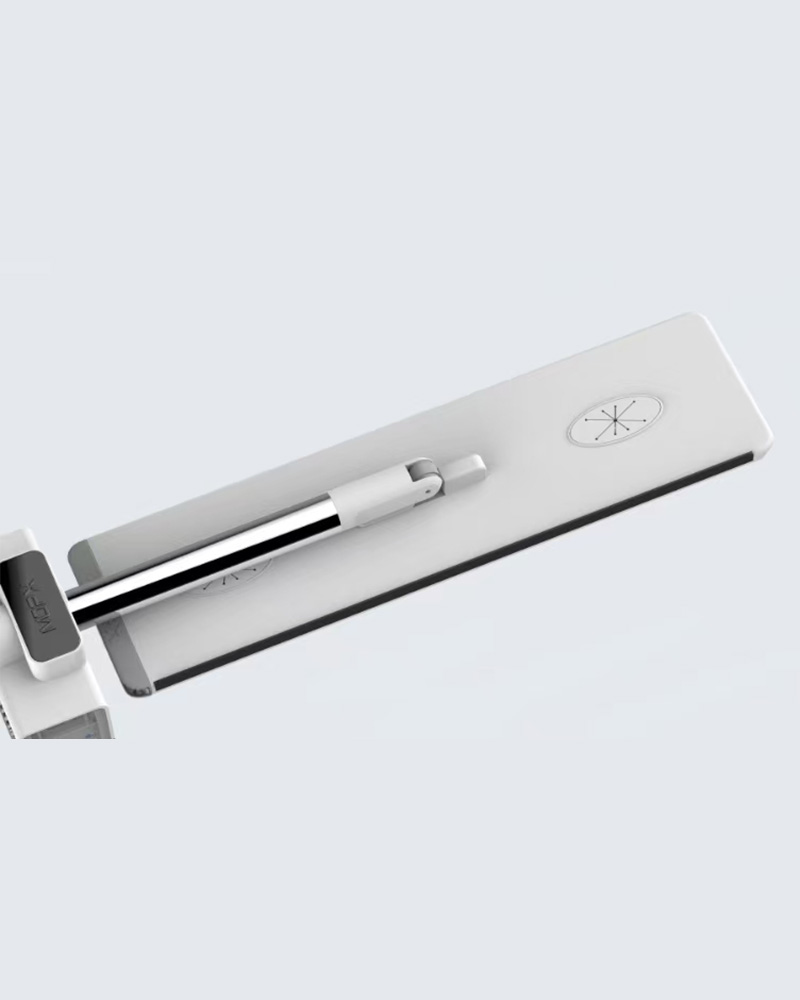 MOP X Flat Mop for Low-Clearance Floor CleaningA low-profile flat mop with a 360° rotating head and 156 cm handle, useful for cleaning under furniture and on hard floors.View Product →
For households, check the head height before buying. A head that is 1 cm too tall is useless under a low rail. For private label and OEM programs, the same point becomes a specification issue. Head height, joint angle, handle length, and mop pad thickness should be agreed before sampling, because a small change in any one of them can change the clearance range. The MOP X flat mop platform is built around this low profile approach, with the mop and bucket system designed as a complete cleaning unit rather than a handle sold alone.
Small Spaces and Adjustable Beds
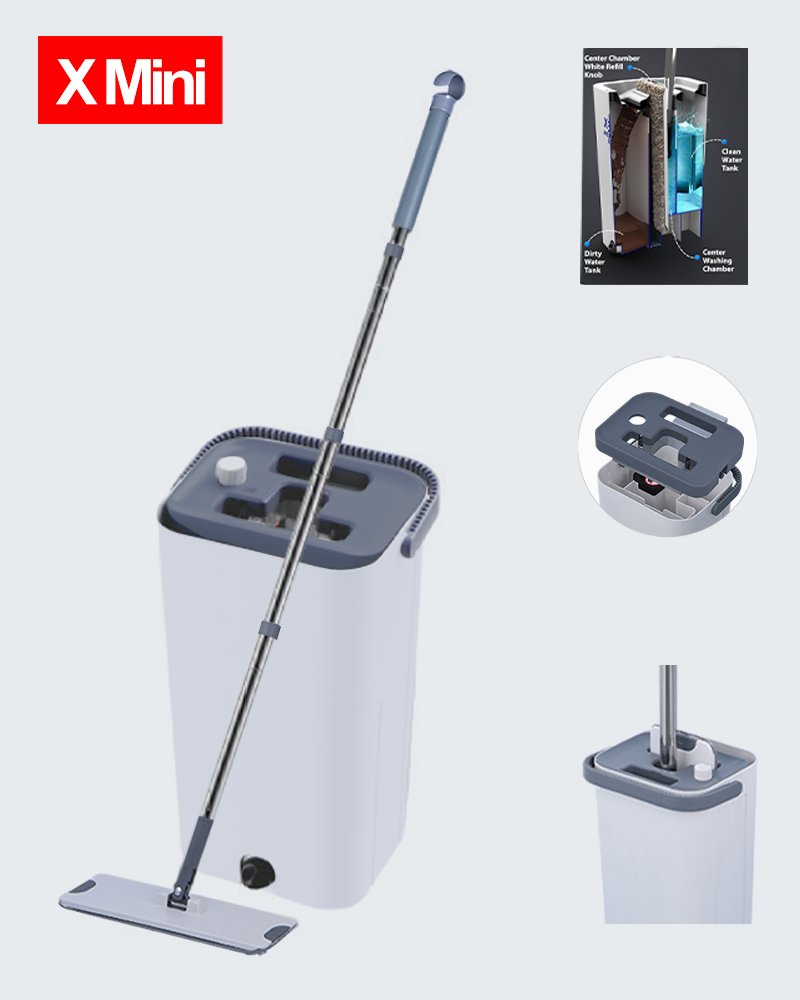
Small bedrooms and adjustable beds create a different problem. The gap may change when the head section is raised, and a long handle can become awkward near wardrobes or side tables. A mini flat mop or a compact wet and dry set is often easier to control in these spaces. It can clean under a bed, then move to a bathroom, balcony, or entryway without taking up much storage room.
 MOP X Mini Flat Mop Bucket Set for Tight SpacesCompact wet-and-dry set with a 360° mini mop head and dual-compartment bucket, suited to small rooms, tight storage, and quick touch-ups.View Product →
For a compact tool, check two tolerances. First, the mop head should be thin enough for the lowest gap in the room. Second, the bucket or cleaning tray should fit the storage space. A mini set is not a substitute for a full size mop on large floors, but it is a sensible second tool for tight rooms and quick touch ups.
Dust Control Matters as Much as Reach
Under bed dust is often fine and light. Dry sweeping or a fast cloth pass can lift it into the air, where it settles on bedding and nearby surfaces. A vacuum with a HEPA filter is the better first step because it captures fine particles instead of redistributing them. After vacuuming, a damp microfiber pass picks up the remaining film. Keep the mop head clean, because a loaded pad will spread dust rather than remove it.
Dust trapping sprays can help on sealed hard floors, but they are not a cleaning step on their own. They work best after dust and hair are removed. Test on a small area first, especially on dark wood or matte laminate where residue shows easily. If the floor is carpeted, skip the spray and use the vacuum with a suitable floor tool. For allergy sensitive rooms, focus on removal and ventilation rather than fragranced products.
After Cleaning: Protect the Next Result
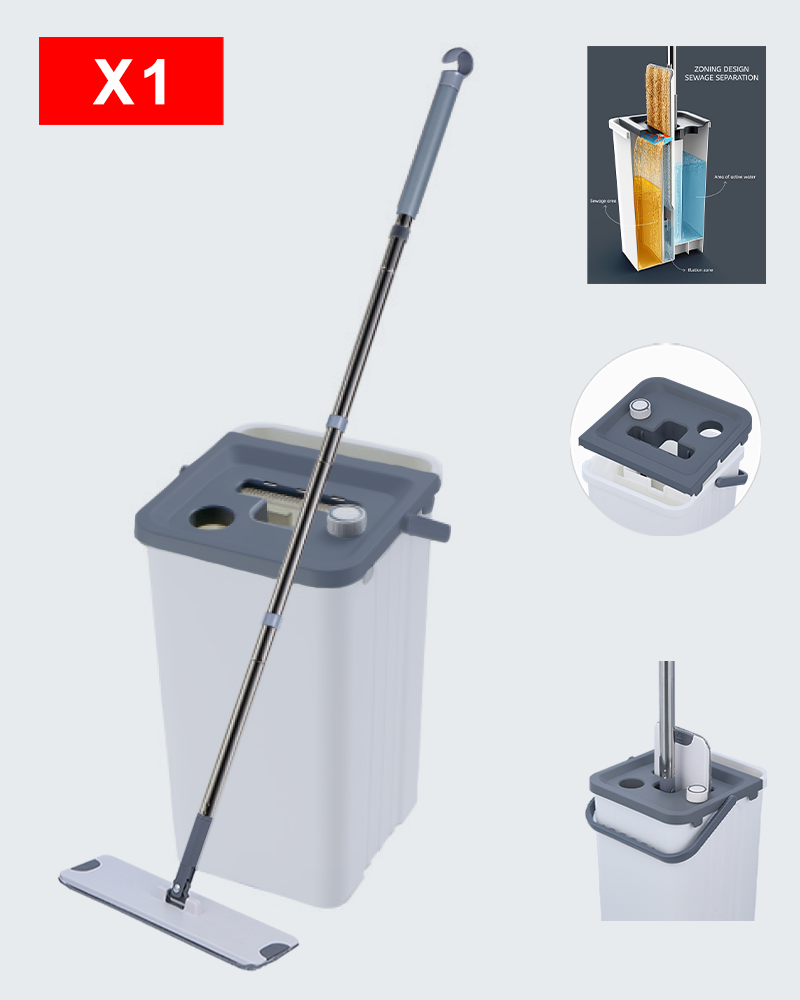
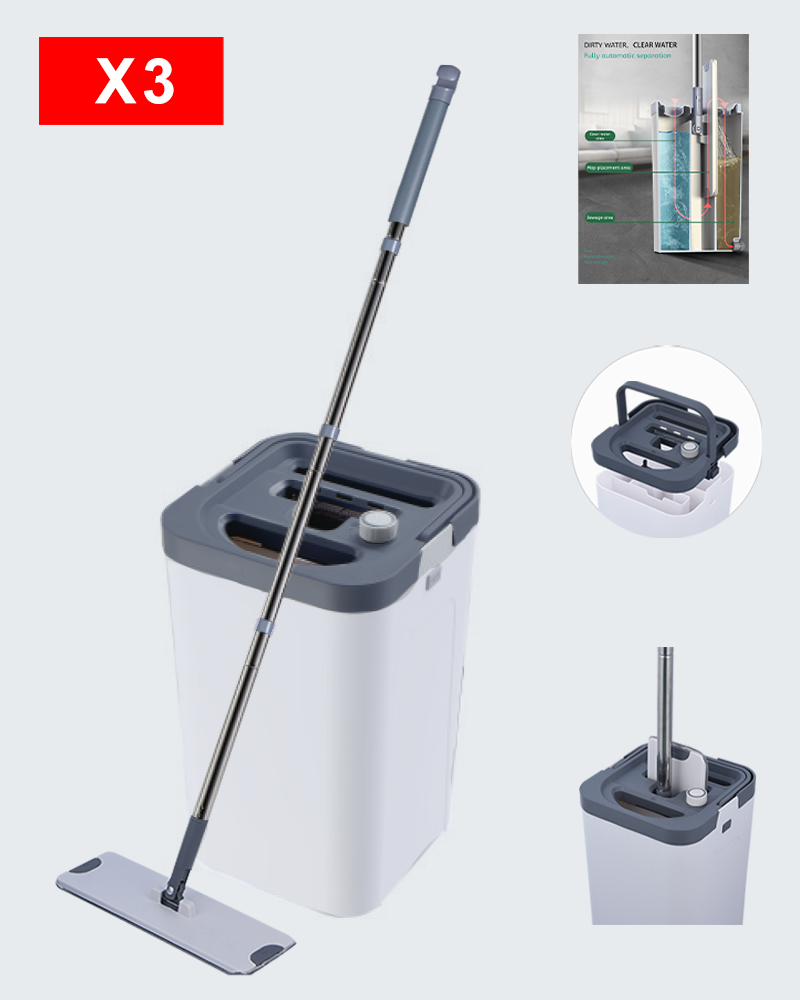
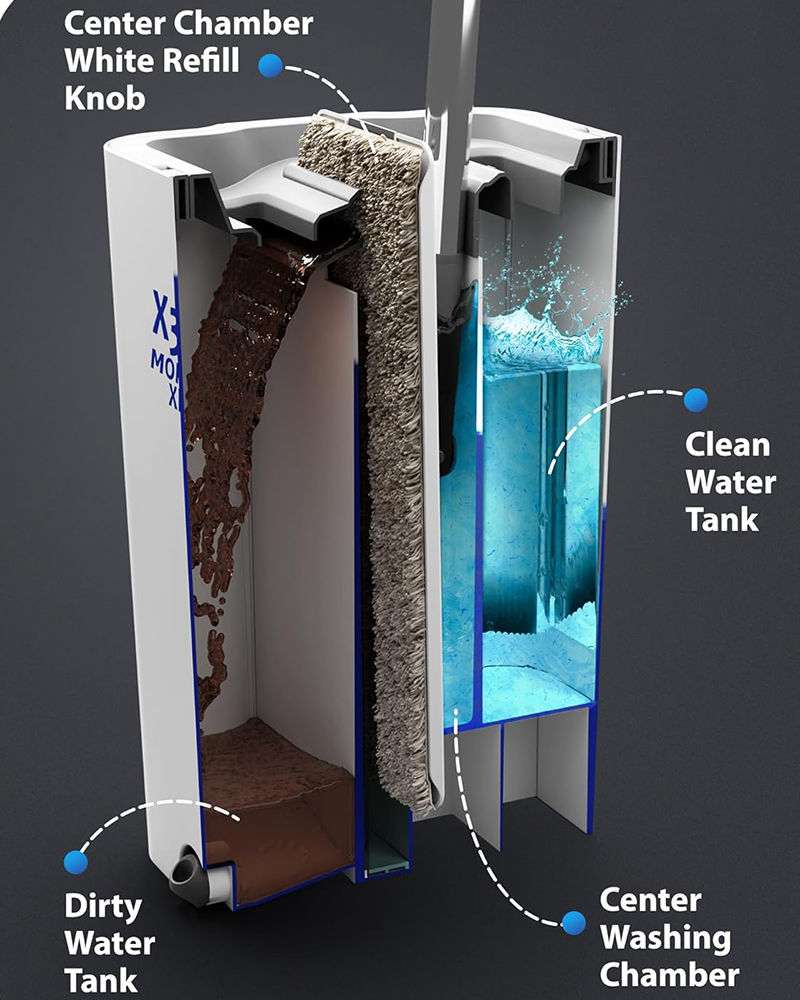
The job is not finished when the mop leaves the floor. Rinse the mop pad, remove hair from the head, and let both dry fully before storage. A damp pad left in a bucket can develop odor and reduce cleaning performance next time. If the bucket system separates clean and dirty water, check that the dirty section is emptied and rinsed. That simple step keeps dirty water from being reused on the next room.
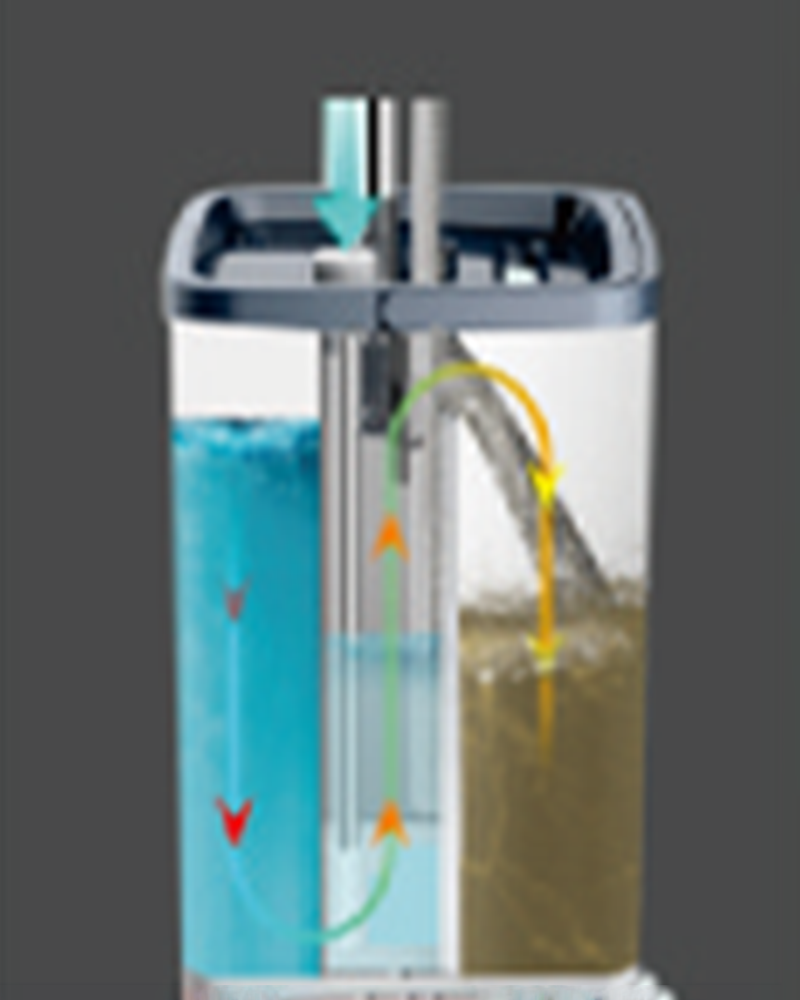 Hands-Free MOP X Flat Mop Bucket SetA flat mop bucket set with hands-free wringing and a 360° head, helping keep hands clean while cleaning floors and maintaining the mop.View Product →
A hands-free washing bucket reduces contact with dirty water and makes the after cleaning routine easier to repeat. For a deeper maintenance routine, follow a practical guide to cleaning and maintaining a flat mop after use. The goal is not a perfect showroom finish under the bed. It is a repeatable routine that removes dust before it builds up again.
A Buying Checklist for Under Bed Cleaning Tools
Use a short checklist before buying or specifying a tool. It will separate a useful under bed cleaner from a product that only looks suitable in a photo.
- Measure the lowest clearance in the room, not the average height.
- Check head height, joint angle, and handle length together.
- Match the tool to the floor: hard floor, carpet, or mixed surfaces.
- Choose microfiber for damp wiping and a HEPA vacuum for fine dust.
- Confirm that the mop pad or duster can be washed or replaced.
- Test whether the bucket or storage tray fits the available space.
- For wholesale programs, agree on head height and pad thickness in the sample stage.
Buyers who compare only handle length often miss the real constraint. A mop with a long handle but a thick head will still fail under a low bed. A vacuum with strong suction but a bulky floor head will still stop at the rail. The useful combination is thin access, controlled dust removal, and a cleaning routine that can be repeated without moving heavy furniture.
The Practical Shortlist
For most homes, the best under bed cleaning tools are a long reach vacuum attachment, a low profile flat mop, and a light duster for edges. Add a compact wet and dry set for small rooms, and use a robot vacuum only as maintenance where clearance allows. Measure first, keep moisture low, and clean the tool after use. That approach solves the reach problem without turning a simple cleaning task into a furniture moving project.