
 English
 Español
 中文简体

Content
A painter finishing a stairwell notices the same thing every time. The walls look fine until light rakes across the skirting board and shows a grey film that a standard mop head cannot reach without soaking the paint. A baseboard mop exists to solve that one problem, and the version that actually works is decided by three numbers rather than by the handle or the colour of the bucket.
Short version: pick a flat mop with a pad under 8 mm thick when dry, a head profile under 30 mm, and enough water control that the pad feels damp instead of wet. Everything else, including the bucket design and the branding on the retail box, is secondary to those three points. The rest of this guide explains why they matter, where thin padding fails anyway, and how a baseboard cleaning program should be specified before samples are approved.
What a Baseboard Mop Really Is
A baseboard mop is not a separate machine. It is a flat mop configured for vertical edges and narrow gaps, so the same frame a factory already produces for floor work can usually carry it. The intended reach is door jambs, window edges, crown moulding, toe kicks, radiator fins and the strip of floor that sits behind a toilet or a sliding door track.
The use case is narrow enough that most of the design effort goes into the pad and the joint, not the pole. That is also why cheap versions disappoint: they copy the shape of a flat mop without adjusting the parts that touch the wall.
Where it differs from a standard flat mop
- Pad thickness: 5 to 8 mm dry. A thicker pad curls at the fold and pushes dirty water upward into the paint line.
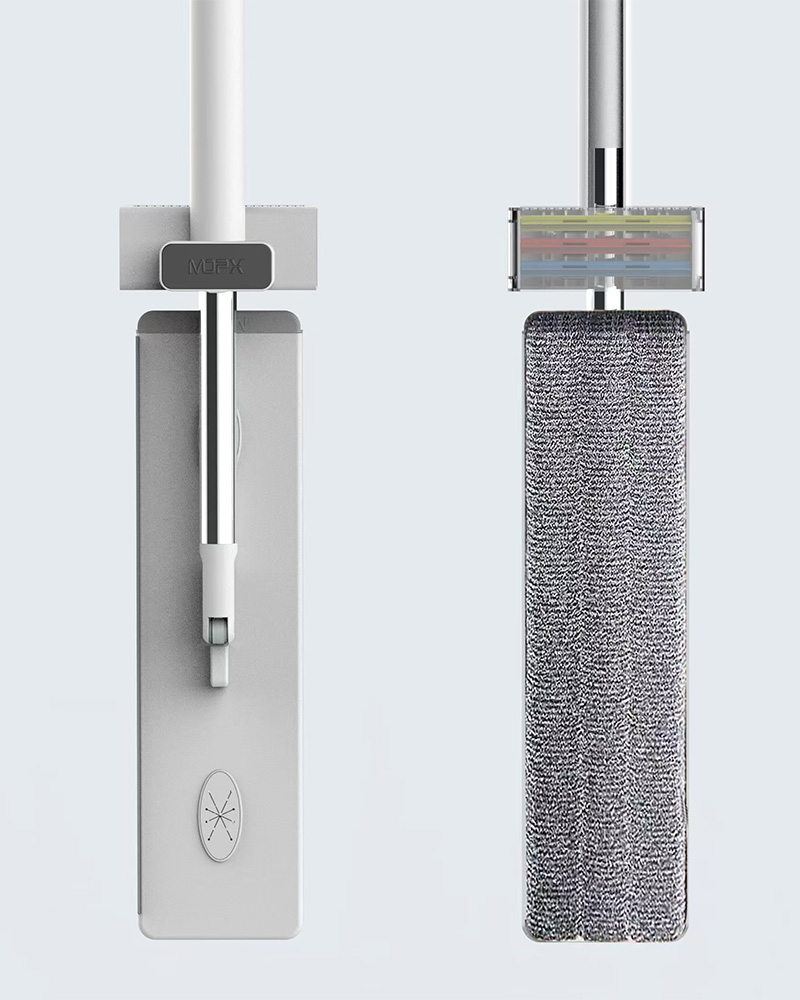
- Head height: under 30 mm, so the plate slides beneath toe kicks, radiator valves and low furniture without tilting.
- Swivel joint: at least 180 degrees, preferably full rotation, so the pad can sit flat against the wall instead of angling away from it.
- Handle: adjustable between roughly 60 cm and 140 cm, because baseboard work alternates between kneeling height and overhead crown moulding.
None of this is exotic engineering. It is a set of tolerances, and tolerances are exactly what a buyer should be checking when a supplier sends a sample that looks correct in a photograph.
Specifications That Decide the Result
Most samples are compared on a showroom floor, which hides the only differences that matter in a home. The table below is the checklist used when a private label customer asks for a baseboard configuration and needs the sample to survive a real wall.
| Specification | Practical target | Why it matters | Typical failure when missed |
|---|---|---|---|
| Pad thickness | 5 to 8 mm when dry | Thin pads follow the curve of a baseboard and release soil at the rinse step | Thick pads push water upward and leave a streak line at the paint edge |
| Head profile | Under 30 mm | Slides under toe kicks, radiators and door tracks | A tall head hits the trim and skips the last strip of floor |
| Head width | 25 to 35 cm | Covers a wall run in one or two passes without overreaching | Wide heads twist on narrow casings and miss corner returns |
| Swivel range | 180 degrees minimum, full rotation preferred | Keeps the pad flat on the board instead of angled | A stiff joint forces the user to press harder, driving water into the wall |
| Pad weight | 300 gsm microfiber or above | Holds dust and lifts the grey film in a single pass | Light cloths shed lint and need two or three passes |
| Water control | Damp to the touch, no drip | Protects paint, MDF and drywall joints | A dripping pad swells the board and stains the wall below the line |
Where a Baseboard Mop Earns Its Place
Three situations justify the tool, and each one changes what the operator needs from it.
Move out and turnover cleaning
An empty property is judged at skirting height. Dust settles there after every room is cleared, and the same pad that wipes the board can be turned to pick up the floor line underneath it. Speed matters more than depth here, so a wide head with quick pad changes wins.
Kitchens and bathrooms
Splash zones carry grease and soap residue rather than plain dust, and the film bonds hard to painted trim. A damp microfiber pad with a short pile lifts it without flooding the joint between board and floor. This is the case where too much water does the most visible damage.
Pre paint and post renovation
Fine sanding dust is the hardest material to remove because it re-suspends the moment a pad passes over it. A dry pass with a clean pad, followed by a damp pass with a second pad, keeps dust from turning into a paste along the top edge of the board. Painters notice this immediately, because a paste line shows through a fresh coat.
The Bucket Matters More Than the Handle
Baseboard cleaning fails for a boring reason more often than a technical one: the pad is already dirty by the time it reaches the wall. A whole floor gets mopped first, the water turns grey, and the same pad then runs along every skirting board in the house. The result is a thin film of everything that was on the floor.
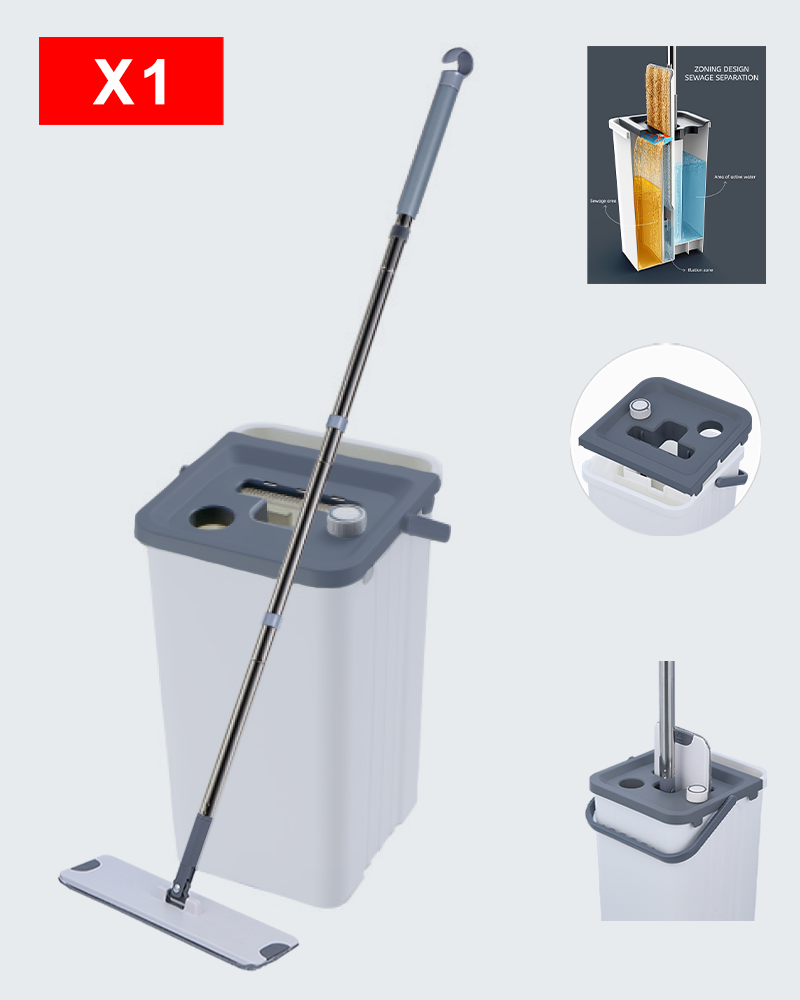
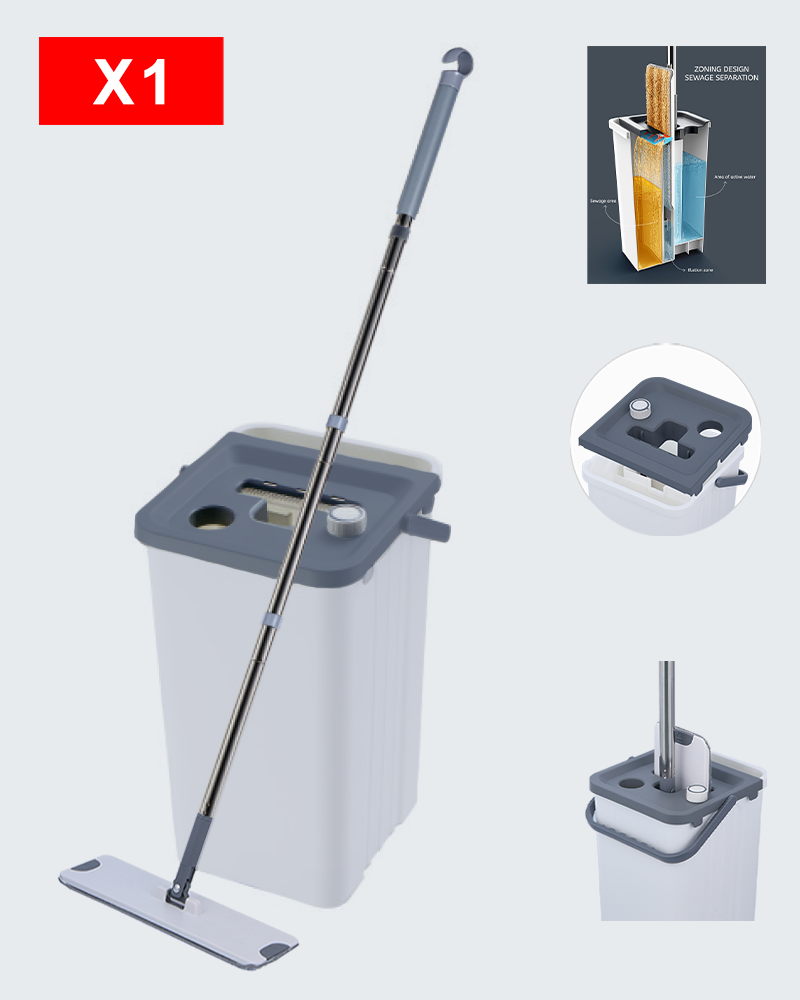 Clean And Dirty Water Separation Mop Bucket SetSeparates clean and dirty water so the wash side stays cleaner through a full floor, with a 360° flat mop for wet and dry cleaning.View Product →
Separating clean water from dirty water solves that directly. The wash side stays usable through a full floor, and the pad leaves the bucket with clean fibres rather than recycled soil. For a household this is convenience; for a contract cleaner it is the difference between one pad per property and three.
Capacity then decides how far one fill goes. A large family home with long wall runs suits a bigger tank, while apartments and bathrooms are better served by a compact set that stores in a cupboard. Neither choice changes the wall result, but both change how often the operator stops.
A Cleaning Sequence That Avoids Streaks
The tool cannot compensate for the wrong order of work. This sequence removes the visible film without leaving a wet line at the paint edge.
- Dust first with a dry pad or a vacuum brush, working from the top of the profile down so loose material does not fall onto a damp surface.
- Start at the crown or the top edge and pull downward in one direction only. Back and forth motion re-deposits soil at the stopping point.
- Keep the pad damp, and test it on the back of a wrist. If water runs, the pad is too wet for painted trim.
- Work in runs of about a metre, then rinse or swap the pad. Long runs load the cloth and smear the last section.
- Finish with a dry pass along the joint where the board meets the floor, which is where standing water collects.
- Ventilate the room and let the trim dry fully before replacing furniture or applying any coating.
Pad hygiene is a purchase decision as much as a habit. The guidance on maintaining a flat mop after use covers wash temperature, drying position and how often microfiber needs replacing, which is useful when a cleaning team is trying to keep results consistent across sites.
What Buyers Should Specify Before Sampling
For a retailer, distributor or brand owner, a baseboard configuration is a specification problem rather than a product idea. The frame, pad size and swivel are set first, because changing any of them later usually means new tooling on the plate or a new cutting size on the pad.
- Pad size range and the corner return radius the pad must reach on a standard casing profile.
- Handle material, adjustable length range and the locking mechanism, which is the part most often returned by end users.
- Bucket configuration, tank capacity and whether the wash and rinse zones are physically separated.
- Packaging claims that can be supported in writing, including fibre content and recycled material percentages.
- Certification and social audit documents, since category buyers increasingly ask for both before listing a line.
A source manufacturer with an established flat mop platform can usually adapt an existing head and bucket rather than starting from a blank drawing. That is the practical advantage of a focused product range: the base design, the separation system and more than 40 national patents sit behind the sample, and a full order typically moves from confirmation to shipment in about 30 days. Factories operating to ISO 9001 and BSCI standards also shorten the paperwork stage, which is often the slowest part of a private label launch.
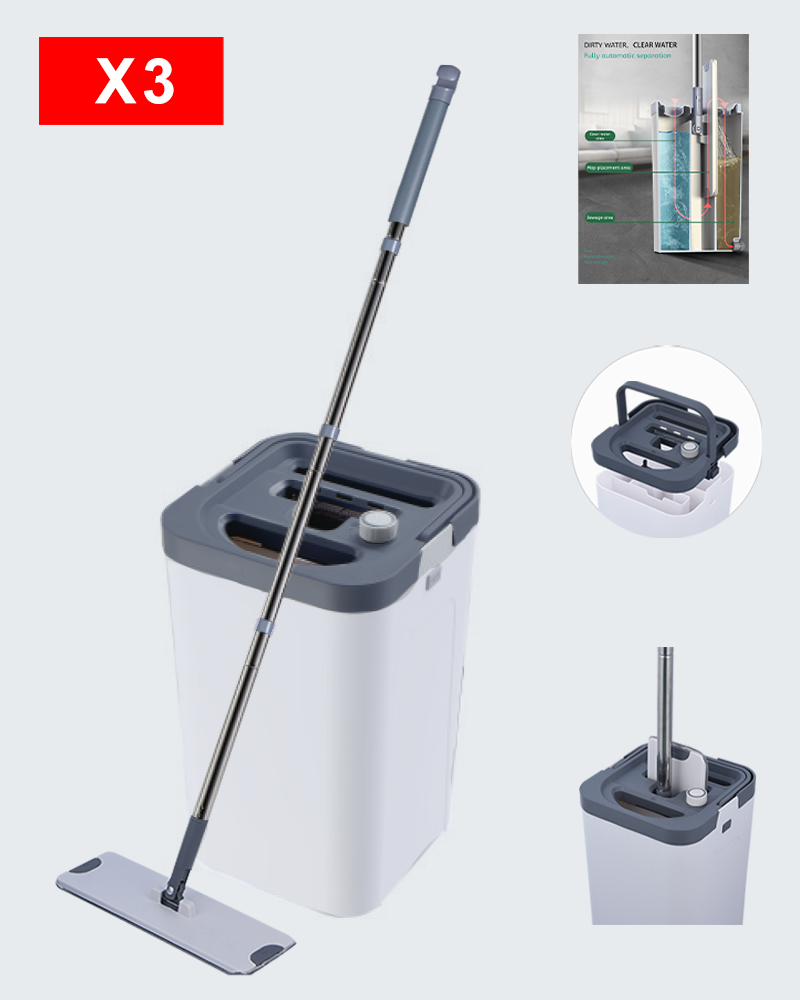
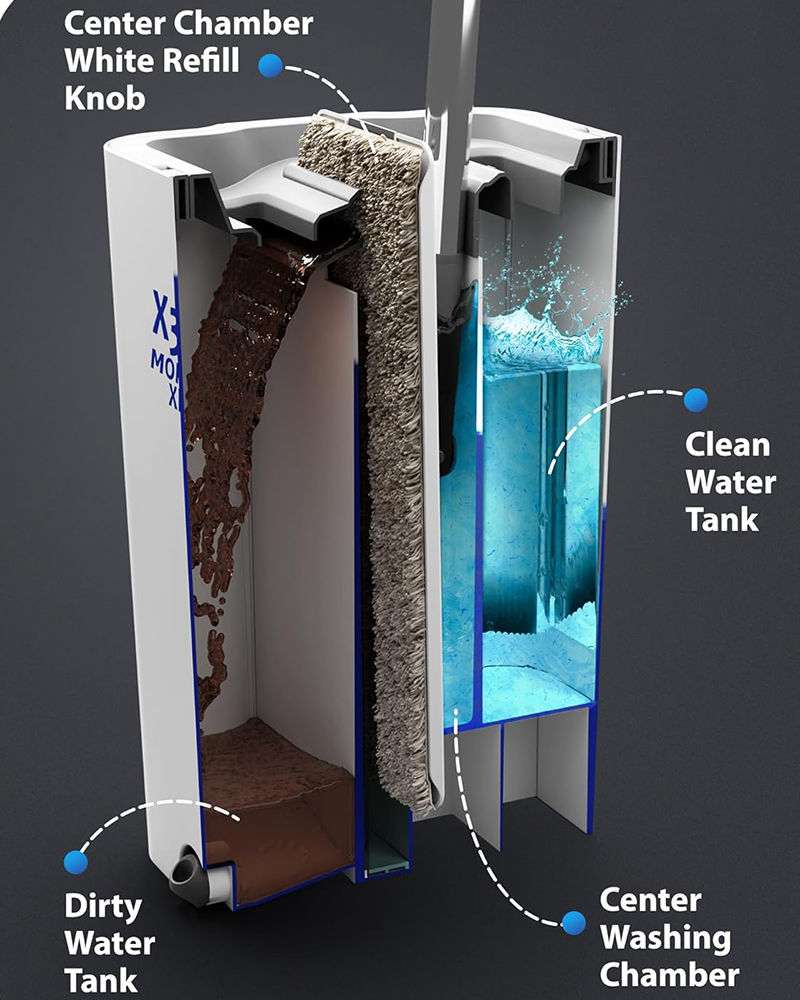 Professional Mopx Big Capacity Flat Mop Bucket SetLarge-capacity separated water bucket and 360° flat mop support wet and dry cleaning in big homes, offices, and commercial spaces.View Product →
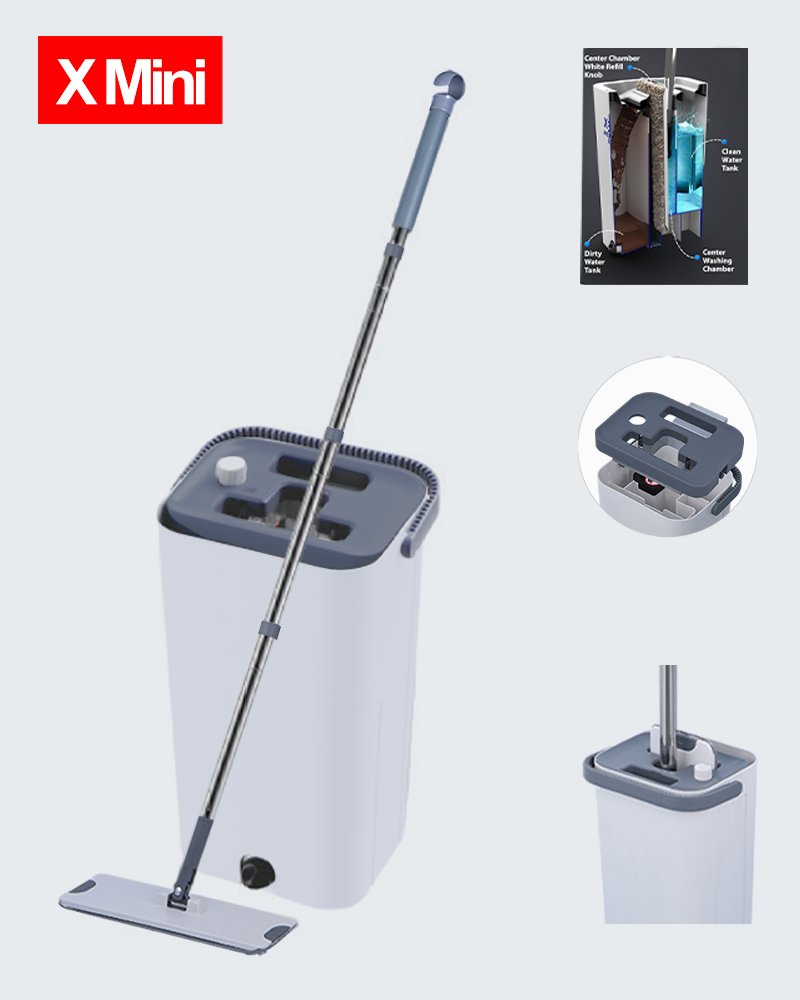
Two configurations cover most programs. A mini dry and wet set suits small living spaces, bathrooms and gift or promotional packaging, where shelf footprint matters. A large capacity professional set suits big homes, cleaning contractors and markets where fewer water changes translate into labour savings. Sampling both, with identical pads, shows the real difference in handling rather than the difference in appearance.
Wet And Dry Use Mopx Mini Flat Mop Bucket SetCompact mini flat mop set separates clean and dirty water, with a 360° head for wet and dry cleaning around edges and corners.View Product →The baseboard problem is small and repetitive, which is why it is usually solved badly. A thin pad, a low head profile and a bucket that keeps clean water clean will handle painted trim, crown moulding and toe kicks without marking the wall. Everything else in the specification should be judged against those three points, whether the user is cleaning a hallway on a Saturday morning or a buyer is assembling a category line for the next season.