
 English
 Español
 中文简体
中文简体
Content
The moment you raise a standard floor sponge mop above shoulder height, the handle flexes, water drips from the sponge, and the head snaps away from the surface. That is the problem a ceiling cleaning mop is designed to solve. A ceiling cleaning mop is not a different machine; it is a flat mop system with an extendable handle, a wide washable pad, and a bucket or sink method that keeps the pad barely damp. Used correctly, it allows you to clean ceilings, cornices, and upper walls with both feet on the floor.
Why Use a Ceiling Cleaning Mop Instead of a Ladder and Cloth?
Working overhead from a ladder is slow and dangerous. A person who stretches to reach a ceiling puts weight on the small joints of the fingers and neck, and even a modest overreach can pull the ladder sideways. A ceiling mop avoids that risk because the handle, not your body, does the reaching. The critical point is the contact area. If the head of the mop is wide and flat, it can trap dust in a single pass rather than in repeated small circles.
The horizontal bars above compare the average contact width of four overhead-cleaning tools. The ceiling flat mop reaches 45 centimetres of usable wiping surface per stroke, so it clears a 15 square metre room with noticeably fewer passes. A microfibre cloth wrapped around an extension handle covers 32 centimetres but crumples when it touches a rough ceiling. A sponge mop drops to 22 centimetres and tends to drip a thin layer of dirty water as it moves. A string mop is the narrowest and often leaves lint on paint. This is why most professional cleaners choose a purpose-built flat mop for high surfaces.
What to Look For in Ceiling Cleaning Mops
Handle reach and locking collar
An extendable handle is the first safety feature. It should reach a 260 centimetre ceiling without you raising your heels, and it should lock firmly at the correct length. A telescopic handle with a locking collar is safer than a fixed-length pole because you can shorten it for doors, cupboards, and stairwells. The connection between the pole and the mop head must not wobble; a flimsy joint transfers every small wobble to your shoulders and creates an uneven cleaning line.
Head design
The mop head needs to pivot in two directions so it can lie flat against a ceiling, even when you are approaching it from below. A flat rectangular head distributes pressure evenly across the pad. Rounded heads leave crescent-shaped gaps at the edges and force you to work in small arcs. Look for a head that locks in three positions: flat for ceilings, angled for walls, and vertical for floor use.
Pad material and water control
| Material | Ceiling safety | Best use |
|---|---|---|
| Fine microfibre | Non-scratching and traps dust | Painted and textured ceilings |
| Cotton string | Too wet and leaves lint | Not recommended |
| Cellulose sponge | Drips and can streak | Bathroom spot cleaning |
| Disposable pad | Convenient but limited reuse | Quick touch-ups |
Choose a fine microfibre pad with a stitched edge, because loose fibres catch on rough ceiling textures and pull off material. The pad should work in two states: dry for dust removal and lightly dampened for grease or soap scum. A clean pad matters more than any other detail, so pick a mop body that accepts a standard sized pad and allows you to flip it over to a fresh side.
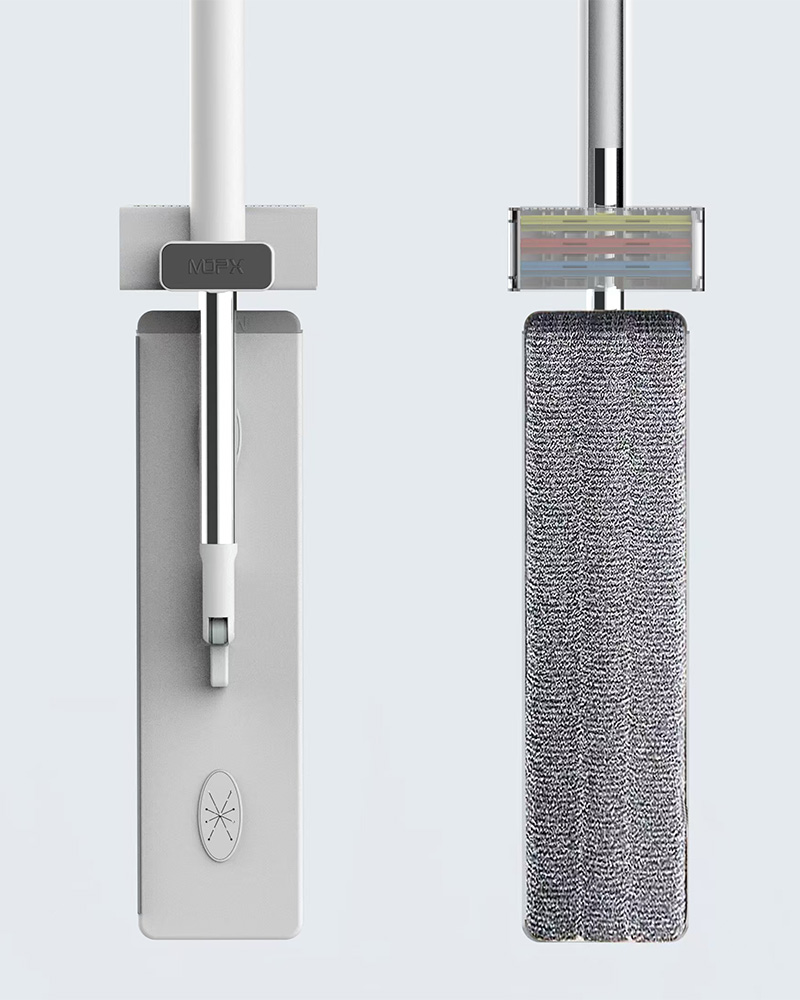
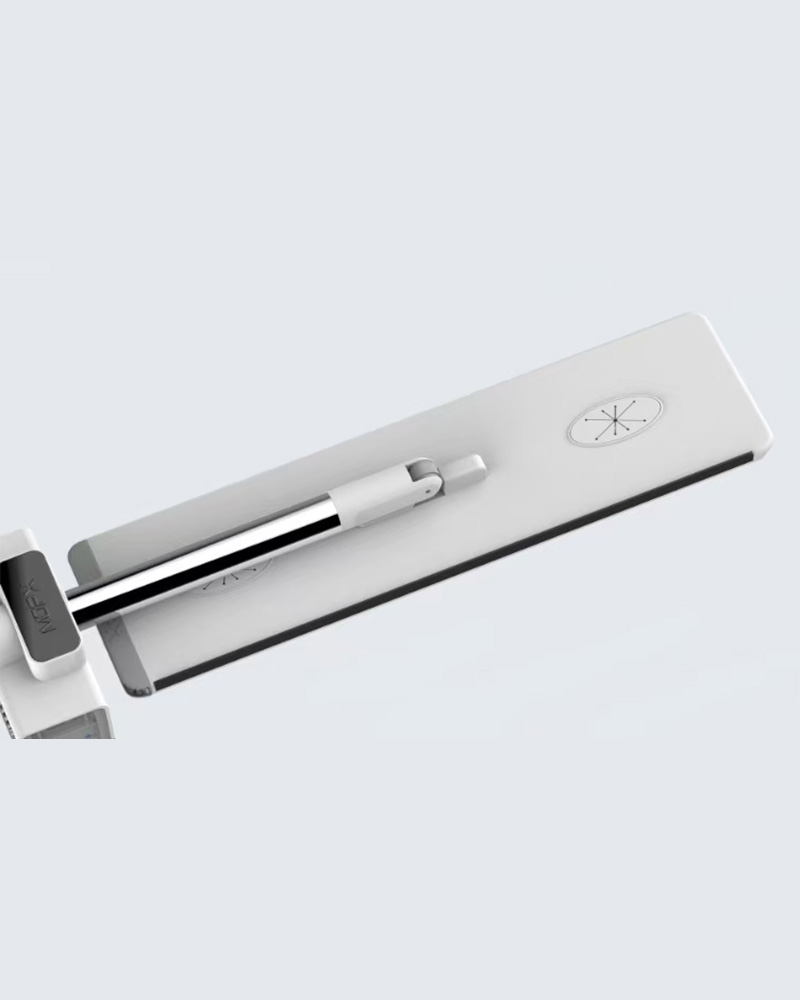 Mopx Flat Mop with 360-Degree Rotating HeadThis stand-alone flat mop accepts a standard microfiber pad and lets you flip to a fresh side, making it a practical choice for ceiling cleaning when paired with a separate clean-water bucket.View Product →
Why a Flat Mop System With a Bucket Set Is More Practical
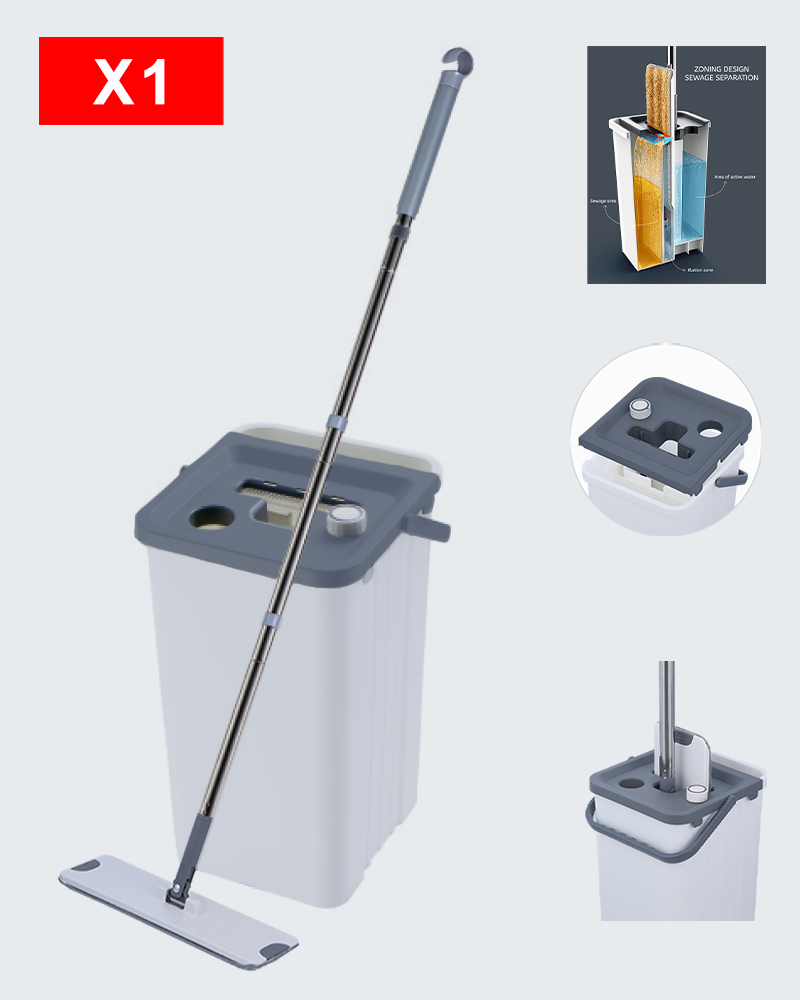
A bucket set is not an afterthought for ceiling cleaning. If you dip the pad into the same water after every pass, the pad carries dirty water back to the ceiling. That is exactly what happens with traditional string mops. A clean and dirty water separation bucket stores clean rinsing water in one compartment and holds used water in another, so every rinse starts with clean water. The result is a cleaner ceiling with fewer visible streaks and less need to change water. See our earlier comparison of flat mop advantages over ordinary mops for more detail on the design.
The radar chart compares the tools across five characteristics that matter when your arms are extended upward. The flat mop posts the highest overall score because its telescopic pole keeps hands low while the head stays flat against the ceiling. Sponge mops lose points because the absorbent head retains water, and the wringer mechanism is difficult to operate overhead. A cloth on an extension handle has decent control but poor coverage and tends to crumple during wiping. There is no single tool that is perfect for every room, but the flat mop is the most balanced for ceilings. It also adapts to walls, high cupboards, and floor use when the pad is swapped.
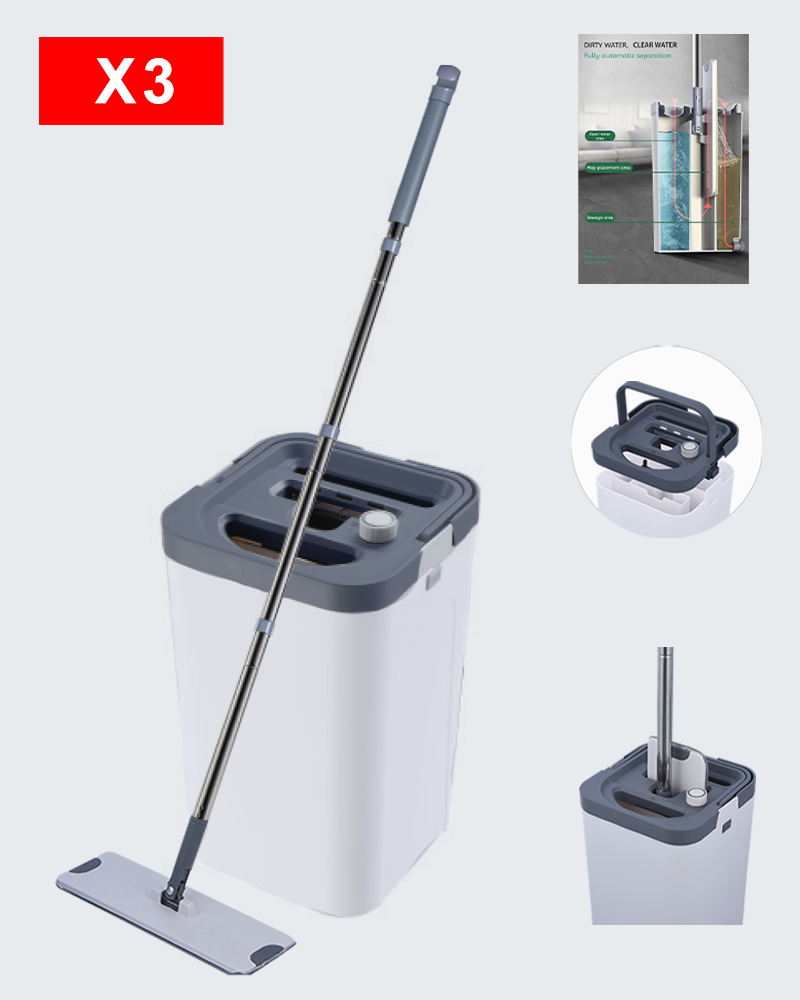
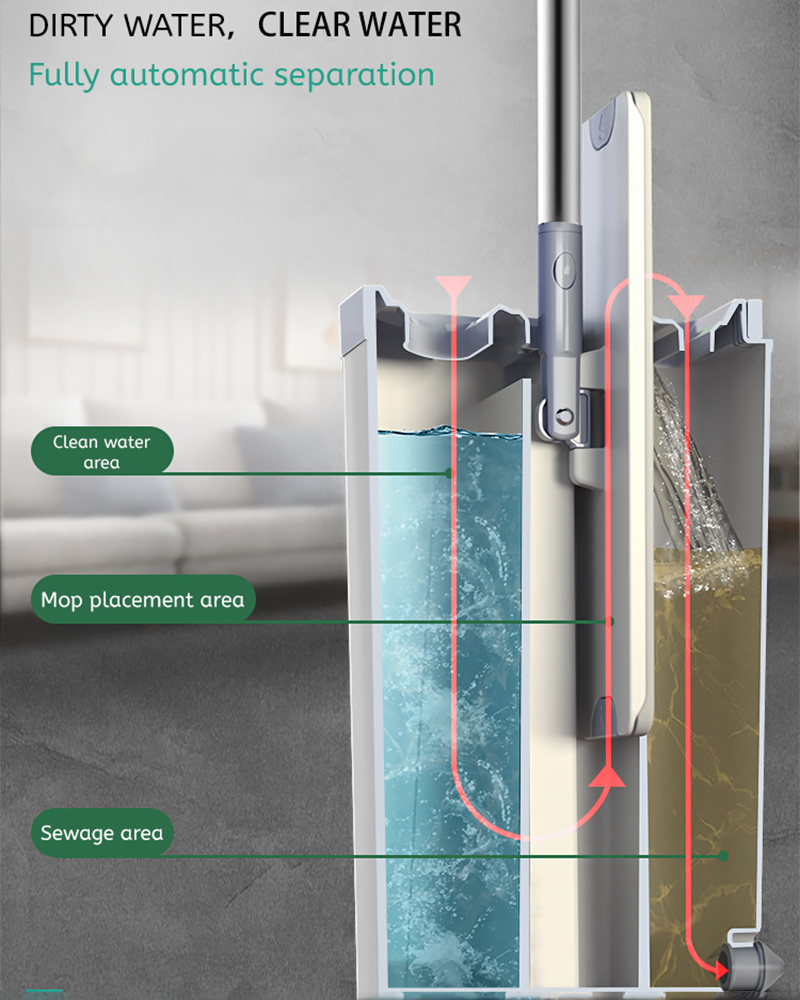 Mopx3 Three-Compartment Separation Flat Mop Bucket SetThe three-compartment bucket isolates clean rinse water from dirty water, so each ceiling wipe starts fresh and avoids re-depositing grime, a key advantage for streak-free results.View Product →
How to Clean a Ceiling With a Ceiling Cleaning Mop
Even the best mop needs a proper order of work. A wet ceiling is a damaged ceiling, so keep the pad barely damp. Turn off the room air conditioner or fan before you start, or the dust will be stirred away from the ceiling. Start at one corner and work across the short dimension of the room, using side-to-side strokes that overlap by one third.
- Dust the ceiling first with a dry microfibre pad.
- Dampen the pad lightly and wring it hard until no water drips.
- Clean in overlapping strokes from left to right.
- Rinse the pad in clean water after every two ceiling panels.
- Switch to a dry pad for a final smoothing pass.
The line chart tracks the amount of dust removed as the same ceiling section is wiped repeatedly. A dense microfibre pad collects most loose dust on the first pass. A cotton string mop, by contrast, glides over surface dust and only begins to collect it after the fibres are worn and split. The gap narrows after the third pass, which suggests you do not need to scrub a ceiling hard. For routine ceiling cleaning, one or two passes with a microfibre flat mop are enough. You should stop when you see the pad showing a clean, uniform contact pattern.
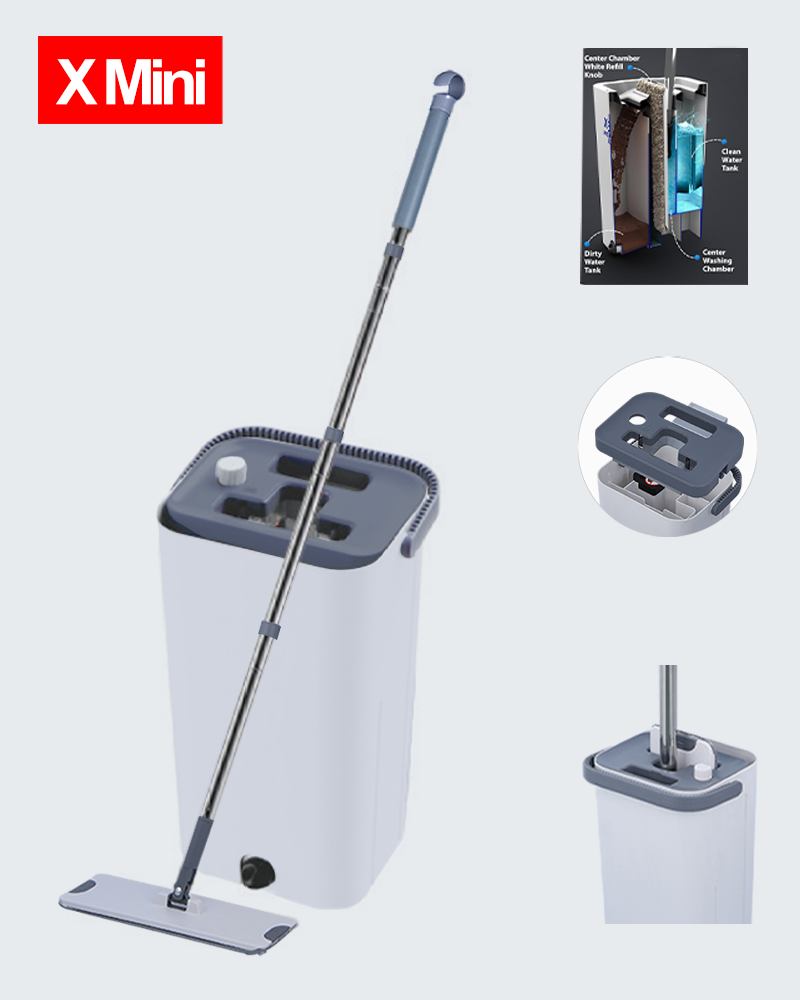
For small bathrooms and low half-ceilings, a mini flat mop bucket set keeps the cleaning step within reach without dragging a full-size bucket into the room.
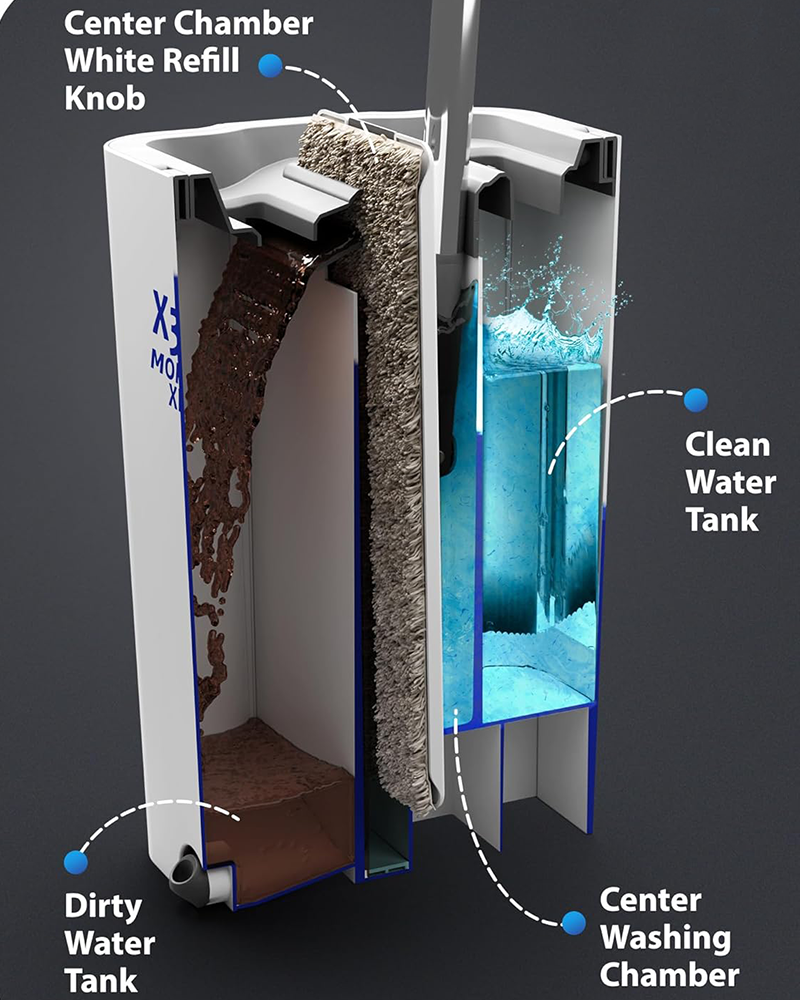 Mopx Mini Flat Mop Bucket Set for Wet and Dry UseA compact bucket set sized for small bathrooms and low ceilings, it offers the same clean-water separation and rotating flat head without hauling a full-size bucket into tight spaces.View Product →
How Much Time Does a Ceiling Cleaning Mop Save?
The main reason people avoid cleaning a ceiling is not the dirt, it is the pain. Holding both arms above your head for more than a couple of minutes causes fatigue and muscle strain. A ceiling cleaning mop reduces that discomfort by cutting the amount of time your elbows are above your shoulders. It also removes the need to carry a ladder between rooms.
The vertical bars compare the time required to clean the same 12 square metre ceiling with tools that are commonly available at home. The flat mop is quick because its wide head and long handle cut the number of trips to the bucket. A cloth on an extension handle works, but the cloth must be rearranged and changed often. A sponge mop is the slowest because it needs to be wrung and is likely to drip. A ladder-based method eats up time in setup and repositioning, and it carries a real fall risk. These times explain why people who switch to ceiling cleaning mops usually keep the ladder folded away.
Clean and Maintain the Mop
A ceiling mop only works as well as its pad after the first use. Rinse the microfibre pad immediately after cleaning, because ceiling dust contains fine particles that can cling to the fabric when they dry. If your mop system includes a clean and dirty water separation bucket, use the clean-water compartment for a final rinse. Hang the mop head to dry in a vertical position so water does not pool behind the pad. A dry pad should be stored with its fibres loose, not folded under pressure.
The short answer is simple: choose a ceiling cleaning mop that is, in effect, a flat mop on an extendable handle with a washable microfibre pad. Keep the pad dry for dusting and barely damp for stains, pair it with a clean and dirty water bucket if you clean more than one room, and avoid any mop that forces you to stretch upward. With the right tool, ceiling cleaning becomes a twice-a-year task instead of a neglected chore that spreads dust onto your furniture.