
 English
 Español
 中文简体
中文简体
Content
- 1 What a Dust Mop Handle and Frame Actually Control
- 2 Handle Specifications Worth Writing into a Purchase Order
- 3 Frame Geometry, Swivel Action and Fabric Attachment
- 4 Where Dust Mop Handles and Frames Fail in the Field
- 5 Thread Joint Wear Across a Full Cleaning Cycle
- 6 Static Pull-Out Load by Connection Type
- 7 Aluminum, Steel or Fiberglass: Comparing Handle Materials
- 8 Sourcing Handles and Frames from a Flat Mop Manufacturer
- 9 Care, Replacement and a Short Pre-Order Checklist
A buyer in Toronto returns a pallet of 48 inch dust mops because six frames will not sit flat on the floor. The fabric is intact, the stitching is sound, and the cartons are undamaged. The problem sits at the joint where the handle meets the frame, and it is exactly the kind of problem that a written specification prevents.
Here is the conclusion first. The frame decides how the mop meets the floor, and the handle decides how much of your effort reaches that frame. Get those two parts right and most remaining decisions become straightforward. Get them wrong and no fabric upgrade will rescue the tool, however many wash cycles the cloth survives.
What a Dust Mop Handle and Frame Actually Control
A dust mop frame is a flat load spreading bar, normally 1.2 mm to 1.8 mm thick steel or molded polymer, with a swivel joint and clips, pockets, or a sleeve that holds the fabric. It must stay flat across its full span while you push forward, then recover when you lift. A 48 inch frame that twists by more than 2 mm along its length lifts at the outer edge, and that lift leaves dust lines along baseboards and under shelving.
The handle is the lever that feeds force into the frame. Commercial handles use 22 mm to 25 mm tubing, and push force on a wet 60 inch dust mop can exceed 100 newtons. A tube with 0.8 mm walls flexes visibly at mid span, while 1.0 mm or heavier keeps the frame tracking straight. Balance matters too: when the grip sits roughly one third of the way down the total length, the wrist does less work across a long shift.
Handle Specifications Worth Writing into a Purchase Order
Four numbers cause most handle complaints: tube diameter, wall thickness, thread engagement length, and overall length. Put them in writing with tolerances, and require wall gauge to be measured at both ends of the tube rather than only at the middle.
| Specification | Typical range | Check at incoming inspection | Risk if out of band |
|---|---|---|---|
| Tube diameter | 22 mm to 25 mm | Fit against frame adapter socket | Wobble and accelerated thread wear |
| Wall thickness | 0.8 mm to 1.2 mm | Gauge both tube ends, not the middle | Visible flex and permanent bend |
| Thread size | M8 or 19 mm rolled thread | Engagement depth after tightening | Stripped threads within months |
| Overall length | 120 cm to 180 cm | Reach versus storage clearance | Poor reach or awkward storage |
| Grip sleeve | TPE or PVC over tube | Bond strength and wet grip | Slipping during wet work |
| Locking mechanism | Twist lock or cam lever | Slip force after 5,000 cycles | Collapse mid stroke |
| Surface finish | Anodized or powder coat | Salt spray hours on file | Rust staining on light floors |
A rolled thread with only 6 mm of engagement strips long before the frame wears out. An adapter socket that is 0.4 mm oversized allows wobble, and wobble transfers stress to the thread every time the mop is lifted. Neither defect appears in a five minute sample inspection, and both appear in a customer complaint six months later.
Frame Geometry, Swivel Action and Fabric Attachment
Frame size changes how a mop behaves in tight spaces. A 24 inch frame with a 360 degree swivel reaches under low shelving and around chair legs. A 60 inch frame covers open aisles faster, but it needs more floor clearance and a stiffer handle to stay flat. Approve a sample only after checking three details: swivel play after 5,000 rotations, clip tension after repeated fabric changes, and the smoothness of the powder coat or anodized finish, since rough edges abrade fabric and shorten its working life.
It also helps to understand how this hardware compares with older string mop designs, which our article on the advantages of flat mops over ordinary mops explains in practical terms.
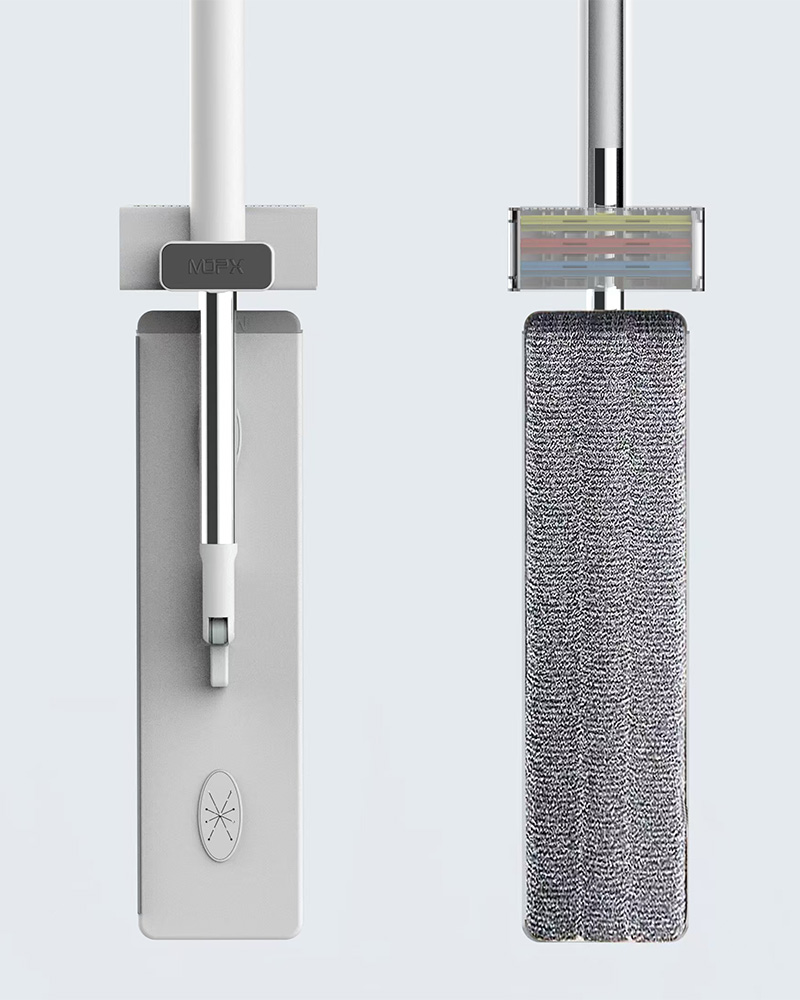
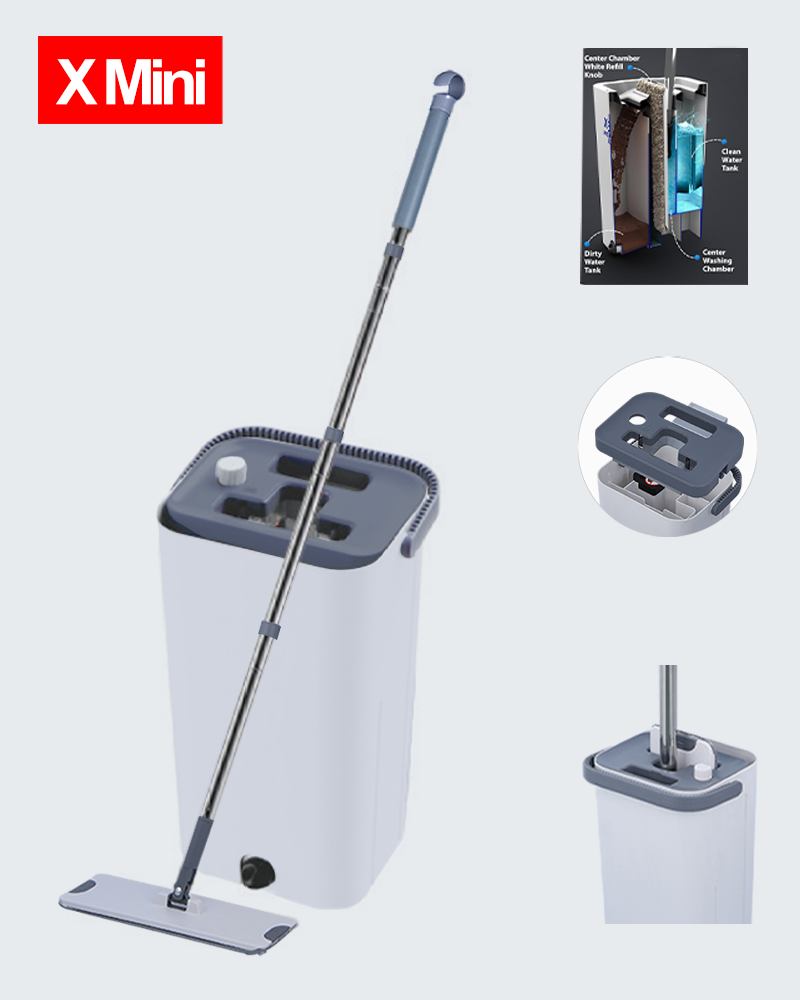
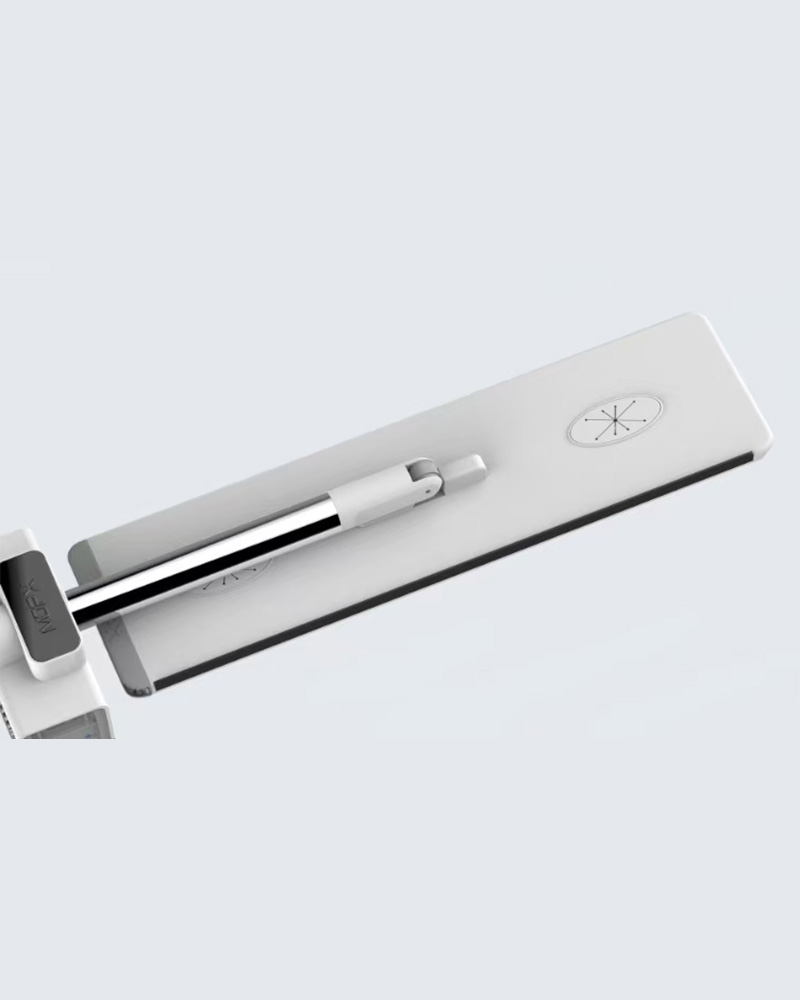 Floor Cleaning Mop Tool Mopx Flat MopDescribe The Floor Cleaning Mop Tool Mopx Flat Mop is a highly efficient and innovative cleaning tool, meticulously engineered to provide exceptional performance in bo...View Product →
Where Dust Mop Handles and Frames Fail in the Field
Service complaints traced to handle and frame defects, share of total
Based on 1,400 warranty records from North American and European retail programs.
The chart shows how repair and return claims break down when a dust mop fails before the fabric does. Thread joint failures take the largest share, at 31 percent, and they almost always begin as a fit problem rather than a materials problem. Bent or twisted frames follow at 24 percent, which reflects frames that were specced too thin for the span they carry. Seized swivels account for 18 percent, usually after dust and grit work into an unsealed bearing. Rust at a weld or joint adds 15 percent, a figure that rises sharply in coastal humidity. Grip sleeve failure is the smallest category at 12 percent, yet it is the defect buyers notice first because it shows up in the hand. Taken together, the three largest causes explain 73 percent of all claims, and each one can be controlled by an incoming inspection step rather than a design overhaul.
Thread Joint Wear Across a Full Cleaning Cycle
Pull-out load retention of the handle joint over 10,000 wash cycles
- Threaded insert with reinforcing collar
- Standard rolled thread direct into the tube
This line tracks how much of the original joint strength remains as a handle is washed, wrung, and reattached over its working life. The reinforced insert holds 85 percent of its starting pull-out load after 10,000 cycles, while the standard rolled thread drops to 60 percent. Most of the loss in the standard thread happens in the first 4,000 cycles, which is why failures often appear during the first year rather than at the end of a product's life. The two curves start at the same point and separate steadily, so the difference is not the initial assembly but the geometry of the joint. Every point on the reinforced curve stays above the 60 percent line, meaning the joint still meets a reasonable service threshold when the mop is retired for other reasons. For a buyer planning a two or three year program, that gap is the difference between a spare parts budget and a returns budget.
Static Pull-Out Load by Connection Type
Static pull-out load before joint failure, kilograms
Bench values from static pull tests on identical 25 mm tubes with a 30 mm adapter.
The bars compare how much straight-line pull each handle connection withstood before it failed. A plain rolled thread gave way at 42 kg, which is modest once you account for the leverage a 60 inch mop puts on that joint. A tapered friction fit added 13 kg, and a ball detent click fitting reached 68 kg, enough for most household and light commercial programs. The threaded insert with a reinforcing collar reached 85 kg, and a welded fixed joint held 110 kg but sacrifices the ability to swap handles or frames. The practical message is that connection geometry matters more than tube diameter, because all five samples used the same tube. If your team replaces handles often but never replaces frames, the collar insert is usually the better compromise between serviceability and strength.
Aluminum, Steel or Fiberglass: Comparing Handle Materials
Handle material comparison across five buying criteria, scored out of 100
- Aluminum 6061 with anodized finish
- Powder-coated steel tube
- Fiberglass composite with a polymer core
The radar view puts three common handle materials side by side on the criteria that buyers actually weigh. Aluminum scores highest for weight advantage and recyclability, which suits crews who carry mops between floors all day. Powder-coated steel wins on stiffness and cost, and reaches the widest of the three shapes on those two axes, but it gives up ground on weight and corrosion. Fiberglass composite sits between them and performs best on corrosion resistance, a real advantage in humid washrooms and coastal markets. No single shape covers the whole chart, which is why a mixed product line usually outperforms a one-size program. If your channel mixes long spans with wet environments, pairing aluminum handles with composite handles often solves more problems than upgrading either one alone.
Sourcing Handles and Frames from a Flat Mop Manufacturer
MOP X, the brand of Ningbo Yaxiang Cleaning Products, has built flat mops and bucket systems since 2008 for retailers and cleaning brands in more than 50 countries. The company holds more than 40 national patents on its cleaning separation designs, runs a five person research team that releases at least ten new items each year, and works to a 30 day window from order confirmation to shipment. ISO 9001 and BSCI certification cover process control and social compliance audits, and the factory sits about 50 km from Ningbo Port, which shortens the inland leg before ocean freight.
Buyers who need a complete system rather than a bare frame can review the full range of flat mop and bucket sets directly on this site.
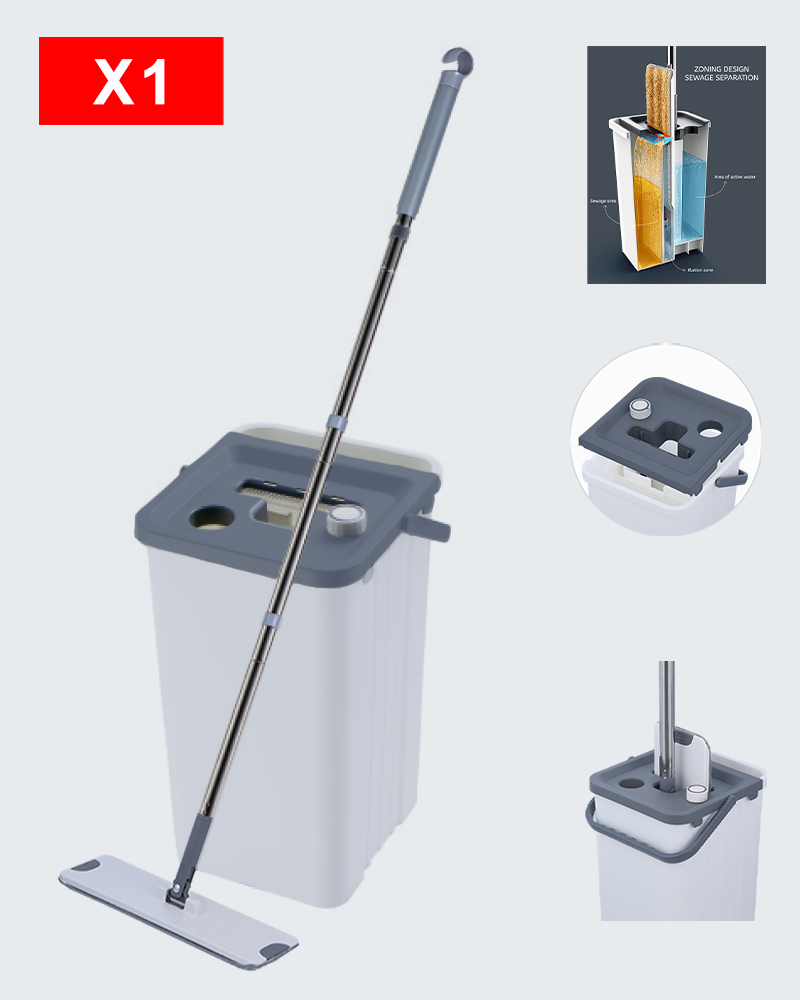
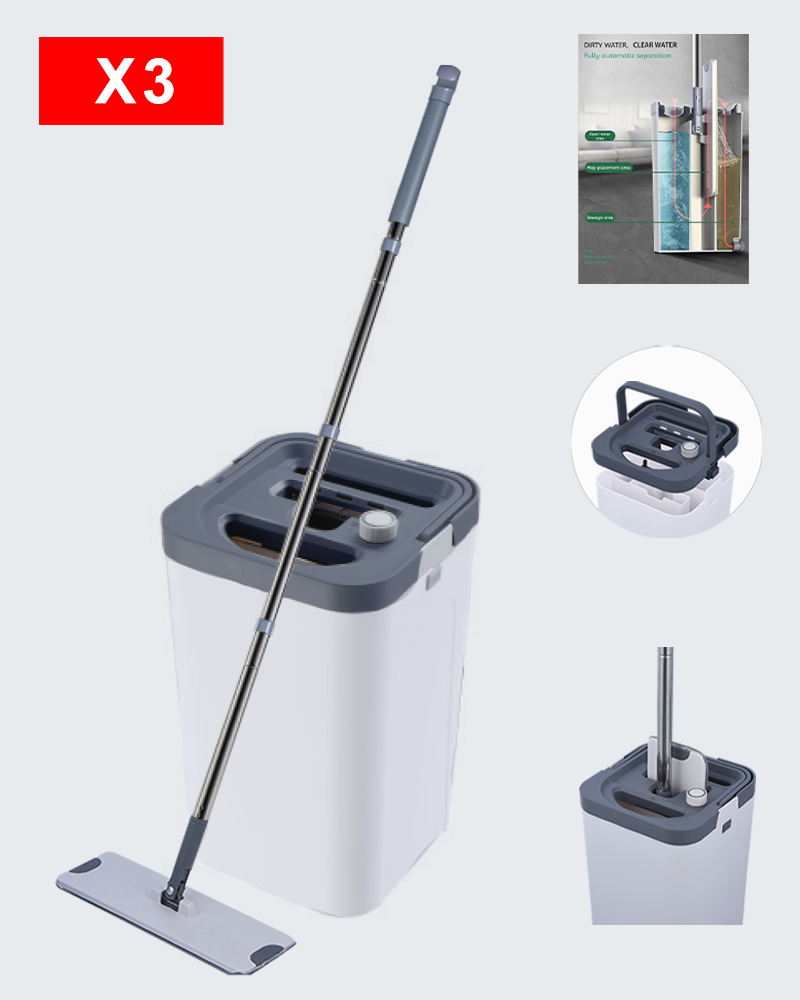
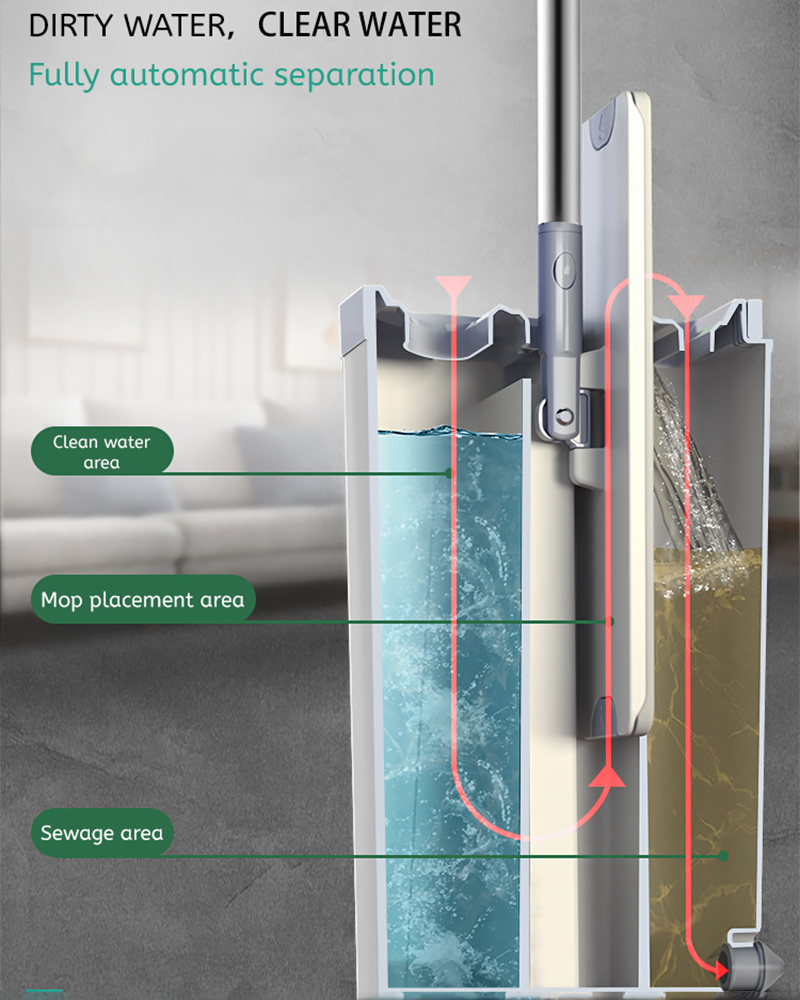 Mopx3 Cleaning Separation Flat Mop Bucket SetDescribe The Mopx3 Cleaning Separation Flat Mop Bucket Set is an advanced and highly efficient cleaning solution designed for both residential and commercial spaces. F...View Product →
  Professional Mopx Big Capacity Flat Mop Bucket SetDescribe The Professional Mopx Big Capacity Flat Mop Bucket Set is an exceptional cleaning tool designed for high-performance and heavy-duty cleaning needs. With its l...View Product →
Two examples show how handles, frames, and buckets are matched during development: the MOP X3 cleaning separation set for households that want cleaner wash water, and the professional big capacity set for large floors where refill stops slow the job down. Both use the same frame and handle standards described above, so spare parts stay interchangeable across the range.
Care, Replacement and a Short Pre-Order Checklist
Handles and frames outlast fabric when they are looked after. Rinse the frame after wet use, dry it before storage, and never leave the mop standing head down in water, because moisture wicks into the swivel and the thread. Check the thread joint every 30 days during heavy use; a handle that turns more than a quarter turn past snug is already worn.
- Confirm tube diameter and wall thickness in writing, measured at both ends.
- Ask for thread engagement length, not just thread size.
- Test swivel play after 5,000 rotations, not on a fresh sample alone.
- Specify frame flatness tolerance, for example 2 mm over the full length.
- Require salt spray hours for any coated or plated part.
- Keep two spare handles for every ten mops in service.
Handles and frames cost little relative to the labor they support. Buying them on specification rather than on price alone is what keeps a floor program running without returns.