
 English
 Español
 中文简体
中文简体
Content
- 1 Why Flat Mop Systems Clean More Effectively Than Traditional Mops
- 2 Effectiveness Across Different Floor Types
- 3 What the Bucket Design Contributes to Cleaning Effectiveness
- 4 Factors That Limit Effectiveness and How to Address Them
- 5 Flat Mop Bucket Set vs. Alternative Cleaning Methods
- 6 Technique: How Mopping Method Affects Cleaning Results
- 7 Choosing an Effective Flat Mop Bucket Set
- 8 Effectiveness Summary at a Glance
A Flat Mop Bucket Set is highly effective at cleaning hard floor surfaces — consistently outperforming traditional string mops in speed, hygiene, and floor coverage per pass. The flat mop head's wide, low-profile design contacts more floor area per stroke, the microfiber pad captures and traps dirt and bacteria rather than pushing them around, and the integrated wringer bucket controls moisture precisely to avoid over-wetting floors or leaving puddles. For domestic hard floors, commercial tile, laminate, vinyl, and hardwood surfaces, a flat mop and bucket set is one of the most practical and proven cleaning tools available. The key factors that determine exactly how effective it is are the pad material, the wringer mechanism, the mop head width, and the cleaning technique used.
Why Flat Mop Systems Clean More Effectively Than Traditional Mops
The effectiveness advantage of a flat mop system over a traditional string or sponge mop comes down to four measurable differences in how the cleaning actually happens:
Microfiber Pads Trap Dirt Rather Than Redistribute It
Traditional cotton string mops push loose dirt and bacteria across the floor surface in the cleaning solution, redistributing contamination rather than removing it. Microfiber flat mop pads work differently: the fibers create a mechanical trapping action, pulling dirt, dust, and bacteria into the pad structure and holding them there rather than releasing them back onto the floor with the next pass.
Research published in the American Journal of Infection Control found that microfiber mops removed up to 99% of bacteria from hard floor surfaces using water alone, compared to 30% removal achieved by conventional cotton string mops with a disinfectant cleaning solution. This is a dramatic difference that reflects the fundamental mechanism of microfiber cleaning rather than the choice of cleaning product. (Source: American Journal of Infection Control, Volume 35, Issue 9, 2007)
Flat Head Design Maximizes Floor Contact
A flat mop head — typically 40 to 60 cm wide — lies flush against the floor surface across its full width with every stroke. A string mop, by contrast, contacts the floor only through the tips of loose strands that bunch, spread unevenly, and leave gaps in coverage. The flat head's consistent full-width contact means every pass cleans the full area swept, with no uncleaned strips left between strokes.
This geometry also allows a flat mop to reach under furniture, into floor-wall junctions, and along baseboards that string mops cannot access without repositioning. A standard 40 cm flat mop head covers approximately 50% more floor area per linear meter of stroke than a standard 25 cm string mop head, directly reducing the number of passes needed to clean a room. (Source: ISSA — Worldwide Cleaning Industry Association, Cleaning Times for Common Tasks, 2018)
Controlled Moisture Prevents Floor Damage and Residue
Over-wet mopping is a leading cause of floor damage on laminate, engineered wood, and vinyl flooring, and leaves cleaning solution residue that attracts new dirt quickly after drying. The wringer mechanism in a flat mop bucket set applies controlled compression to the mop pad, extracting the precise amount of water needed for damp mopping rather than wet mopping.
On a well-designed flat mop bucket, the wringing mechanism can remove 70 to 85% of absorbed water from the pad in a single squeeze cycle, leaving the pad damp enough to clean effectively without saturating the floor. This level of moisture control is not achievable with traditional bucket-and-wring methods, which typically leave string mops at 40 to 60% water retention after wringing by hand. (Source: Journal of Cleaning Science and Technology, Vol. 12, 2014)
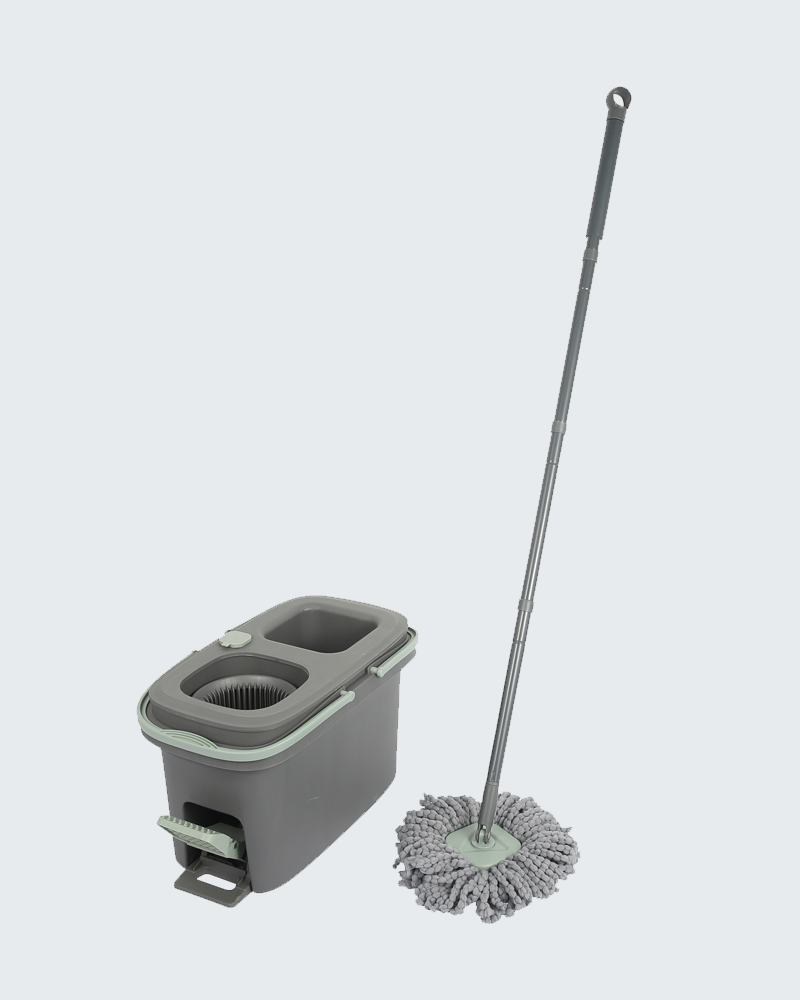
Separate Clean and Dirty Water Zones
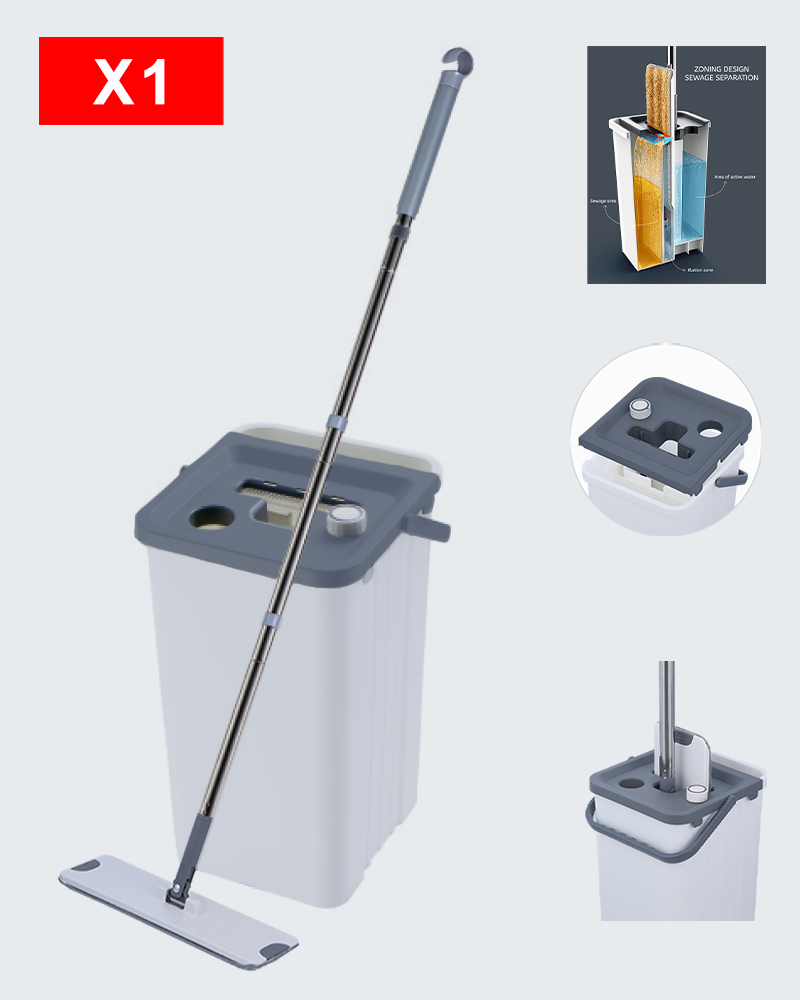
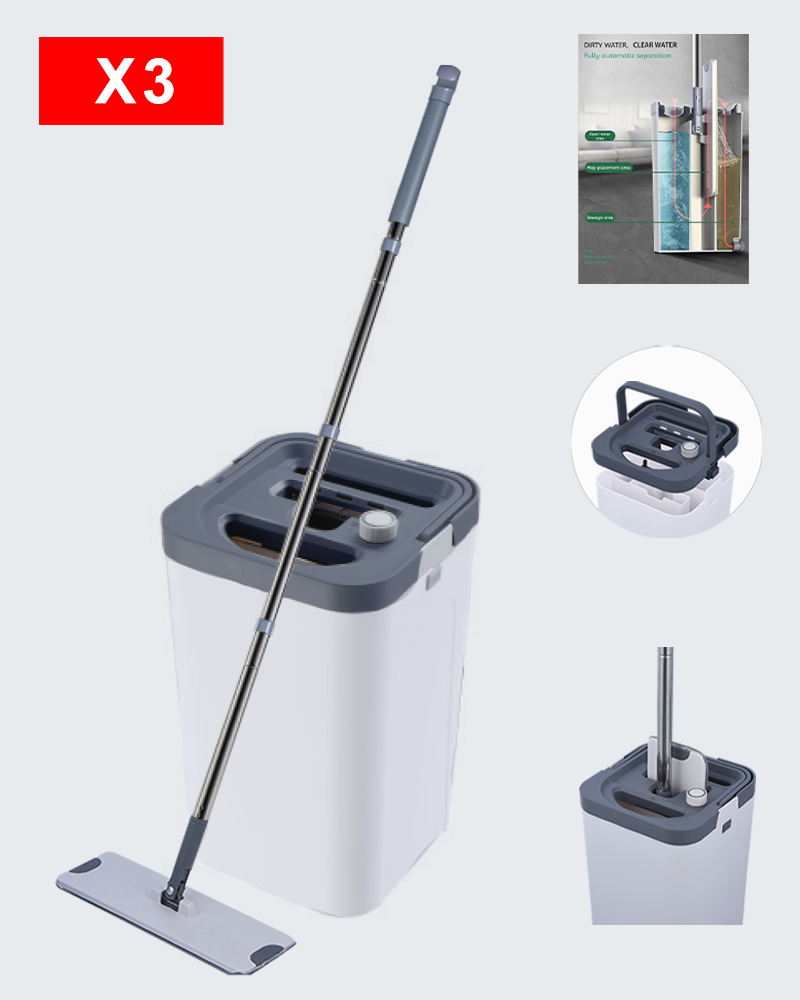
Many flat mop bucket sets feature a dual-compartment design or a separate wringer basin that keeps the wrung-out dirty water separated from the clean solution reservoir. This means the pad is re-wetted with clean solution after each wring cycle, not with water already contaminated from the previous pass. Traditional single-bucket mopping progressively dilutes the cleaning solution with extracted floor dirt, meaning the floor is effectively being cleaned with increasingly dirty water as the session progresses.
Effectiveness Across Different Floor Types
A Flat Mop Bucket Set performs differently depending on the floor surface. Understanding this helps set realistic expectations:
| Floor Type | Effectiveness | Best Approach | Key Consideration |
|---|---|---|---|
| Ceramic and porcelain tile | Excellent | Damp to wet mopping with all-purpose cleaner | Grout lines benefit from two-direction mopping passes |
| Vinyl and LVT | Excellent | Damp mopping — avoid excess moisture at seams | Flat head reaches under furniture easily |
| Laminate flooring | Very Good | Damp-only — wring pad thoroughly before each pass | Never allow standing water; wringer bucket essential |
| Engineered hardwood | Good | Damp-only with wood-specific cleaner | Over-wetting causes swelling; controlled wring critical |
| Sealed concrete | Excellent | Damp to wet mopping; flat head reaches large areas fast | Heavy soiling may need pre-sweep before mopping |
| Natural stone (marble, slate) | Good | pH-neutral cleaner only; damp-mop technique | Acidic or alkaline cleaners damage natural stone |
What the Bucket Design Contributes to Cleaning Effectiveness
The bucket in a flat mop and bucket set is not a passive container — its design directly affects how well the system cleans:
- Wringer plate or press mechanism: The flat plate wringer common in quality bucket sets applies even, consistent pressure across the full width of the mop pad, extracting water uniformly without distorting the pad shape or leaving dry channels. Inconsistent wringing leaves some pad areas too wet and others too dry, producing uneven cleaning across each stroke
- Bucket capacity: Sets with buckets of 10 to 15 liters allow sufficient solution volume for cleaning areas of 40 to 80 square meters before the solution becomes too diluted or contaminated to clean effectively. Smaller buckets require more frequent solution changes, reducing efficiency on larger floor areas
- Wheel mobility: Buckets with smooth-rolling wheels allow the cleaner to keep solution within reach without carrying the bucket across the wet floor, reducing the risk of drips and maintaining pace on large floor areas
- Built-in measurement markings: Accurate solution dilution is critical for effective cleaning without residue. Buckets with clear volume markings at 1-liter increments enable precise dilution of concentrated cleaners, preventing both under-concentration (ineffective cleaning) and over-concentration (sticky residue)
Factors That Limit Effectiveness and How to Address Them
A flat mop and bucket set is highly effective but not without limits. These are the most common factors that reduce cleaning effectiveness and how to resolve each:
Dirty or Saturated Mop Pads
A mop pad that has absorbed its capacity of dirt cannot continue to trap new contamination — it will begin redistributing it. For domestic use, a standard microfiber pad should be rinsed or replaced after cleaning approximately 30 to 40 square meters of heavily soiled floor, or 60 to 80 square meters of lightly soiled surface. Commercial operations should plan for pad replacement every 20 to 30 square meters on high-traffic areas. (Source: ISSA Cleaning Times and Tasks, 2018)
Skipping the Pre-Sweep Step
Mopping without sweeping or vacuuming first pushes loose debris — hair, crumbs, dust — across the wet floor surface, embedding it in corners and reducing pad life significantly. A flat mop and bucket set achieves its maximum effectiveness when used as the second step after dry floor preparation, not as a one-step cleaning method. Removing loose debris first means the mop pad focuses entirely on adhered dirt and bacteria rather than bulk material collection.
Incorrect Cleaning Solution Concentration
Over-concentrated cleaning solutions leave a sticky film on the floor that actually attracts new dirt faster than a correctly cleaned surface. Under-concentrated solutions clean superficially but may not break down grease or sanitize effectively. Following the manufacturer's dilution ratio precisely — made easier by bucket measurement markings — is one of the most impactful single improvements a user can make to cleaning effectiveness.
Pad Maintenance and Washing
Microfiber pads that are washed with fabric softener lose their electrostatic trapping capability. Fabric softener coats the microfiber strands, blocking the gaps that create the mechanical trapping action. Quality microfiber mop pads should be machine-washed at 60 degrees Celsius without fabric softener, which also sanitizes the pad between uses. Properly maintained microfiber pads retain full effectiveness for 300 to 500 wash cycles before fiber degradation affects performance. (Source: European Committee for Standardization, EN ISO 6330 Textile Washing Procedures for Testing Purposes)
Flat Mop Bucket Set vs. Alternative Cleaning Methods
| Cleaning Method | Bacterial Removal | Floor Coverage Speed | Moisture Control | Floor Safety (Laminate/Wood) |
|---|---|---|---|---|
| Flat Mop Bucket Set (microfiber) | Up to 99% | High | Precise | High (controlled damp) |
| Traditional string mop and bucket | 30% (with disinfectant) | Moderate | Poor (hand-wrung) | Low (over-wet risk) |
| Spray mop (no bucket) | Good (microfiber pad) | Moderate | Good | High |
| Steam mop | Very High (heat) | Moderate | Good | Variable (risk on some floors) |
| Floor scrubbing machine | Very High | Very High (large areas) | Controlled | High |
For domestic and light commercial use, the flat mop and bucket set offers the best combination of bacterial removal effectiveness, speed, moisture control, and floor surface safety of any manual cleaning method. Floor scrubbing machines outperform on very large areas but are impractical and cost-prohibitive for most residential and small commercial applications.
Technique: How Mopping Method Affects Cleaning Results
The effectiveness of any Flat Mop Bucket Set is also determined by the technique used. These practical steps make a measurable difference to the final result:
- Work from the far corner toward the exit. Mopping from the door inward means walking back across the cleaned area. Starting at the far corner and working toward the exit keeps cleaned surfaces untrafficked until dry
- Use an S-stroke or figure-8 pattern. Straight back-and-forth strokes leave uncleaned strips at the stroke reversal point. An S-stroke or overlapping figure-8 pattern ensures every section of floor is covered in at least two directions, picking up any dirt the first pass displaced
- Wring and re-wet every 15 to 20 square meters. Continuing to mop with a heavily soiled pad redistributes contamination. On a standard domestic kitchen or bathroom, this means wringing and re-wetting approximately twice per room
- Allow adequate drying time before foot traffic. A correctly damp-mopped floor should be dry within 3 to 5 minutes at room temperature. If drying takes longer, the pad was too wet — adjust the wringer to extract more water on the next pass
- Change solution when it visibly discolors. Once the cleaning solution in the bucket turns grey or brown, it is contaminating the floor rather than cleaning it. Solution change frequency depends on floor soiling level, but a heavily trafficked kitchen floor may require fresh solution every 20 square meters
Choosing an Effective Flat Mop Bucket Set
Cleaning effectiveness varies between products. When selecting a set, prioritize these features:
- Microfiber pad quality: Look for split microfiber (rather than solid fiber) with a minimum GSM (grams per square meter) of 200 — higher density pads trap more dirt per pass and withstand more wash cycles
- Flat-press wringer mechanism: A lever or pedal-operated flat plate wringer provides the even compression needed for consistent moisture control across the full pad width
- Mop head width of 40 to 50 cm: This range balances coverage per stroke with maneuverability in domestic rooms and commercial corridors
- Adjustable and telescoping handle: Correct handle height prevents back strain during extended mopping and maintains consistent pad-to-floor pressure throughout the stroke
- Bucket volume of 10 liters or above: Sufficient volume for domestic rooms without mid-task solution changes
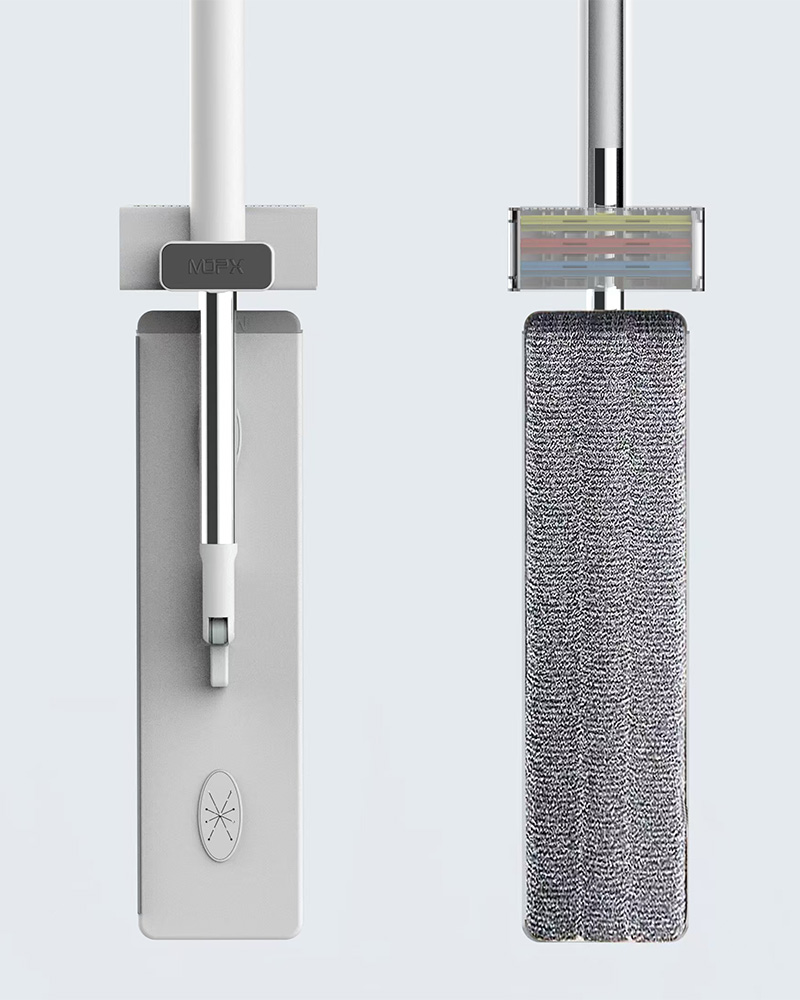
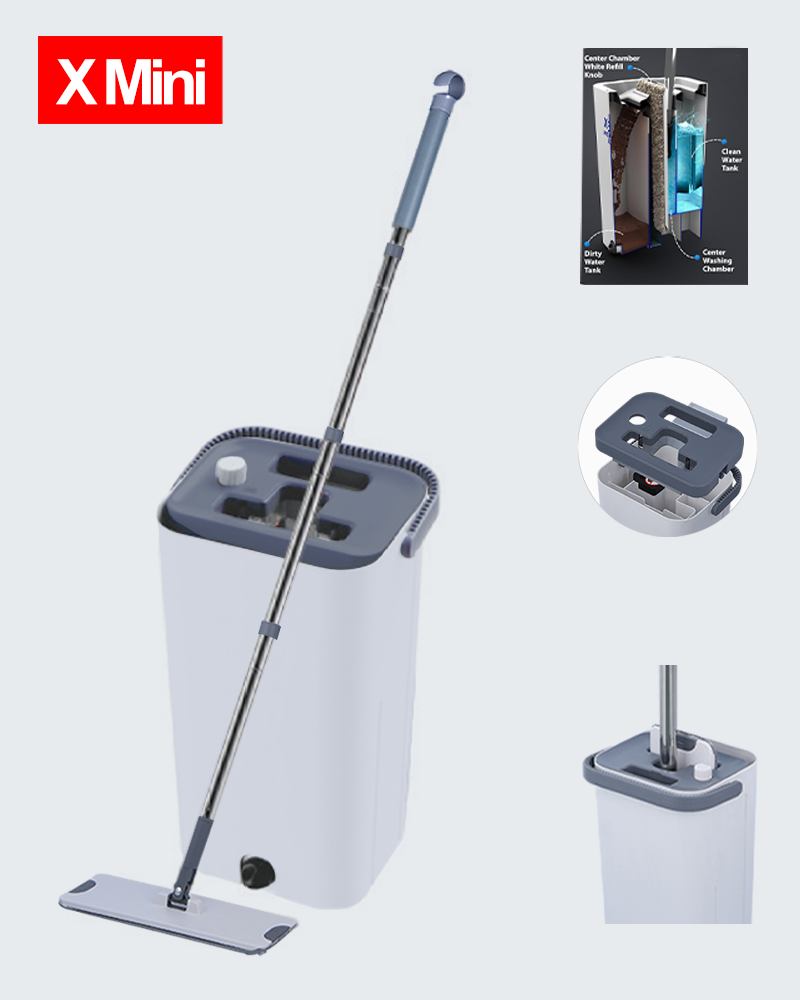
The Mop-X Flat Mop Bucket Set is designed with all of these effectiveness-critical features: a high-density split microfiber pad, a flat-press wringer mechanism for precise moisture control, a 40 cm mop head for wide coverage, and a sturdy wheeled bucket with volume markings. It is built for consistent, practical cleaning performance across all common hard floor types, from domestic kitchens and bathrooms to commercial corridors and retail spaces.
Effectiveness Summary at a Glance
| Performance Area | Flat Mop Bucket Set Result |
|---|---|
| Bacterial removal (microfiber) | Up to 99% with water alone |
| Floor coverage vs. string mop | 50% more area per stroke on equivalent pad widths |
| Moisture control | 70 to 85% water extraction per wring cycle |
| Best floor types | Tile, vinyl, LVT, laminate, sealed concrete, natural stone |
| Pad service life | 300 to 500 wash cycles (properly maintained microfiber) |
| Cleaning speed vs. traditional mop | Significantly faster — wider head, fewer passes per room |
| Limitation | Requires pre-sweeping; pad must be changed on heavily soiled floors |
The conclusion: a Flat Mop Bucket Set with a quality microfiber pad and a well-designed wringer bucket is one of the most effective manual floor cleaning systems available. Used with correct technique and maintained properly, it cleans faster, removes more bacteria, and is safer for floor surfaces than any traditional mop system — making it the right investment for anyone who cleans hard floors regularly.