
 English
 Español
 中文简体
中文简体
Content
- 1 Evaluating Wringer Mechanism Type and Build Quality
- 2 Considering Bucket Capacity and Dual Chamber Design
- 3 Assessing Mop Pad Material and Attachment System
- 4 Checking Handle Length and Ergonomic Design
- 5 Evaluating Wheel and Mobility Features
- 6 Comparing Material Quality and Overall Durability
- 7 Considering Ease of Cleaning and Maintenance
- 8 Weighing Price Against Long-Term Value
- 9 Who Should Prioritize Which Selection Factors
Choosing the best flat mop bucket set comes down to evaluating wringer mechanism type, bucket capacity and chamber design, pad material quality, and overall build durability, rather than selecting based on appearance or price alone. Since the wringer and dual chamber system are what separate an effective flat mop setup from a basic bucket, these functional components deserve the most attention during comparison, as they directly determine cleaning performance and long-term convenience. Cleaning equipment durability studies commonly referenced in commercial janitorial supply comparisons show that sets with reinforced wringer mechanisms typically last two to three times longer under regular use than lower-cost alternatives with lighter plastic components, making wringer build quality one of the most important factors to prioritize.
Evaluating Wringer Mechanism Type and Build Quality
The wringer is the core functional component of any flat mop bucket set, and its design directly affects how consistently the mop pad is dried between uses, which in turn affects cleaning effectiveness across an entire session.
Common Wringer Types to Compare
- Lever press wringers that compress the flat mop pad between two flat surfaces for even moisture removal
- Roller wringers that squeeze the pad as it passes between two cylindrical rollers
- Spin wringers that use centrifugal force to remove excess water from a rotating mop head
A well-built Flat Mop Bucket Set should feature a wringer mechanism constructed from durable, reinforced materials at the pivot and press points, since these areas experience the most repeated mechanical stress and are typically the first components to fail on lower-quality sets.
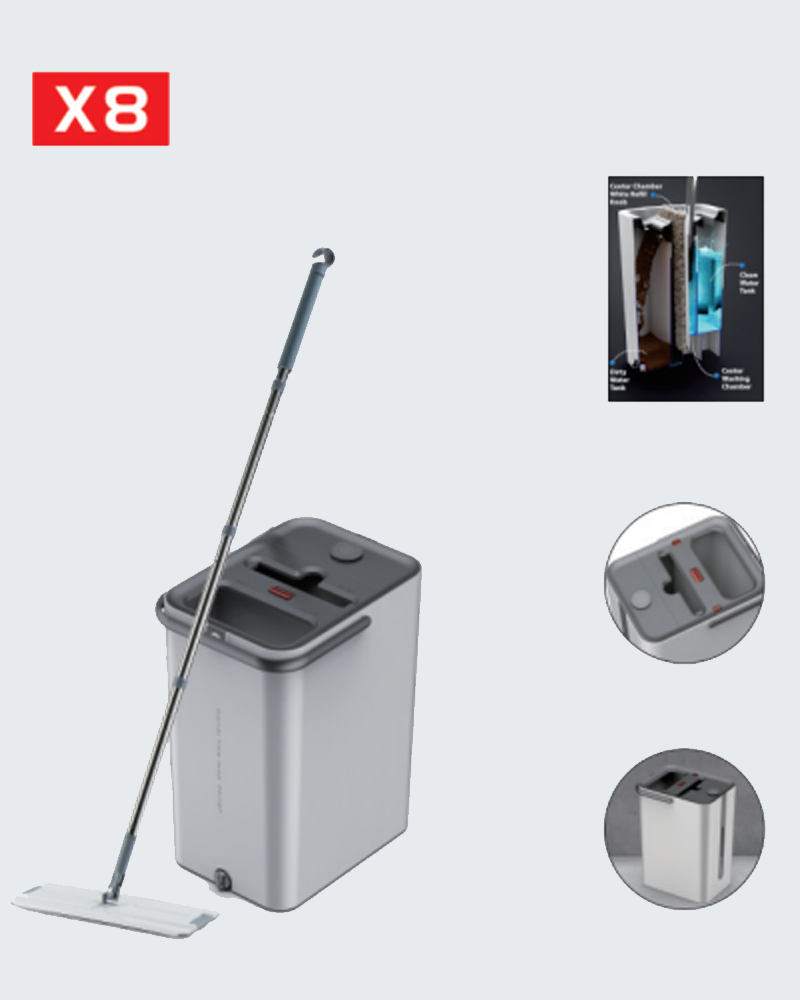
Considering Bucket Capacity and Dual Chamber Design
Bucket size and chamber configuration affect both how long you can clean before needing to refill water and how effectively the set separates clean water from dirty rinse water during use.
Capacity Comparison Guidelines
| Cleaning Area Size | Recommended Bucket Capacity |
| Small residential spaces | 4 to 6 liters per chamber |
| Larger homes or light commercial use | 7 to 10 liters per chamber |
Buyers cleaning larger floor areas should prioritize higher capacity buckets to reduce how often water needs replacing mid-session, while those with smaller spaces or limited storage room may prefer a more compact set that is easier to store between uses.
Assessing Mop Pad Material and Attachment System
The flat mop head itself plays a significant role in overall cleaning performance, and both the pad material and how it attaches to the handle affect convenience and long-term usability.
Pad Material Options
- Microfiber pads, offering strong dirt and dust pickup along with good absorbency for wet mopping
- Cotton blend pads, providing durable, budget-friendly performance for general cleaning tasks
- Chenille or looped pads, suited to picking up finer dust particles during dry sweeping passes
Checking whether the pad attaches through a hook and loop system or a clip-style mechanism also matters, since hook and loop attachments generally allow for quicker, more secure pad changes compared to some clip designs that can loosen with repeated use.
Checking Handle Length and Ergonomic Design
Handle design affects user comfort during extended cleaning sessions, and matching handle length to the user's height helps reduce strain on the back and shoulders while mopping.
Handle Features to Look For
- Adjustable or telescoping handles that accommodate different user heights within one household
- A comfortable grip texture that remains secure even when hands are slightly damp during use
- A swivel or pivoting mop head connection that allows easier maneuvering around furniture and tight corners
Testing the handle length against your own height before purchase, or checking manufacturer height recommendations, helps avoid the back strain that can result from using a mop handle that is too short for comfortable, upright use.
Evaluating Wheel and Mobility Features
For larger cleaning areas, bucket mobility becomes an important practical consideration, since dragging or repeatedly lifting a full water bucket across a large floor space adds unnecessary physical effort.
Why Wheeled Buckets Add Value
Sets equipped with sturdy caster wheels allow the bucket to be rolled alongside the user while mopping, significantly reducing the physical strain associated with repeatedly lifting and repositioning a full bucket across larger commercial or residential floor areas.
Checking Wheel Durability
Buyers should look for wheels made from durable plastic or rubber compounds rated to support the bucket's full water capacity without cracking or flattening under sustained weight over repeated use.
Comparing Material Quality and Overall Durability
The plastic material used throughout the bucket and wringer assembly directly affects how well the set withstands daily use, repeated water exposure, and general wear over its expected service life.
Signs of Durable Construction
| Quality Indicator | Why It Matters |
| Thick, rigid bucket walls | Resist cracking or bowing when filled with water |
| Reinforced wringer hinge points | Withstand repeated pressing motion without loosening over time |
Choosing a Flat Mop Bucket Set built with thicker, impact-resistant plastic at stress points helps ensure the set holds up well over years of regular use rather than developing cracks or hinge failures within the first several months of ownership.
Considering Ease of Cleaning and Maintenance
How easily the bucket itself can be cleaned and maintained between uses affects both hygiene and the long-term convenience of owning the set.
Maintenance-Friendly Design Features
Look for buckets with smooth interior surfaces free of hard-to-reach corners where residue could accumulate, along with a wringer basket design that can be easily removed and rinsed separately from the main bucket body for thorough cleaning between sessions.
Weighing Price Against Long-Term Value
While budget is always a practical consideration, evaluating total value rather than upfront price alone helps ensure the chosen set performs reliably across its expected years of use.
Long-Term Cost Perspective
A slightly higher upfront investment in a durable, well-constructed set often proves more cost-effective over time than repeatedly replacing a lower-quality bucket or wringer that fails within the first year of regular household or commercial use.
Who Should Prioritize Which Selection Factors
Households cleaning smaller spaces occasionally can prioritize compact size and straightforward wringer design without needing the largest capacity or most heavy-duty construction available. Commercial cleaning staff or households managing larger floor areas on a regular basis should prioritize wringer durability, bucket capacity, and wheeled mobility features, since these factors most directly affect efficiency and long-term reliability under frequent, sustained use.