
 English
 Español
 中文简体
中文简体
Content
- 1 What separates a commercial-grade flat mop from a household one
- 2 Cleaning efficiency is measurable, not just a marketing claim
- 3 Water separation keeps every pass as effective as the first
- 4 Purchase price is a small part of the total cost
- 5 Comparing mop systems across five performance dimensions
- 6 Matching the mop to the actual workload
- 7 Why the supplier source matters
- 8 The final decision on the best commercial flat mop
A facilities manager opens a supply closet and sees three cleaning systems from three different vendors. One promises savings. One promises performance. The third, a flat mop with a separation bucket, asks for a larger budget. Which one deserves the label of the best commercial flat mop?
The evidence from measurable cleaning performance and total cost of ownership points to the flat mop with a clean-water separation system. It covers more floor area per pass, keeps its wash water cleaner for a full shift, and reduces labor time enough to pay back the higher purchase price within a few months. The sections below break down the metrics that matter and show how they change the final buying decision.
What separates a commercial-grade flat mop from a household one
Commercial cleaning is a different world from home cleaning. A mop in a retail store, office building, or school is used several times a day on larger surfaces with tighter hygiene expectations. A product built for weekly home use often cannot survive that volume. The best commercial flat mop is the one that closes the gap between heavy-duty engineering and easy daily operation.
The main differentiators are the mop head construction, fiber material, bucket capacity, and water management system. A large head with dense fiber coverage cleans more area per stroke and resists pressure without losing its shape. The bucket needs enough capacity to span a large floor plan without constant refills. The wringing mechanism must remove dirty water without demanding excessive effort. And a system that keeps clean and dirty water in separate chambers prevents contaminated water from being spread across the floor.
- Head sizes from 40 to 50 centimeters cover more floor per stroke
- Fiber density determines how much soil the mop lifts and holds
- Bucket capacities between 12 and 16 liters support longer shifts
- Separation technology isolates clean and dirty water from the first pass to the last
Facilities that are still deciding between mop categories can review the detailed comparison of the advantages of flat mops compared to ordinary mops.
Cleaning efficiency is measurable, not just a marketing claim
When evaluating a commercial flat mop, cleaning efficiency is the first metric to check. It combines the surface area covered in a fixed time with the level of soil removed per pass. A mop that needs fewer passes and less pressure saves labor minutes every single day.
The chart compares the productivity of four common mop systems under identical cleaning conditions. The traditional cotton string mop covers the least area because its bulky head requires frequent rinsing and more physical effort. The spin mop improves on this with a mechanical wringing function, but it still relies on a single water reservoir that becomes dirtier with every use. Flat mops with a standard bucket show a clear step up in coverage because the wide head works like a squeegee across the floor. The flat mop with a separation bucket delivers the highest output because operators spend less time changing water and more time cleaning. For a commercial facility, this difference translates directly into labor hours saved every week.
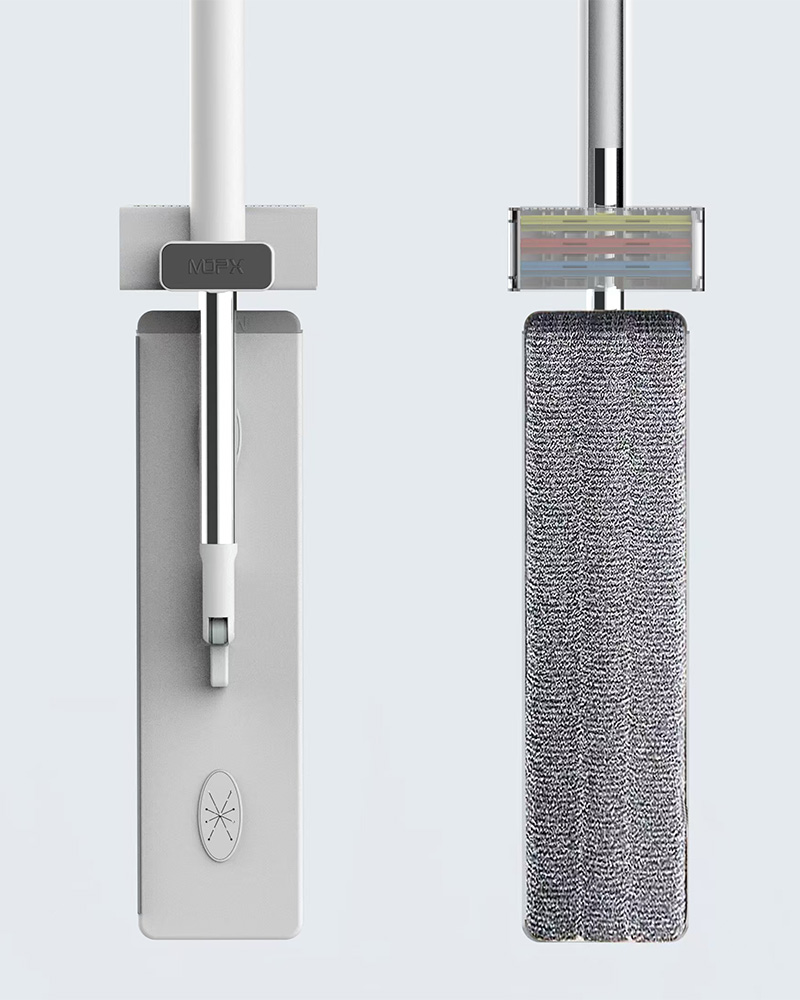
The mop head itself is the starting point of that efficiency. The MOP X flat mop floor cleaning tool combines a 45-centimeter head with a dense fiber weave so the mop picks up dust, stains, and moisture in a single forward stroke.
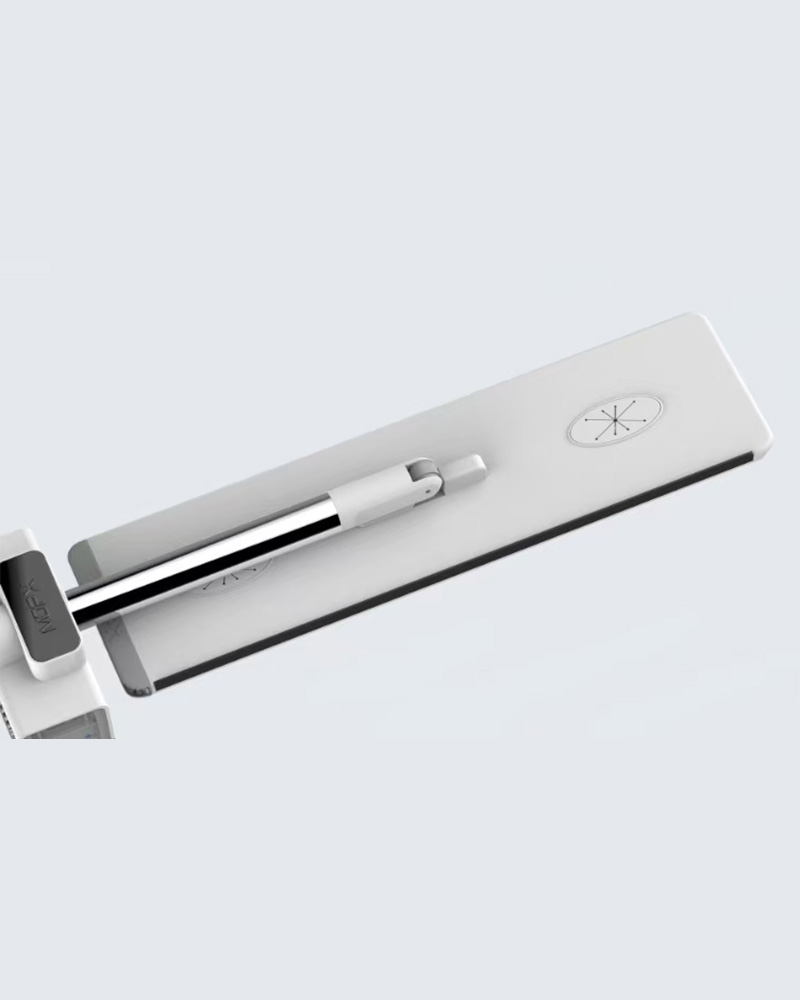 Custom Floor Cleaning Mop Tool Mopx Flat Mop Manufacturers, Source Factory - NinNingbo Yaxiang Cleaning Products Co., Ltd is China custom Floor Cleaning Mop Tool Mopx Flat Mop manufacturers and source factory,The Floo...View Product →
Water separation keeps every pass as effective as the first
The most overlooked factor in floor cleaning is the quality of the wash water. With a conventional single-bucket system, the mop is dipped into the same water repeatedly. As soil accumulates, the water becomes a carrier of dirt rather than a cleaning agent. That is why water separation technology matters more than any other feature in a commercial mop system.
The line chart tracks how quickly wash water degrades over a sequence of ten cleaning strokes. With a regular bucket, the cleanliness index falls rapidly after the first few passes because dirt, grease, and microorganisms all return to the same reservoir. With a separation bucket, the clean and dirty chambers remain physically isolated, so the rinse water stays visually clear for the entire cycle. Operators always rinse the mop in water that is close to its original quality, which means the final stroke cleans as effectively as the first. This consistency is what makes a dual-chamber bucket a worthwhile investment. Facilities that switch to this system report fewer repeated passes and less detergent consumption.
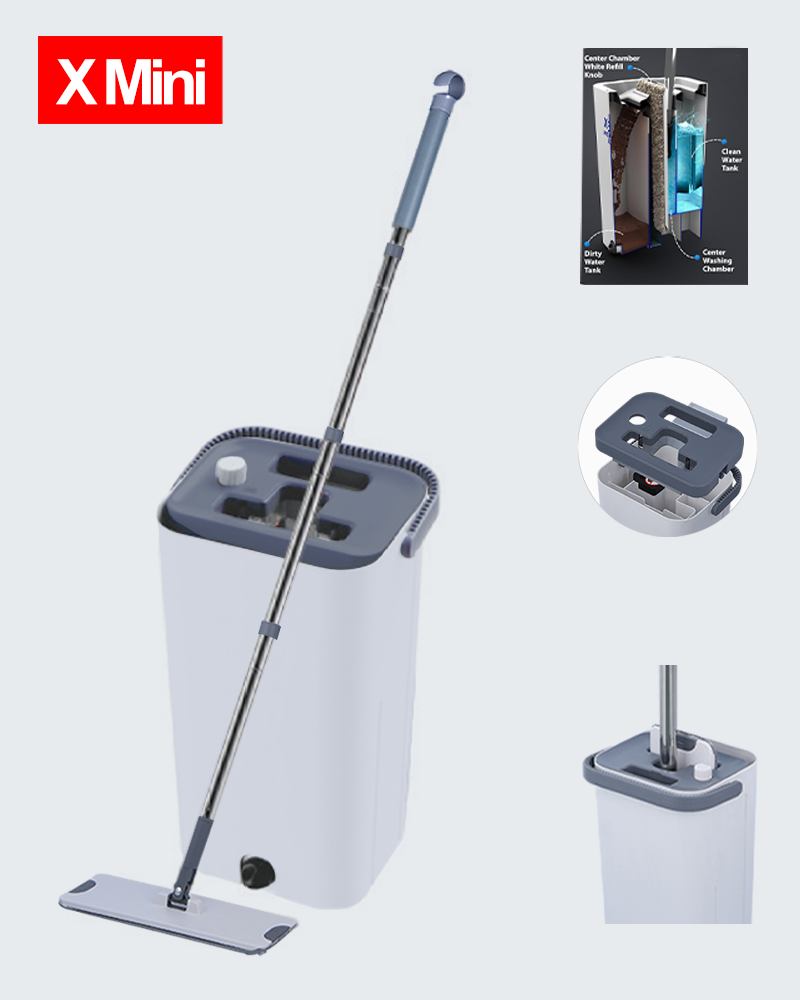
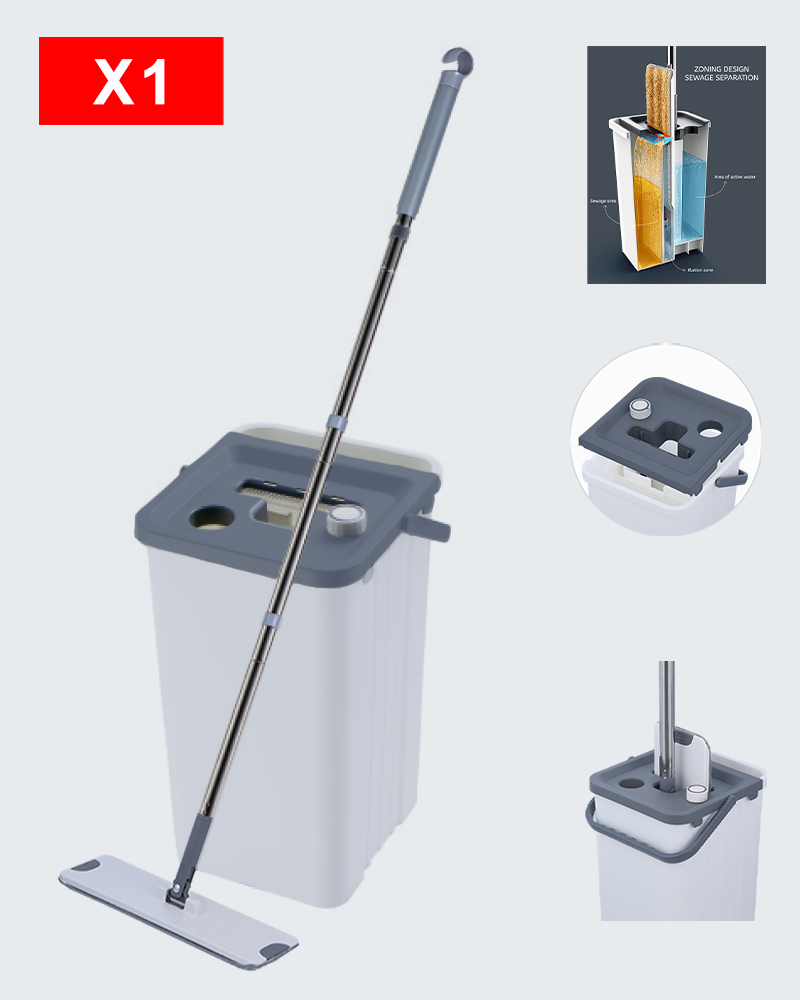
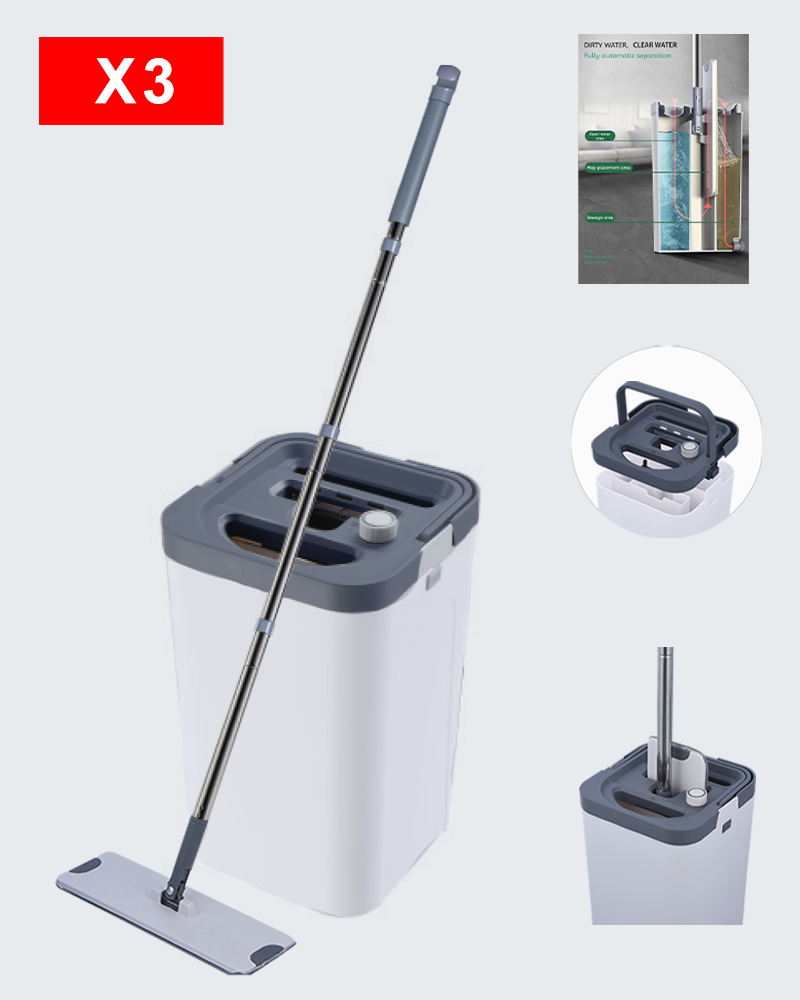
Buyers who want this isolation in a complete package can evaluate the clean and dirty water separation mop bucket set, which pairs the flat mop with a dual-chamber bucket and a one-way flow mechanism.
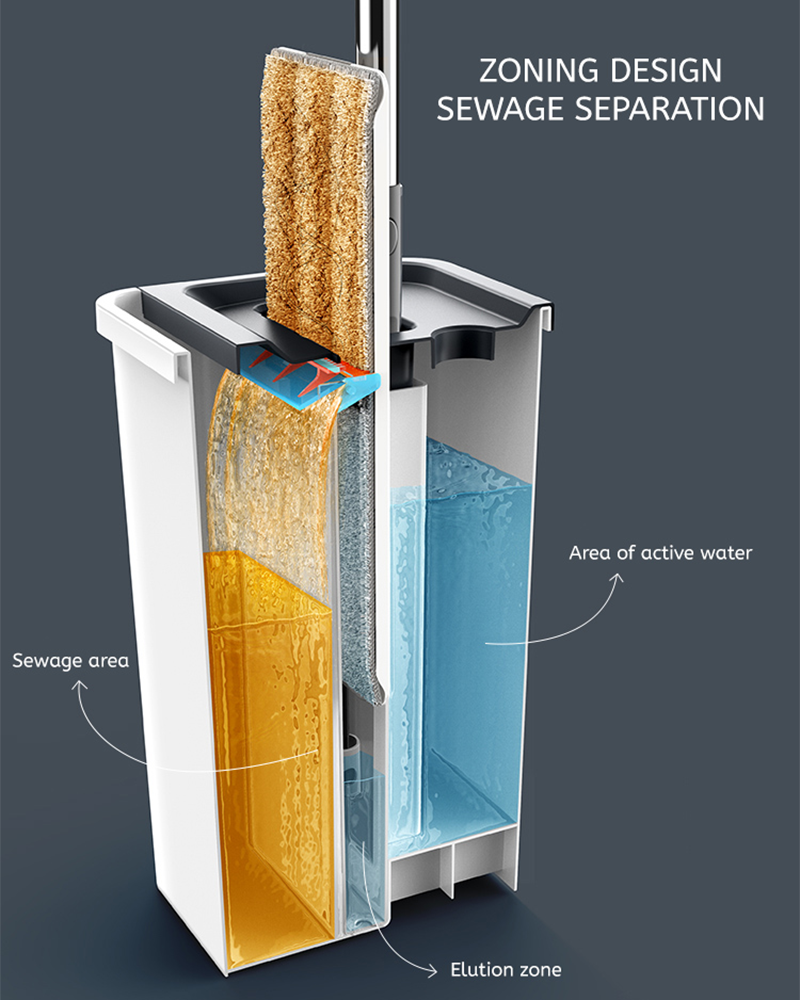 Custom Clean And Dirty Water Separation Mop Bucket Set Manufacturers, Source FacNingbo Yaxiang Cleaning Products Co., Ltd is China custom Clean And Dirty Water Separation Mop Bucket Set manufacturers and source factor...View Product →
Purchase price is a small part of the total cost
Facilities managers often choose the cheapest mop to protect the current month's budget. In the long run, the cheapest mop is usually the most expensive one because it wears out quickly, wastes labor, and increases detergent usage. The total cost of ownership includes purchase price, replacement frequency, labor time, and cleaning chemicals.
The column chart shows the estimated operating cost of one mop station over twelve months. The economy option appears cheap at the register, but its fiber wears down within a few weeks of daily use and requires five or more replacements per year. The mid-range flat mop lasts longer but still lacks the water separation feature that reduces rework time. The commercial flat mop with a separation bucket carries the highest upfront price and the lowest total cost because it lasts longer and shortens every cleaning task. When labor is calculated at a standard hourly rate, even a ten-minute saving per shift adds up to more than the price difference over the year. The decision that looks expensive on the purchase order often becomes the most economical choice on the annual budget report.
Comparing mop systems across five performance dimensions
No single number tells the full story of a commercial flat mop. A balanced evaluation must look at cleaning coverage, bacteria removal, water efficiency, durability, and labor efficiency together. A radar chart is a practical way to see the strengths and weaknesses of each system side by side.
The radar chart compares a traditional cotton string mop with a flat mop equipped with a separation bucket across five evaluation criteria. On cleaning coverage, the wide flat head doubles the area covered per pass. On bacteria removal, the separation system prevents contaminated water from being reapplied to the floor. Water efficiency favors the flat mop because it uses less water per square meter while keeping the water usable for longer. Durability is roughly even, since both systems can be manufactured with heavy-duty components. Labor efficiency is where the flat mop has its largest margin because it eliminates most rinsing, wringing, and rework time. Across the five dimensions, the commercial flat mop wins four categories and ties the fifth.
Matching the mop to the actual workload
A commercial floor cleaning purchase should start with the building layout and the cleaning frequency. The following table maps common facility types to mop specifications that fit their workload.
| Facility type | Daily cleaning area | Bucket capacity | Recommended mop head |
|---|---|---|---|
| Small office | Under 300 sqm | 8-12 liters | 40 cm head with basic separation |
| Retail store | 300-800 sqm | 12-16 liters | 45 cm head with dual-chamber separation |
| School or clinic | 300-600 sqm | 12-16 liters with disinfection compatibility | 45 cm head with hands-free wringing |
| Large facility or warehouse | Over 800 sqm | 16 liters or more | 50 cm head with big-capacity bucket |
The table provides a starting point rather than a hard rule. A facility with hard floors and heavy foot traffic needs a larger bucket to avoid frequent refill trips. A facility with hygiene regulations benefits from a separation system that keeps disinfectant effective for more strokes. A multi-floor building may prioritize a lightweight mop head and a mobile bucket. The key is to evaluate the mop and the bucket as one system, because a good mop attached to the wrong bucket still produces the problems described in the earlier sections.
Large facilities with more than 800 square meters of daily cleaning area should review the professional big capacity flat mop bucket set, which pairs a 16-liter clean-water reservoir with a large wringing platform to minimize stops.
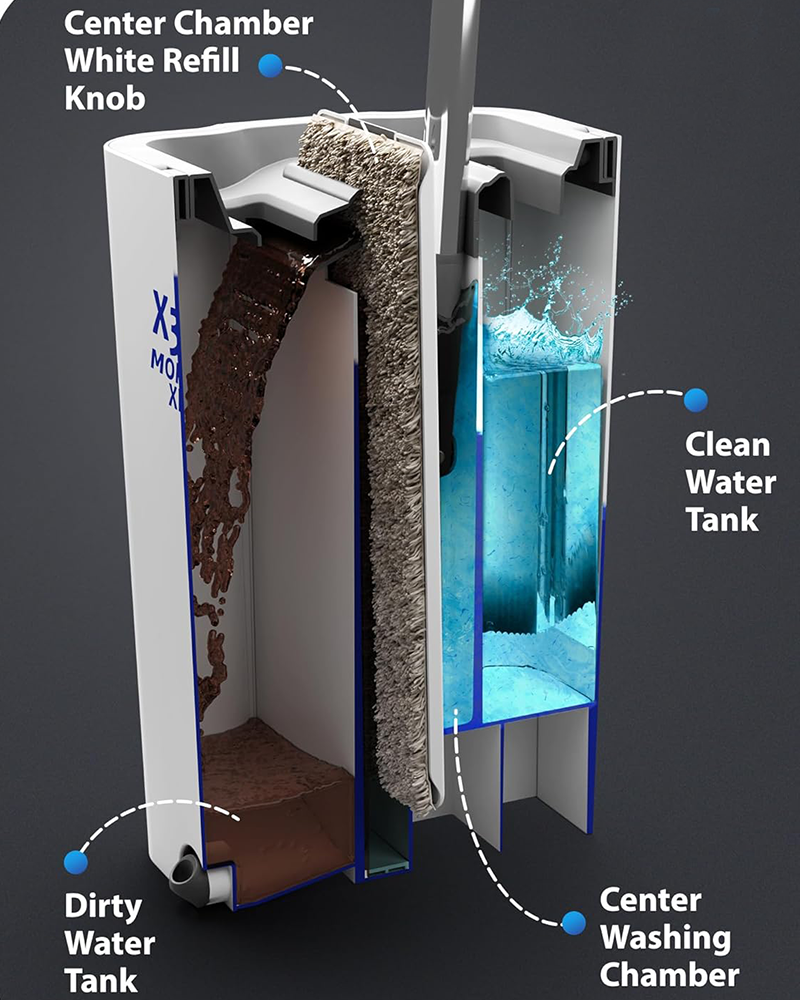 Custom Professional Mopx Big Capacity Flat Mop Bucket Set Manufacturers, Source Ningbo Yaxiang Cleaning Products Co., Ltd is China custom Professional Mopx Big Capacity Flat Mop Bucket Set manufacturers and source fac...View Product →
Why the supplier source matters
Once the specification is defined, the next question is where to source it. A commercial buyer needs a supplier with consistent quality, reasonable lead times, and the ability to customize. The best commercial flat mop is only valuable if it can be delivered at scale with repeatable quality.
MOP X, a cleaning products manufacturer from Ningbo, China, has focused on flat mop systems since 2008. The MOP X cleaning separation series holds more than 40 national patents and ships to more than 50 countries. The company holds ISO 9001 quality management certification and BSCI social compliance status, which matter for retailers and distributors that audit their supply chain. From order confirmation to delivery, the standard lead time is about 30 days, and its location near Ningbo Port shortens ocean freight logistics. OEM and ODM customization is available for brands that want their own mop specifications, colors, and packaging.
Once the right mop arrives, its service life depends on daily care. The guide on how to properly clean and maintain a flat mop after use explains the steps that keep fibers effective and odor-free.
The final decision on the best commercial flat mop
Choosing the best commercial flat mop is not about picking the most expensive model or the cheapest one. It is about selecting the system with the best combination of cleaning coverage, water management, durability, and operating cost. The evidence from performance data and total cost analysis consistently favors a flat mop with a clean-water separation bucket. It cleans faster, keeps floors genuinely cleaner, and reduces the long-term cost per square meter.
A facilities manager who evaluates mops by these criteria will not need to rely on vendor claims. The data, the comparisons, and the workload table in this guide provide a practical basis for the next purchasing decision.